
-
WordPress Password Leak Protection in CleanTalk Plugin

Leaked passwords are one of the fastest-growing threats to WordPress. WordPress password leak protection helps block attackers who reuse stolen credentials from massive breaches.Security by CleanTalk now gives you a way to stop them before they log in. What’s New: WordPress Password Leak Protection Password Leak Protection automatically checks user credentials against public breach databases.
FEEDBACK LOG
The Latest
-
WPForms Spam Protection in 2026
If you use WPForms for contact forms, lead generation, surveys, or payment forms, you will eventually face spam – fake submissions, junk leads, and bot activity. This guide explains how to set up WPForms spam protection using: The integration protects WPForms forms such as: WPForms continues to handle the form UI and workflow, while CleanTalk…

-
Avada Form Builder – Spam protection guide in 2026
Avada Form Builder is a great choice when you need to create contact forms, surveys, quizzes, and more. In this post, we will review available anti-spam services such as Google reCAPTCHA and Cloudflare Turnstile, tools like honeypots, and anti-spam plugins including CleanTalk, Akismet, hCaptcha, and OOPSpam available to Avada users as of March 2026. Avada…

-
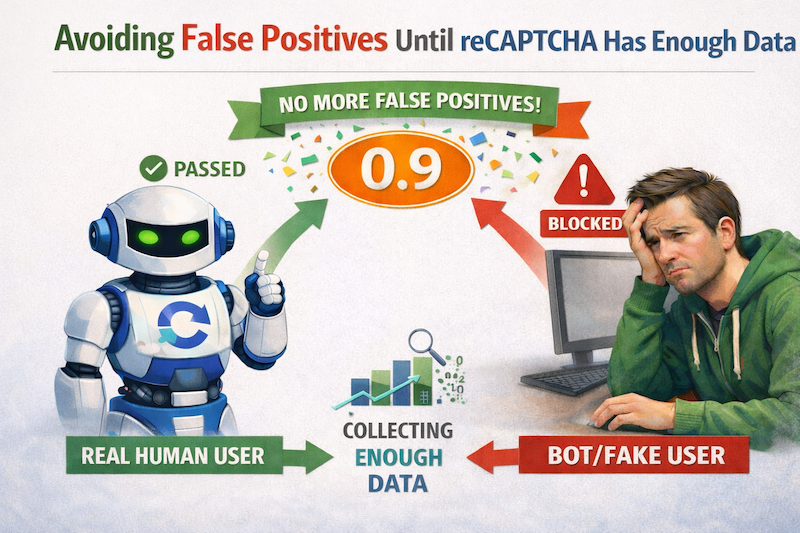
reCAPTCHA v3 always returns 0.9 score. Avoid false positives
Many reCAPTCHA v3 users complain about always receiving a score of 0.9 despite multiple attempts and changes in their Google Cloud integration. In this article, we reproduce this issue and explain why reCAPTCHA always returns a score of 0.9. Research Objective Users complain that when testing reCAPTCHA v3, they always receive the same score of…
-
Why do contact form 7 users prefer Anti-spam by CleanTalk against reCAPTCHA?
As a WordPress user let me share my experience of using CAPTCHA less and CAPTCHA style Anti-Spam tools on the example of Contact form 7. Is reCAPTCHA good or bad for Contact form 7? Contact Form 7 users may prefer Anti-Spam plugin by CleanTalk over reCAPTCHA for several reasons, as each solution has its own…