

L;DR: To stop spam signups in The Newsletter Plugin, combine its built-in antiflood and blacklist settings with a cloud anti-spam filter. CleanTalk Anti-Spam checks every subscription request in the background and blocks spam bots invisibly – no CAPTCHA, no confirmation puzzle – while protecting comments, registrations and other forms on the same site. reCAPTCHA, hCaptcha and Turnstile add a visible challenge layer for high-risk forms. For most WordPress sites, an invisible cloud filter blocks more spam with less friction than CAPTCHA alone. Plans start at $12 per site/year with a free 7-day trial.

A subscription form is the smallest form on the site and the most expensive one to get wrong. Every fake address you collect is a bounce, and enough bounces move your campaigns from the inbox to the spam folder – for everyone on the list, including real customers.
The Newsletter Plugin sits right in that spot. It stores subscribers in its own table, sends the double opt-in email itself, and exposes a simple public endpoint so any form on any page can submit to it. That endpoint is what bots find. They do not want your newsletter; they want your server to send a confirmation email to an address they chose, or they just want to fill the table.
As WordPress.org shows, The Newsletter Plugin is currently used on over 200,000 active installations and has 1,203 reviews with an average rating of 4.6.
Plugin Homepage at wordpress.org | Developer Stefano Lissa – The Newsletter Team
Common types of spam in The Newsletter Plugin
- Bulk fake signups. Randomly generated addresses submitted straight to the subscription endpoint, hundreds per night.
- Bounce damage. Non-existent addresses stay on the list until they bounce, and bounces are what mailbox providers score you on.
- Confirmation email abuse. Bots submit someone else’s address so your site sends them an unwanted opt-in email – and your domain takes the complaint.
- Spam in the name field. Links and offers typed into the first name field, which then appear in your admin and sometimes in your own emails through {name} tags.
- Disposable and role addresses. Throwaway inboxes and info@ / admin@ addresses that inflate the list count and never open anything.
- Profile and preference forms. The plugin’s profile page can be submitted by bots too, not only the signup form.
Official anti-spam options and integrations in The Newsletter Plugin
The plugin does ship an anti-spam section, and it is worth going through it. In *Newsletter -> Subscription -> Antispam* you get:
- Akismet – subscription data is sent to Akismet for a spam verdict, off by default.
- Antiflood – refuses repeated subscriptions from the same IP or address within an interval you pick, from 5 seconds to 30 minutes; the default is 60 seconds.
- Captcha – an extra confirmation step shown after the form is submitted.
- Address blacklist – a manual list of addresses and patterns to refuse.
Double opt-in is available as well, and it is worth switching on – in a default install it is off, so an address goes straight into the list without confirming anything.
What this stack does not do is judge the sender. Antiflood only sees repeats from one IP, so a bot rotating addresses through a proxy pool passes it. The blacklist only knows what you typed into it. Double opt-in keeps unconfirmed junk out of your active list, but only if you turned it on – and even then the request still hit your site and your server still sent the email.
If your goal is to protect signups without adding a challenge step, CleanTalk can be used as a Google reCAPTCHA alternative that filters spam submissions in the background.
CAPTCHA options in The Newsletter Plugin
- Built-in captcha is a confirmation step after submission – no third-party scripts, but it is an extra click for every real subscriber.
- reCAPTCHA v2/v3 can be added through third-party extensions; v3 still loads Google scripts and shows a badge.
- Turnstile is lighter and privacy-friendly, but it is still a challenge, not a reputation check.
On a signup form, friction costs more than anywhere else on the site. The form usually sits in a footer or a popup, and the decision to subscribe lasts about two seconds. Anything you add between the email field and the Submit button is paid for in conversion.
Best ways to stop spam in The Newsletter Plugin
- Filter before the row is written. A blocked signup should never reach the subscribers table or trigger a confirmation email.
- Judge the address, not the timing. Reputation across many sites catches rotating bots that antiflood cannot see.
- Turn double opt-in on. It is your second line, not your first, and it is off in a fresh install.
- Protect the endpoint. The plugin submits through admin-ajax.php, and bots post there directly without loading your page.
- Cover the whole site. Signup forms rarely live alone – comments and registration forms are usually attacked by the same bots.
Comparison table: The Newsletter Plugin spam protection options
Here is how the main anti-spam options for The Newsletter Plugin compare:
| Solution | Best for | Pricing | Main limitation |
| CleanTalk Anti-Spam | Invisible, site-wide protection across signups, comments and registrations | From $12/site/year; free 7-day trial | Cloud service; paid after trial |
| Akismet | Comment and basic form spam on small sites | Free personal; paid commercial | Comment-focused; weak on custom forms |
| Google reCAPTCHA | High-risk forms where a challenge is acceptable | Free | Adds friction; can hurt conversion; bots bypass it |
| Cloudflare Turnstile | Lighter, privacy-friendly CAPTCHA | Free | A challenge, not a content filter |
In short: use CleanTalk as the invisible baseline filter, and add reCAPTCHA, hCaptcha or Turnstile only on your highest-risk forms.
How the CleanTalk integration works with The Newsletter Plugin
This is a direct integration, not a generic catch-all. CleanTalk hooks the plugin’s own subscription action, takes the email and the name from the submitted fields and sends them to the cloud for a decision. It covers the normal subscribe action as well as the AJAX variants the plugin uses in popups and widgets.
If the verdict is spam, the request stops there: no row in the subscribers table, no confirmation email, no entry in your list to clean up later. The visitor sees a short spam-protection page with the reason and is returned to the form.
Anti-Spam plugin by CleanTalk for WordPress
The next tool we’re going to use is the Anti-Spam plugin by CleanTalk.
Here’s a short overview:
- CleanTalk is a cloud-based spam protection service for websites, founded in 2012.
- It automatically blocks spam without CAPTCHAs and doesn’t interrupt the user experience.
- Protects many types of forms: contact forms, payment forms, registrations, comments, surveys and more.
- Stops both automated bots and human spam submissions.
- Uses advanced filtering algorithms and a global spam detection network.
- Detects spam based on IP address, email address and user behavior.
- Lets you create custom filtering rules for specific cases.
- Allows blocking or filtering by IP, email and country.
- Works quietly in the background and is very easy to install and configure.
According to WordPress.org, Anti-Spam by CleanTalk for WordPress has over 200,000 active installations, with 3,209 reviews and an average rating of 4.8.
Plugin Homepage at cleantalk.org | Latest release at GitHub.com | Website cleantalk.org
Install the CleanTalk Anti-Spam plugin
Show Instructions
To install the Anti-Spam plugin, go to your WordPress admin panel → Plugins → Add New.
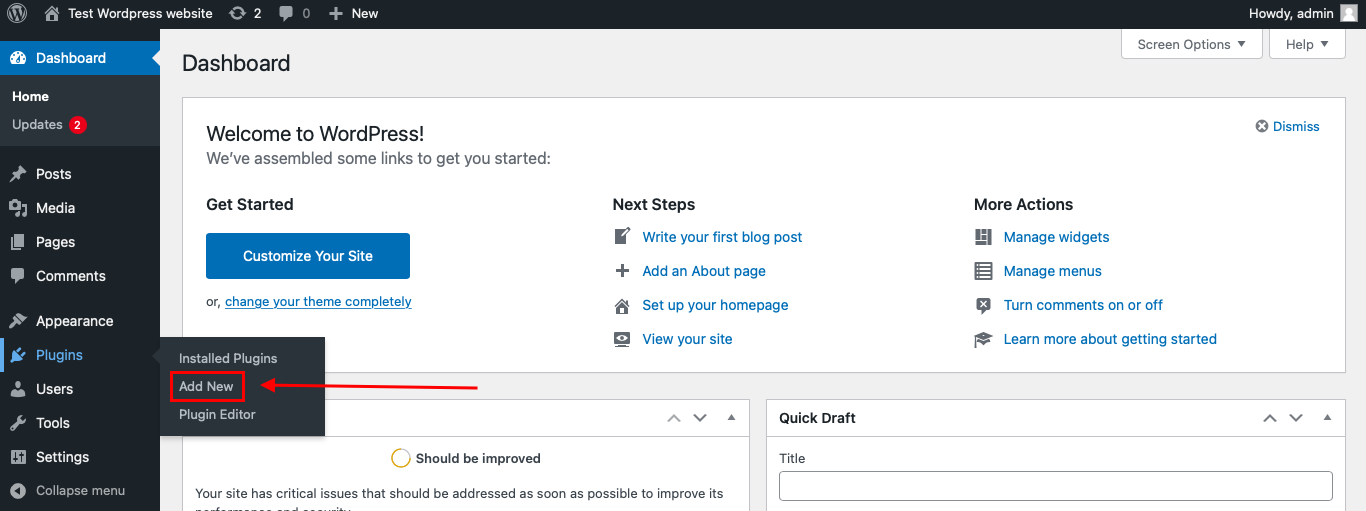
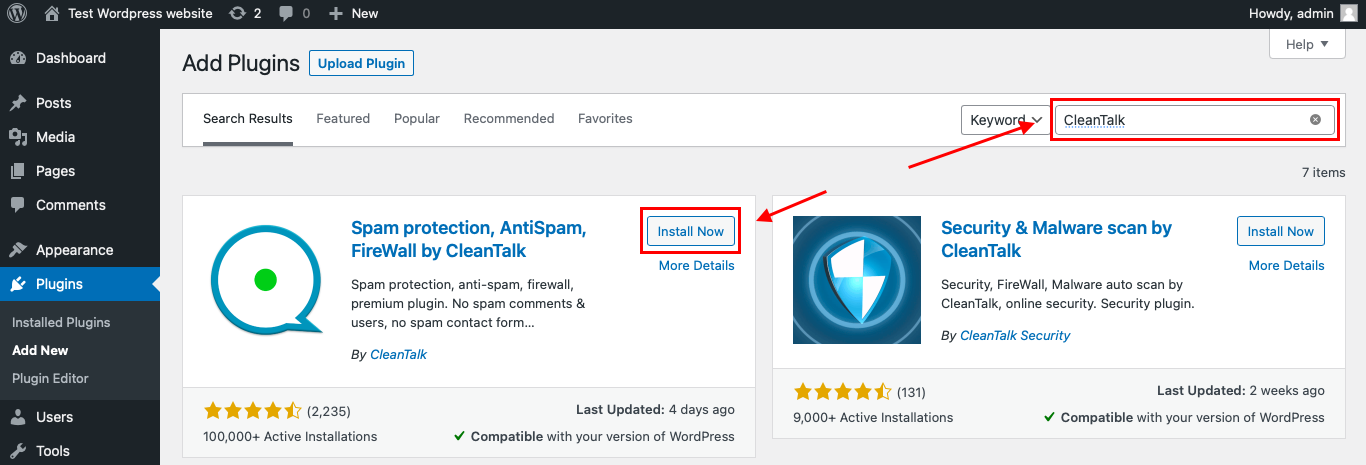
Then enter «СleanTalk» in the search box and click the Install button for «Spam protection, Anti-Spam, FireWall by CleanTalk».
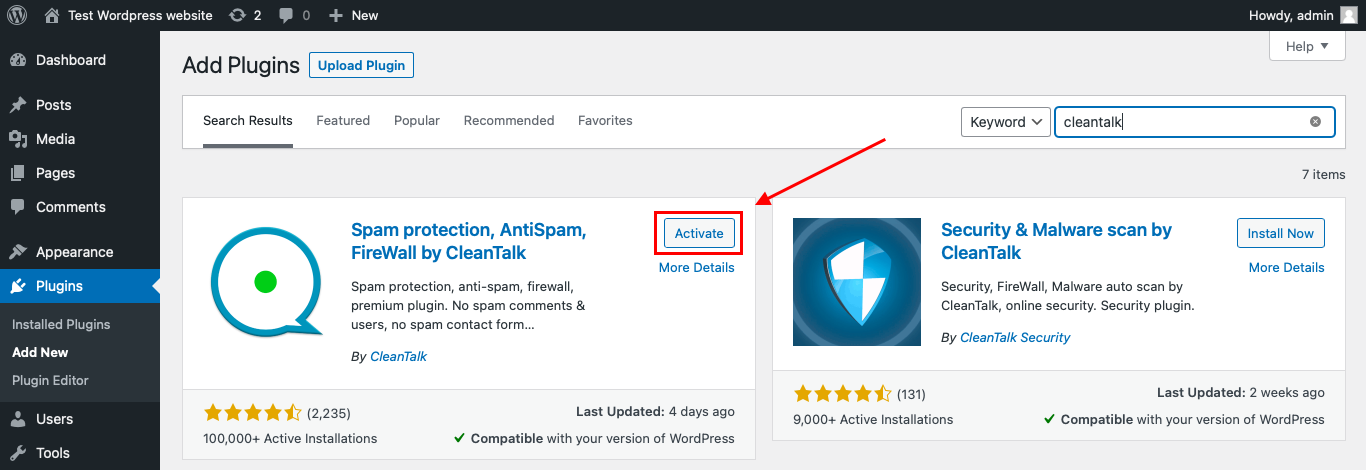
After installing the plugin, click the «Activate» button.
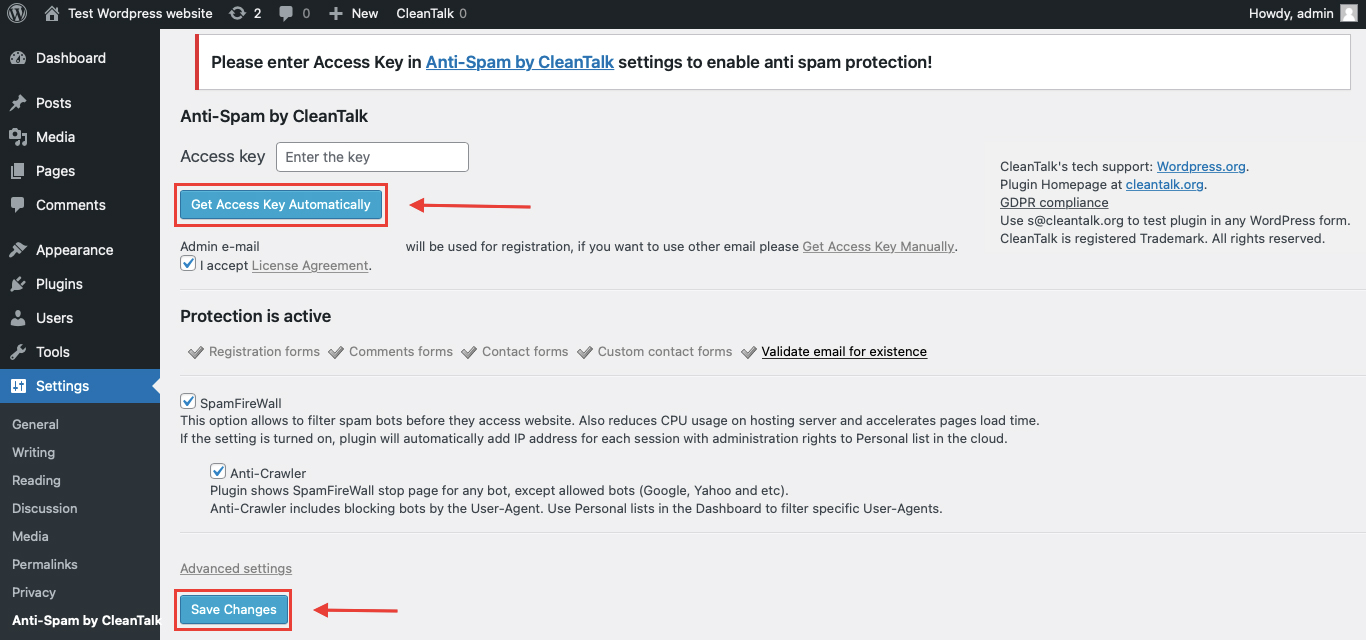
After it is done go to the plugin settings and click the «Get Access Key Automatically» button. Then just click the «Save Settings» button.
That’s it! From now you know how to completely protect your Forminator Forms from spam.
That’s it! From now you know how to completely protect your Newsletter subscription forms from spam. Nothing changes in your form code or shortcodes – CleanTalk filters signups in the background.
Check if spam protection works with The Newsletter Plugin
The best way to test the spam protection is by using a test email,
stop_email@example.com
- Open a page with your [newsletter_form] in an Incognito / private browser tab.
- Fill out the form using stop_email@example.com as the subscriber’s email.
- Send the form.
- You should see the Anti-Spam plugin’s spam-protection page with the reason for the block, and then be returned to the form.
*** Forbidden. Sender blacklisted. Anti-Spam by CleanTalk. ***
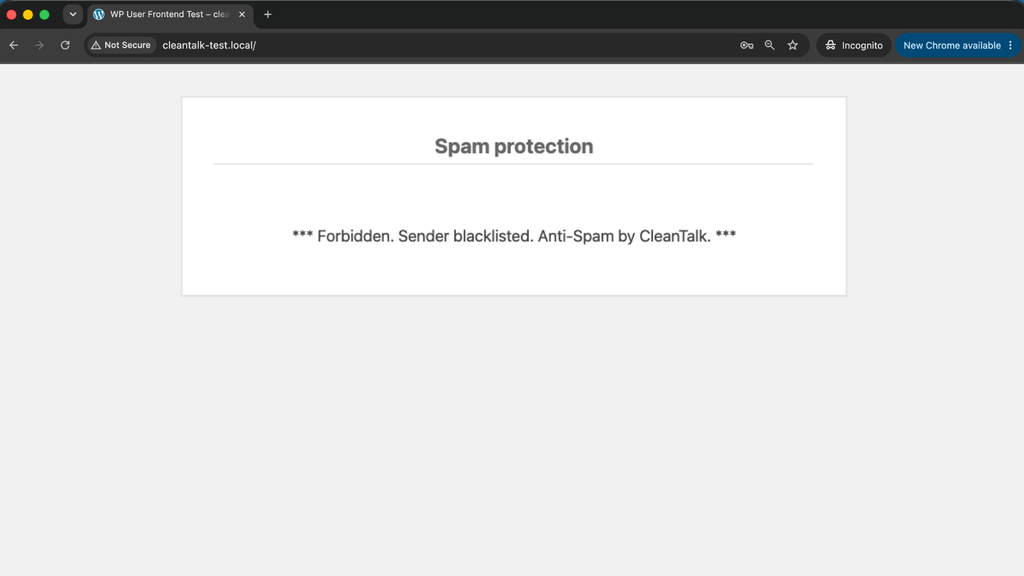
Then open *WordPress admin -> Newsletter -> Subscribers*: the blocked address is not there, and no confirmation email was sent.
If you see this message, it means CleanTalk successfully protects your Newsletter subscription forms from spam.
Cloud Dashboard
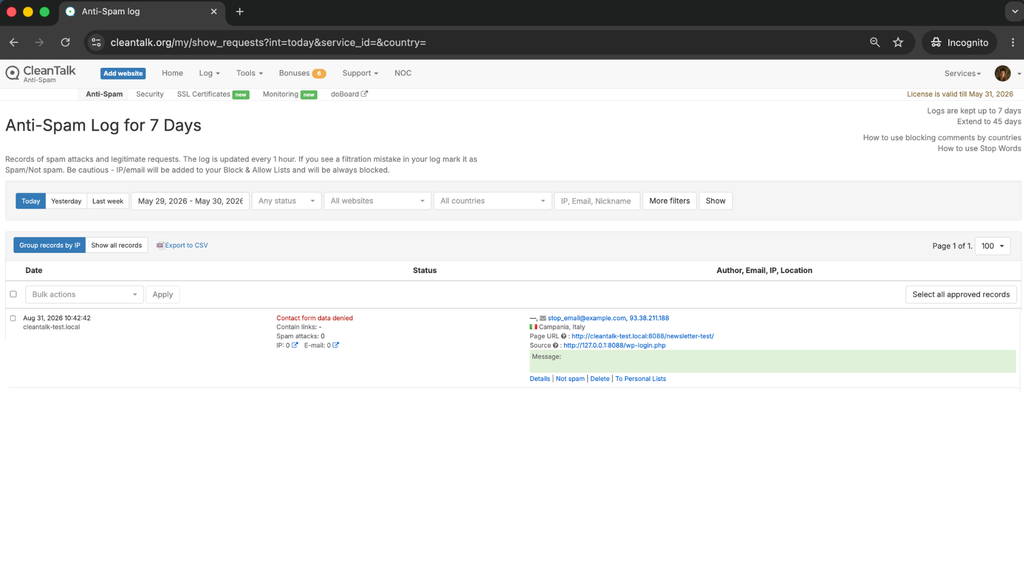
In addition, in the Cloud Dashboard you can find extra details regarding all submissions processed by CleanTalk, including Newsletter subscription forms:
- IP and email of the sender, as well as the sender’s activity history across other websites connected to the CleanTalk cloud.
- Geolocation of the sender.
- Date and time of the submission.
- Page (URL) where the form was submitted.
- Cloud decision – Approved or Denied.
- Cloud explanation for the decision (e.g. blacklisted email, bad IP reputation, spam text, etc.).
- Tools to move the sender to Block or Allow lists so you can fine-tune your signup protection.
FAQ
Should I turn off the plugin’s antiflood and blacklist?
No – keep them. They are cheap, and they handle the crude repeat attempts. CleanTalk covers the part they cannot see: who the sender is.
Do I still need double opt-in?
Yes – and check that it is actually enabled. It protects you legally and keeps unconfirmed addresses out of your list. It just should not be the only filter.
Will blocked signups appear in Subscribers?
No. They are filtered before the row is written, so the list and your subscriber count stay accurate.
Does it work with popup and widget signup forms?
Yes. The AJAX subscribe actions the plugin uses are covered too.
What about the profile and preferences page?
The subscription actions handled by the plugin are checked; the visitor sees no extra step.
What if a real subscriber gets blocked?
Open the Cloud Dashboard, find the request with its reason, and move the address to the Allow list.
Does it slow the form down?
No puzzle is rendered and no extra script is required for the check itself.
Final recommendation
A newsletter list is only worth what its deliverability is worth, and fake addresses eat that quietly. Switch on antiflood and keep double opt-in, but do not expect them to identify a spammer – they only measure timing. A server-side filter that knows the reputation of the address keeps the list clean and the form down to one field and one click.
For broader website protection, CleanTalk also provides anti-spam protection for websites, helping block spam in forms, comments, registrations, and orders without CAPTCHA.
Keep your subscriber list clean
Create your CleanTalk account and protect your Newsletter signup forms from bot and human spam with server-side filtering. Keep subscribing easy for real visitors while extending protection across comments, registrations, and other WordPress forms. API | Plugins
*No credit card required – Setup takes less than a minute – Your temporary password will be sent by email.*

Leave a Reply