
Category: CleanTalk

  • How Agencies Use CleanTalk to Secure High-Risk WordPress Environments

    How Agencies Use CleanTalk to Secure High-Risk WordPress Environments

    WordPress powers business websites of every size and is one of the most commonly used tools in website development due to its massive developer ecosystem. However, in fast-growing and higher-risk digital environments, WordPress also has a long history of vulnerabilities, often exploited because of its large and open plugin ecosystem.

    At CleanTalk, we regularly work with professional WordPress agencies managing business-critical websites across healthcare, infrastructure, and enterprise sectors. In these contexts, security solutions must be reliable, lightweight, and proven over time.

    One such example comes from Myanmar, where a regional web development agency, Bold Label, manages multiple high-traffic and high-visibility WordPress sites for enterprise clients.

    CleanTalk as a Long-Term Security Standard

    Rather than relying on multiple overlapping plugins or reactive fixes, Bold Label made an early decision to standardize on CleanTalk as its primary WordPress security layer across client projects. CleanTalk became the default security foundation for all Bold Label–managed WordPress installations.

    This approach reduced plugin bloat, simplified maintenance, and made security behavior predictable across different sites and industries.

    Securing Medical Platforms at Scale

    Healthcare websites are among the most sensitive WordPress environments. They handle patient inquiries, appointment requests, and critical informational content that must remain accessible and trustworthy.

    One of the largest diagnostic centers in Myanmar operates its main website on WordPress, with ongoing management by Bold Label. CleanTalk has been actively protecting this site by blocking automated attacks, filtering spam submissions, and preventing malicious access attempts.

    The result has been stable operations, clean form data, and minimal administrative overhead through an easy-to-manage dashboard. Security remains effective without interfering with legitimate patients or medical staff.
    See website.

    Protecting Industrial and Corporate Websites

    CleanTalk is equally effective for corporate and infrastructure-focused websites that face different threat profiles.

    A leading powerline and electrical construction company in Myanmar relies on CleanTalk for malware protection and abuse prevention on its corporate WordPress site. Managed by Bold Label, the site serves as a key business touchpoint for partners and institutional stakeholders.
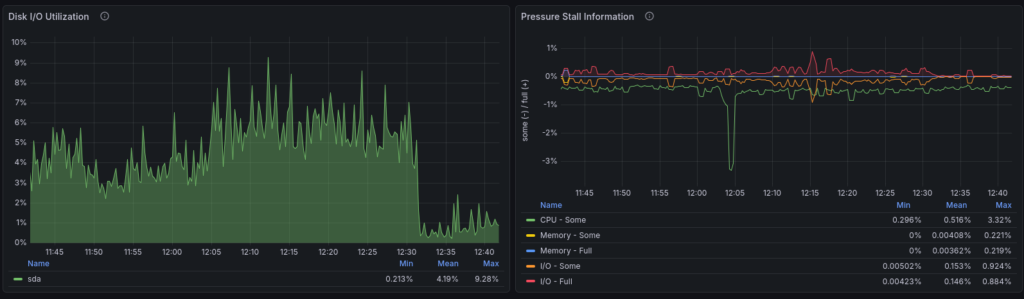
    CleanTalk keeps the site clean, fast, and uncompromised, even under constant background scanning and automated threats.
    See website.

    Why Agencies Standardize on CleanTalk

    For agencies like Bold Label, WordPress security is not an upsell feature. It is part of delivery responsibility.

    By standardizing on CleanTalk, agencies reduce maintenance complexity, shorten incident response time, and avoid reactive security workflows. This allows development teams to focus on performance, UX, and scalability rather than ongoing cleanup and monitoring.

    Practical Security in Real Deployments

    These deployments show how CleanTalk operates in real production environments, not just controlled test cases.

    Across healthcare and industrial websites, CleanTalk delivers consistent protection with minimal configuration and low ongoing overhead. While these examples come from specific sectors, the same approach applies to any WordPress site that requires stable, long-term security.

    CleanTalk can be deployed across a wide range of use cases, from corporate and service websites to high-traffic platforms. Details on available plans and pricing are available on the CleanTalk website.

  • ot*****@*************od.com — Detection and Blocking

    What Is This Bot?

    The email address belongs to a set of randomized domains generated for automated use. As a result, it does not correspond to a legitimate mailbox and is therefore used for automated form submissions. In practice, log data shows repeated, high-frequency submission attempts, which are typically associated with domains lacking valid MX records. In this context, the observed activity involves machine-generated input that targets website forms and underlying application logic.

    Recent Attacks Detected

    Across websites protected by CleanTalk Anti-Spam, this bot consistently demonstrates aggressive behavior. On December 2, 2025, it initiated a rapid sequence of contact-form submissions at machine speed, and attempted multiple user registrations. The following day, the system recorded a pattern of IP rotation that is characteristic of botnet behavior. On December 4, the bot was again identified scanning form endpoints, but the attempt was stopped before reaching the application layer thanks to SpamFireWall filtering.

    These events closely align with bot behaviors described by Imperva, where malicious automation imitates real users, rotates identities, and continuously probes for vulnerabilities.

    How This Spam Bot Operates

    Instead of behaving like a normal visitor, this bot submits forms far faster than a human ever could, changes its user agent headers to appear legitimate, and introduces artificial timing delays to bypass simple JavaScript filters. It fabricates random names, email addresses and message subjects, while trying to discover weak validation rules or unprotected endpoints such as custom APIs.
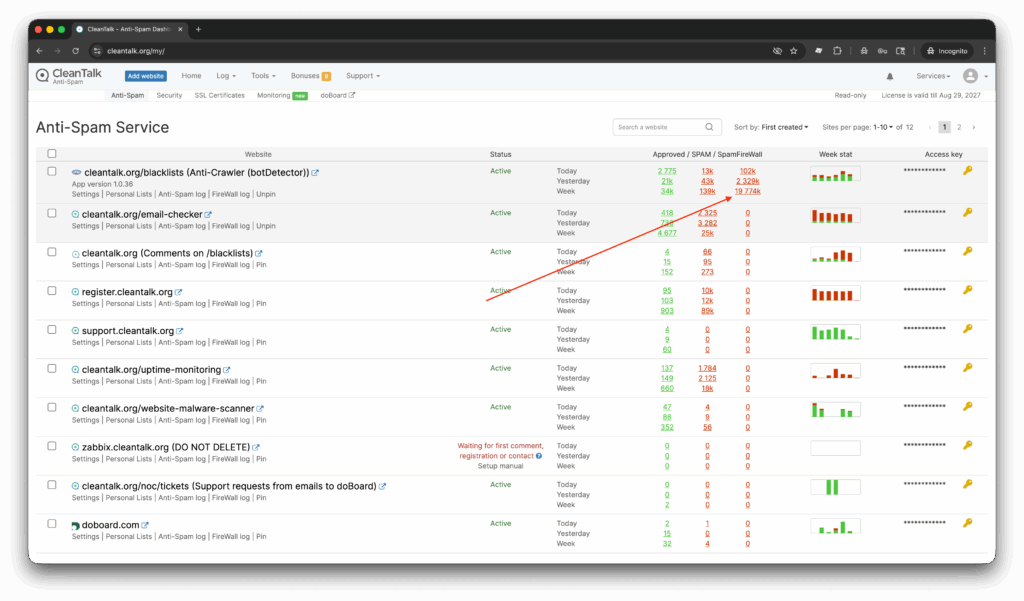
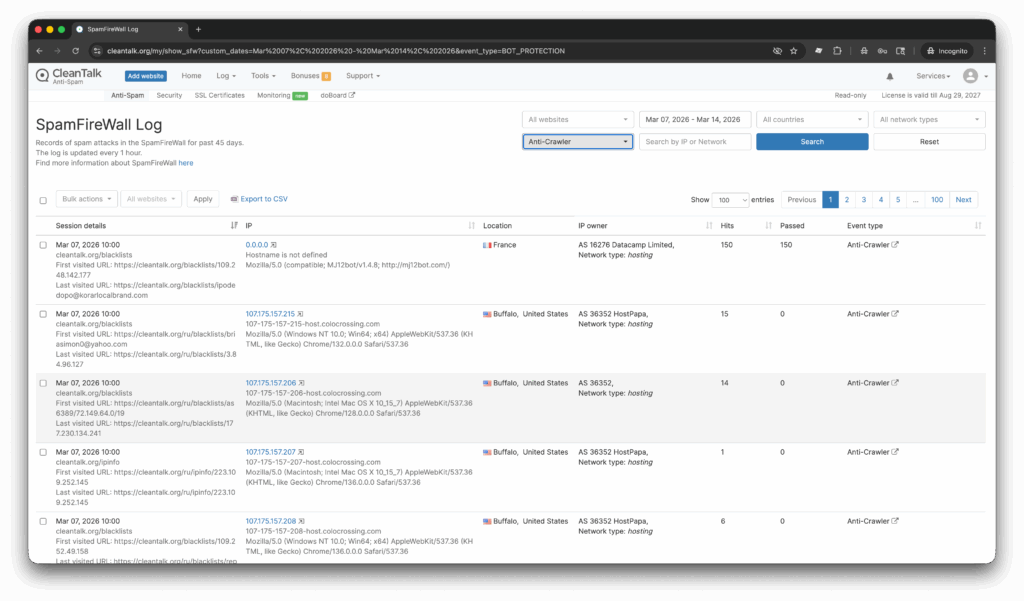
    Beyond this, its activity distorts website analytics by generating fake conversions, sign-ups and form submissions. As confirmed in OOPSpam’s 2024 report, synthetic and disposable emails — exactly like those from the mailcorplrtgood domain cluster — represent the fastest-growing pattern of automated abuse.

    Why This Bot Is Dangerous

    Bots of this type cause multiple layers of damage. They inflate registration and form-submission counts, undermining accurate analytics. Their constant POST requests increase server load, sometimes raising CPU usage by as much as 15–25%, as highlighted by ClickCease’s research.
    In addition, because they repeatedly scan your site structure, they can reveal vulnerable entry points or expose weak validation. Since modern bots easily bypass common CAPTCHA implementations, their activity often precedes more serious intrusions such as credential stuffing or brute-force attempts.

    How to Check This Email

    The easiest way to validate whether an email is legitimate is to use the CleanTalk Email Checker: https://cleantalk.org/email-checker

    In addition to the Email Checker, you can also verify this address in the *****@*************od.com“>CleanTalk Public Blocklist.
    This database records spam activity, failed form submissions, and bot-generated behavior for domains and email accounts.
    You can view the real-time status of this address here:

    The checker evaluates email existence, spam history, MX configuration and signs of bot activity. For ot*****@*************od.com, the system typically reports that the address does not exist, is associated with spam activity, and belongs to a low-reputation synthetic domain — all indicators of a high-risk automated bot.

    stop spam bot attacks

    How to Protect Your Website

    The most reliable method of stopping this bot is to activate CleanTalk Anti-Spam, which filters automated submissions before they reach your backend. Combined with SpamFireWall for IP-level blocking and Anti-Crawler technology for detecting scanning patterns, the system prevents bots from overloading forms or probing endpoints.

    Recommended setup:

    ✔ CleanTalk Anti-Spam Plugin
    ✔ SpamFireWall
    ✔ Anti-Crawler
    ✔ Form & Registration Protection

    Install Anti-Spam:
    https://cleantalk.org/help

    Conclusion

    The address ot*****@*************od.com is part of a known botnet that uses machine-generated domains to carry out high-volume automated attacks. With malicious bot traffic representing nearly a third of the modern internet, proactive and cloud-based anti-spam protection is essential.

    CleanTalk Anti-Spam blocks bots before they interact with your website, preserving performance, security and analytics integrity.

  • Spam Bot di**************@***il.com — How to Block It and Stop Website Attacks

    Spam Bot di**************@***il.com — How to Block It and Stop Website Attacks

    The email address **************@***il.com” target=”_blank” rel=”noreferrer noopener”>di**************@***il.com has been reported for sending spam and launching automated malicious requests on thousands of websites.

    According to CleanTalk BlackLists, this address has:

    • Attacked over 10,002 websites
    • Generated approximately 17,304 spam requests in the last 24 hours
    • The bot uses many different IP addresses from all over the world.
    • First detected on June 19, 2025
    • Last activity recorded: Nov 21, 2025 06:28:40 GMT0.

    The bot is currently blacklisted in CleanTalk Anti-Spam databases.

    What Does This Spam Bot Do?

    This spam bot employs a multilingual approach, sending seemingly innocent pricing inquiry messages in various languages to bypass basic spam filters. The messages appear legitimate at first glance, making them particularly insidious for website owners who might mistake them for genuine customer inquiries.

    Common Spam Messages from **************@***il.com” target=”_blank” rel=”noreferrer noopener”>di**************@***il.com

    The bot sends variations of pricing inquiries in multiple languages:

    • Danish: “Hej, jeg ønskede at kende din pris.”
    • Indonesian: “Hai, saya ingin tahu harga Anda.”
    • Latin: “Hi, ego volo scire vestri pretium.”
    • Albanian: “Hi, kam dashur të di çmimin tuaj”
    • English: “Hi, I wanted to know your price.”
    • Spanish: “Hola, quería saber tu precio..”
    • Zulu: “Sawubona, bengifuna ukwazi intengo yakho.”

    All these messages translate roughly to:
    “Hi, I wanted to know your price.”

    The bot repeats this pattern on contact and comments forms.

    Here is a snapshot from CleanTalk’s logs:

    “17304 requests in 24 hours detected from multiple IP addresses. All actions associated with spam form submissions and bot-like behavior.”

    dinanikolskaya99@gmail.com spam report
    dinanikolskaya99@gmail.com spam report Nov 21, 2025 06:28:40 GMT0

    How to Block Spam from ze**********@***il.com

    If you’re seeing traffic or spam submissions from this email, here’s how to stop it:

    1. Use CleanTalk Anti-Spam Plugin
    Install the CleanTalk Anti-Spam plugin for your CMS (WordPress, Joomla, Drupal, etc.). It automatically filters requests by checking emails, IPs, and behavior against the global CleanTalk Spam Database.

    This email is already blacklisted and will be blocked automatically by the plugin.

    2. Manually Block the Email (if needed)
    If you want to block it manually in addition to using CleanTalk:

    Add ze**********@***il.com to your site’s block list.

    Block common IPs that were used in attacks (CleanTalk logs show many from Russian ranges).

    Monitor your server logs for repetitive POST requests.

    **********@***il.com“>ze**********@***il.com is a known spammer attacking thousands of sites daily. By installing proper anti-spam protection like CleanTalk and staying vigilant, you can block these threats before they reach your visitors.

    If you’re already using CleanTalk, rest assured — this spammer is on the blacklist and will be filtered automatically.

    You can check any email or IP for spam activity on our BlackLists page.

    🧩 Want full protection?

    ✅ Blocks fake registrations and spam submissions
    ✅ Filters bots and fake emails in real time
    ✅ No CAPTCHAs or puzzles – clean and fast

    Stay ahead of spam – let CleanTalk handle the bots so you can focus on your content. Protect your site in under 5 minutes.
    👉 Start now

  • Critical Vulnerability in WP Reset – Plaintext License Key Exposure via Public Log File (CVE-2025-10645)

    Critical Vulnerability in WP Reset – Plaintext License Key Exposure via Public Log File (CVE-2025-10645)

    CleanTalk Research Team has identified a severe information disclosure vulnerability in the popular WordPress plugin WP Reset (400,000+ active installations). The issue allows unauthenticated attackers to obtain license keys and sensitive site metadata directly from a publicly accessible log file created by the plugin.

    This vulnerability has been assigned CVE-2025-10645 and independently confirmed by Wordfence.

    Potential Consequences


    1. License Abuse

    • License Theft: Using stolen keys on other websites
    • Resale: Illegally selling valid license keys
    • Financial Losses: Losses to plugin developers from illegal use

    2. Targeted Attacks

    • Infrastructure Reconnaissance: Collecting software version information to find other vulnerabilities
    • Phishing: Using website information for targeted phishing attacks
    • Social Engineering: Using data for convincing attacks

    3. Privacy Breach

    • Corporate Data Leak: Exposing organization names and internal URLs
    • Compliance Issues: Violation of GDPR/CCPA when personal data is leaked
    • Reputational Risks: Damage to reputation when a leak is discovered

    4. Attack Escalation

    • Exploit Chains: Using nonces and metadata for other attacks
    • Credential Stuffing: Using obtained information to attack other services
    • RCE Chains: Combining with other vulnerabilities for remote execution Code

    Affected Versions

    Confirmed to be vulnerable: WP Reset version 2.05 and earlier
    Fixed in: version 2.06 (released September 18, 2025)

    CVE-2025-10645 poses a serious privacy threat to hundreds of thousands of WordPress sites using WP Reset. While the vulnerability does not allow direct code execution, the leak of license keys and metadata creates significant security risks and can lead to financial losses.
    This incident highlights the critical importance of secure logging practices:

    • Never write secrets in plaintext
    • Store logs outside the web root
    • Disable verbose logging in production
    • Audit and purge logs regularly

    Developers should treat logging with the same seriousness as password handling—any sensitive information must be protected at all stages of the application lifecycle.

    References
    Wordfence Advisory:
    https://www.wordfence.com/threat-intel/vulnerabilities/wordpress-plugins/wp-reset-2/wp-reset-205-unauthenticated-sensitive-information-exposure-via-wf-licensinglog 

    CleanTalk Research Report:
    https://research.cleantalk.org/cve-2025-10645/ 

  • Critical Vulnerability CVE-2025-11705: Arbitrary File Reading in Anti-Malware Security and Brute-Force Firewall

    Critical Vulnerability CVE-2025-11705: Arbitrary File Reading in Anti-Malware Security and Brute-Force Firewall

    The CleanTalk research team discovered a critical vulnerability in the popular WordPress plugin “Anti-Malware Security and Brute-Force Firewall” (GOTMLS), installed on over 100,000 websites. CVE-2025-11705 allows attackers with minimal privileges (Subscriber level) to read arbitrary files on the server, including the critical wp-config.php file, which contains database credentials and secret keys.

    This issue was independently confirmed by multiple parties, including Wordfence, and assigned CVE-2025-11705.

    Problem Description
    The vulnerability is a classic authorization breach chain involving token leakage and cross-context reuse. The main issue is that the GOTMLS_View_Quarantine AJAX endpoint displays the quarantine list to any authorized user without checking access rights or validating nonce tokens.

    Summary of the Vulnerability

    The plugin exposes an internal AJAX endpoint, GOTMLS_View_Quarantine, to any authenticated user, without performing any capability checks or verifying a security nonce.

    When this endpoint renders the quarantine interface, it embeds a valid GOTMLS_mt token into HTML links.

    Because other privileged AJAX handlers — such as:

    • GOTMLS_scan
    • GOTMLS_empty_trash

    — rely only on the leaked token and do not enforce current_user_can(…), a low-privileged user (e.g., Subscriber) can:

    ✔ Reuse the leaked token
    ✔ Trigger GOTMLS_scan
    ✔ Supply an arbitrary file path
    ✔ Receive the contents of that file

    This includes highly sensitive files like:

    • wp-config.php
    • credential-containing logs
    • backup files
    • environment configuration

    Additionally, the same token works with GOTMLS_empty_trash, allowing the attacker to delete quarantine records, effectively tampering with detection artifacts.

    Affected versions
    The vulnerability has been confirmed in version 4.23.81 and earlier of the Anti-Malware Security and Brute-Force Firewall plugin.

    The developers have already released a plugin update that addresses this issue. Users should update to the latest version.

    Wordfence Advisory:
    https://www.wordfence.com/threat-intel/vulnerabilities/wordpress-plugins/gotmls/anti-malware-security-and-brute-force-firewall-42381-missing-authorization-to-authenticated-subscriber-arbitrary-file-read 

    CleanTalk Research Report:
    https://research.cleantalk.org/cve-2025-11705/ 

  • Client Review: Maker Of Jacket

    Client Review: Maker Of Jacket

    We’re happy to share another story from one of our valued clients — Maker Of Jacket.

    At CleanTalk, we always appreciate hearing how our service helps real businesses operate more smoothly. Feedback like this motivates our team to continue improving our anti-spam technologies and deliver reliable, invisible protection for websites of all sizes.

    Today’s highlight comes from Maker Of Jacket.

    About Maker Of Jacket:
    Since 2017, Maker Of Jacket has specialized in handcrafted, customizable, high-quality jackets and leather apparel. From biker to varsity styles, every piece is crafted with premium materials and trusted by over 6,000 happy customers worldwide. Our products are made-to-order, and we serve customers globally, ensuring a smooth and secure shopping experience.


    “How we use CleanTalk:

    We use CleanTalk Anti-Spam to protect our website forms, including customer inquiries, order forms, and reviews, from spam bots. Since implementing CleanTalk, we’ve experienced a significant reduction in spam submissions, allowing our team to focus on genuine customer interactions and maintain a safe, efficient online environment.

    We’d like to thank Maker Of Jacket for trusting CleanTalk to protect their website and for sharing their experience with our community.”

    Best Custom Jackets Handcrafted Unique Stylish Designs Maker of Jacket
    Best Custom Jackets Handcrafted Unique Stylish Designs Maker of Jacket
  • reCAPTCHA, hCaptcha, and CleanTalk: A Comparison for WordPress Spam Protection

    reCAPTCHA, hCaptcha, and CleanTalk: A Comparison for WordPress Spam Protection

    Spam on WordPress isn’t just annoying — it’s relentless, especially for those searching for reCAPTCHA alternatives WordPress. You can read our full guide on how to stop WordPress spam without CAPTCHA — including real examples from site owners.

    reCAPTCHA alternatives WordPress

    Fake signups, bot comments, and form spam eat up time, clog your inbox, and scare off real users who just wanted to contact you.

    You think you’ve fixed it — you install CAPTCHA.
    But now your customers are stuck “clicking all the traffic lights” while your conversion rate quietly falls off a cliff.

    If that sounds familiar, you’re not alone.

    Let’s unpack what’s really happening — and why switching to a cloud-based CAPTCHA alternative like CleanTalk finally ends the cycle.

    reCAPTCHA — Familiar, but Frictional Compared to reCAPTCHA Alternatives WordPress

    For years, reCAPTCHA by Google has been the default choice for WordPress site owners. It’s everywhere — free, familiar, and simple to enable.

    But familiar doesn’t mean friendly.

    Your visitors shouldn’t have to prove they’re human. Yet that’s what reCAPTCHA does every single time.
    If they fail the invisible scoring system, their message never gets through — even if it’s from a paying customer.

    And those “invisible” versions? Not really invisible.
    They track mouse movements, time on page, and behavioral data to judge your “trust score.”
    That data goes to Google’s servers — not yours.

    Pros:

    • Free and widely supported across WordPress plugins
    • Integrates easily with forms and comments
    • Offers invisible mode (v3)

    Cons:

    • Behavioral tracking raises privacy flags
    • Real users can be blocked by mistake
    • Conversion rates quietly drop over time

    Every one-second delay in form submission kills roughly 7% of conversions. Add a CAPTCHA puzzle, and you’ve just lost another potential lead.

    reCAPTCHA might stop bots — but it’s not protecting your users.

    hCaptcha — A Privacy-Focused reCAPTCHA Alternative WordPress Users Still Find Frustrating

    When hCaptcha arrived, it felt like hope.
    Finally, a CAPTCHA that respected privacy. No data sharing, GDPR-friendly, and a free option for small sites.

    But the honeymoon ended fast.

    Because privacy alone doesn’t fix bad UX.
    hCaptcha still interrupts users with grids of blurry photos and impossible “find all the bridges” puzzles.

    And if your visitor is on mobile — good luck. Those images are microscopic.

    Pros:

    • Strong privacy focus and GDPR compliance
    • Compatible with major WordPress form plugins
    • Offers monetization options for website owners

    Cons:

    • Still requires solving visual puzzles
    • Terrible on mobile devices
    • Causes checkout drop-offs and user frustration

    One site owner summed it up perfectly:

    “Our spam stopped — but so did our customers.”

    Privacy shouldn’t come at the cost of usability.

    CleanTalk — The Cloud-Based reCAPTCHA Alternative WordPress Doesn’t Punish Users For

    Now, imagine stopping spam without punishing real people — that’s the promise behind the best reCAPTCHA alternatives WordPress.

    That’s the idea behind CleanTalk — a cloud-based anti-spam solution that filters bots before they reach your site, with no CAPTCHA, no tests, and no user interaction at all.

    If you want to see exactly how it works, check out our CleanTalk Anti-Spam Plugin for WordPress — it explains the technology behind real-time spam filtering and cloud validation.

    Instead of forcing users to prove they’re human, CleanTalk quietly analyzes form submissions in real time:

    • IP reputation and spam database checks
    • Submission behavior and timing patterns
    • Known spam signatures and disposable email filters

    It’s precision without pressure — protection your users never even notice.

    👉Try CleanTalk for free → cleantalk.org/register
    See how clean a form can be when you remove friction entirely.

    What Happens When You Replace CAPTCHA with a Real Alternative

    To see the real impact, a WordPress eCommerce agency decided to test one of the leading reCAPTCHA alternatives WordPress — CleanTalk. After that, they replaced hCaptcha with CleanTalk on their product inquiry and contact forms.

    reCAPTCHA alternatives WordPress

    Two weeks later, the numbers spoke for themselves:

    • +32% increase in successful form submissions
    • 99.8% drop in spam entries
    • 0 customer complaints about blocked forms

    There were no more “click the crosswalk” nightmares.
    Instead, users stopped refreshing pages in frustration.
    As a result, only real people got through — while bots were quietly filtered out in the background.

    Ultimately, that’s the difference between a CAPTCHA challenge and a true CAPTCHA alternative.

    Comparison at a Glance: reCAPTCHA Alternatives WordPress

    FeaturereCAPTCHAhCaptchaCleanTalk
    TypeBehavior-based CAPTCHAPrivacy-focused CAPTCHACloud-based spam filter
    User InteractionYesYesNo
    Privacy
    Tracks behavior
    Minimal trackingFully GDPR-compliant
    Ease of UseModerateModerateEasy
    UX Friction
    High
    MediumNone
    Integration
    Wide

    Wide

    Wide
    PricingFreeFreeFree trial, low-cost plan

    CleanTalk isn’t just another plugin.
    It’s a rethinking of how spam should be handled — server-side, silent, and smart.

    6. Join the Sites That Already Switched

    Over 200,000 WordPress sites have already chosen CleanTalk to replace CAPTCHA.
    From blogs to online stores, teams report higher conversions, fewer complaints, and faster page performance.

    “We didn’t just stop spam — we stopped losing users.”
    — Web agency, Berlin

    Ready to upgrade your spam protection?
    Join 200,000+ WordPress sites using CleanTalk Anti-Spam today — protect your site in 2 minutes.

    Why Cloud Filtering Wins Every Time

    Traditional CAPTCHA works one-on-one — your site vs. a bot.
    CleanTalk works as a network — one system protecting thousands of sites simultaneously.

    When a spammer is caught on any CleanTalk-protected website, that data updates instantly across the network.
    So by the time that bot reaches you, it’s already blacklisted.

    It’s proactive, not reactive.
    No waiting for form submissions, no guessing games — just protection that gets smarter with every request.

    The Bottom Line

    reCAPTCHA still wins on familiarity — it’s everywhere, but it watches, tests, and sometimes blocks real users.
    hCaptcha improves privacy, yet still frustrates the very people it tries to protect.
    CleanTalk combines all three — security, privacy, and conversions — without the trade-offs.

    Because real protection shouldn’t look like an obstacle course.

    • Stops spam in comments, signups, and WooCommerce checkouts
    • Works invisibly, without pop-ups or puzzles
    • Saves time, bandwidth, and lost leads

    Start your free trial now → CleanTalk Anti-Spam Plugin
    Protect your WordPress site with the cloud-based CAPTCHA alternative that users actually love.

    Looking for more ways to protect your WordPress site from spam and bots?
    Here are a few helpful guides from our team:

    Disclaimer:

    reCAPTCHA™ and hCaptcha™ are trademarks of their respective owners (Google LLC and Intuition Machines, Inc.).
    This article is for informational and comparative purposes only and is not affiliated with or endorsed by those companies.

  • Why CAPTCHA Falls Short and How CleanTalk Helps

    Why CAPTCHA Falls Short and How CleanTalk Helps

    Why CAPTCHA Falls Short and How CleanTalk Helps

    CAPTCHA used to feel clever — until it started blocking real users.
    If you’re looking for a CAPTCHA alternative that protects your WordPress site without frustrating visitors, this article explains how CleanTalk does it differently.

    According to Baymard Institute, traditional CAPTCHA can reduce form completion rates by up to 30%. Even invisible versions like reCAPTCHA or hCaptcha still cause friction and delay — which means fewer conversions and more frustrated visitors.

    CleanTalk offers a modern anti-spam solution that keeps bots away without testing your users’ patience.

    The Problem with Old-School CAPTCHA (and Why You Need a CAPTCHA Alternative)

    CAPTCHA doesn’t just block spam — it blocks progress. Every unnecessary click is a lost second of trust. Every failed puzzle is a potential customer who decides not to try again.

    Many WordPress site owners see a 25–30% drop in form completions when CAPTCHA is enabled. That’s not spam protection. That’s conversion destruction.

    Even “invisible” versions like Google reCAPTCHA v3 or hCaptcha still rely on behavioral tracking and hidden scoring. They may feel lighter, but they still slow users down and send data off-site.

    Security shouldn’t make visitors feel like suspects.

    Why Users Are Over It

    The internet has changed, but CAPTCHA hasn’t.
    Users expect smooth, fast, privacy-safe experiences. They want to submit, not prove.

    And when your site feels like a test, they leave.

    The sad part? Many owners think CAPTCHA is still necessary because “bots will flood us otherwise.”
    But there’s a smarter, modern CAPTCHA alternative — and it doesn’t punish your audience for being human.

    CleanTalk: The CAPTCHA Alternative That Works Quietly

    CleanTalk replaces the CAPTCHA wall with a silent filter. Instead of challenging users, it checks every submission in real time via cloud-based spam protection.

    How it works:

    1. Each form submission is analyzed using CleanTalk’s global spam database.
    2. The system checks IP reputation, submission speed, and spam patterns.
    3. Legitimate users pass instantly — no tests, no tracking, no delays.
    CAPTCHA alternative

    It’s the same level of protection without punishing your audience for being human.

    Want to see what happens when you remove CAPTCHA?
    Try CleanTalk for free — protect your WordPress site without losing users.

    What Happens When You Remove CAPTCHA and Use a CAPTCHA Alternative

    A client switched from reCAPTCHA to CleanTalk. Within two weeks, form completions increased by 28%, and spam disappeared almost entirely.

    No code changes. No pop-ups. Just results.

    That’s the key difference — you don’t lose engagement while keeping the spam out.

    Invisible Security, Visible Results

    CleanTalk supports every major WordPress plugin — comments, contact forms, WooCommerce checkouts, and membership systems.

    You install once, activate your API key, and it just works. It doesn’t track personal data or store cookies. Everything runs in the background while your users enjoy a smoother experience.

    No puzzles. No friction. No lost leads.

    If you want to learn more about configuration and setup, visit our WordPress Anti-Spam Plugin page for detailed installation steps.

    CAPTCHA alternative

    Final Thoughts

    CAPTCHA helped when the web was simpler. But in 2025, people value privacy, speed, and trust over proof.

    CleanTalk gives you both: real protection for your site and a better experience for your visitors.

    Start your free trial of CleanTalk Anti-Spam and experience invisible spam protection that works.

    Disclaimer: reCAPTCHA™ and hCaptcha™ are trademarks of their respective owners (Google LLC and Intuition Machines, Inc.). This article is for informational purposes only and not affiliated with or endorsed by those companies.

  • Top reCAPTCHA Alternatives for WordPress in 2025

    Top reCAPTCHA Alternatives for WordPress in 2025

    reCAPTCHA was a brilliant idea — for its time.
    It kept bots busy clicking bicycles and crosswalks while real visitors went about their day.

    But as automation evolved, the balance shifted.
    Bots got faster. Humans got irritated.
    And WordPress admins got a new hobby: deleting fake leads and “test messages.”

    So if you’re tired of proving you’re not a robot (to a robot), let’s look at reCAPTCHA alternatives for WordPress that actually work — without turning your site into a CAPTCHA museum.

    Why reCAPTCHA Fails (and Keeps Failing)

    reCAPTCHA still relies on users to prove they’re human.
    Meanwhile, modern bots don’t need to “see” anything — they send direct POST requests straight to your backend.

    The result?

    • Real users get blocked.
    • Bots still get through.
    • Everyone’s annoyed.

    Google tried to fix this with the score-based v3, but it often misfires — flagging genuine users as suspicious and letting obvious spam through.

    And yes, that “score 0.9” still doesn’t mean what you think it does.it does.

    CleanTalk Anti-Spam — Because Invisible Security Is the Best Kind

    Instead of asking users to solve puzzles, CleanTalk Anti-Spam for WordPress checks every submission server-side — before WordPress even processes it.
    It analyzes IPs, behavior, and content in milliseconds.

    No boxes. No pop-ups. No “spot the traffic lights.”
    It just works — quietly, effectively, and invisibly.

    Teams that switched from reCAPTCHA to CleanTalk reported dramatically fewer spam entries and smoother user flows.
    As one agency put it:

    We stopped debugging user complaints. Forms just started working again.

    That’s the kind of silence every developer dreams of.

    Cloudflare Turnstile — The Diplomatic Option

    Cloudflare Turnstile is what happens when someone at Cloudflare says:
    “Okay, but what if the CAPTCHA didn’t make people hate us?”

    It checks browser behavior in the background and lets humans through without the clicks or guessing.
    If your site already runs on Cloudflare, setup takes minutes.

    It’s privacy-focused, lightweight, and — best of all — free.
    Just note: performance is best inside the Cloudflare ecosystem.

    hCaptcha — Privacy With Homework

    hCaptcha is the privacy-friendly alternative to Google — but still makes users identify hydrants.
    It’s GDPR-compliant and a direct reCAPTCHA replacement, even offering small payouts to site owners.

    Still, it’s a CAPTCHA.
    And in 2025, asking users to do anything extra is a quick way to lose mobile conversions.

    If your top priority is compliance — hCaptcha fits.
    If it’s UX and conversions — your visitors might disagree.

    The Numbers Don’t Lie

    Across thousands of WordPress sites, one trend is clear:
    less friction equals less spam.

    CleanTalk: fully invisible, minimal spam, faster submissions.

    reCAPTCHA: higher form drop-offs, slower loads, more user frustration.

    Turnstile: smoother experience within Cloudflare.

    The Bigger Picture: UX Is Security

    Security shouldn’t feel like punishment.
    If your “anti-spam” tool slows real people down, you’re protecting an empty inbox.

    CAPTCHA asks for effort.
    CleanTalk and Turnstile ask for trust.

    That’s the real evolution of WordPress spam protection — automation that feels like nothing’s happening.

    So, Which One Should You Pick?

    • Want total automation and peace of mind? → CleanTalk
    • Already living inside Cloudflare? → Turnstile
    • Need GDPR-perfect compliance? → hCaptcha

    Pick your hero.
    The bots won’t wait — but your visitors shouldn’t either.

    Final Thought

    Spam protection should be invisible, not intrusive.
    If your users are still playing CAPTCHA bingo, maybe it’s time for an upgrade.

    Try CleanTalk Anti-Spam for WordPress
    No riddles. No lag. Just clean forms and happy humans.