Stop spam without frustrating your visitors

Create your CleanTalk account and start blocking spam — no CAPTCHA challenges and no impact on visitors.

Security Block Lists

CleanTalk Account

No credit card required • Setup takes less than a minute • Your temporary password will be sent by email.

Tag: spam protection

  • Klaviyo Web Forms Spam Protection in 2026

    Klaviyo Web Forms Spam Protection in 2026

    If you use Klaviyo web forms for email marketing, popups, or lead generation, you will eventually face spam: fake sign-ups, bot submissions, disposable emails, and low-quality leads.

    This guide explains how to set up Klaviyo web forms spam protection using CleanTalk as the core filtering layer on your website, together with additional tools like Google reCAPTCHA, hCaptcha, Cloudflare Turnstile, email validation, and double opt-in.

    This protection approach can be applied to Klaviyo popup forms, flyout forms, full page forms, embedded forms, and custom sign-up forms connected to Klaviyo. Klaviyo documents these form types in its sign-up forms help materials.

    Klaviyo Web Forms

    First, let’s take a quick look at Klaviyo itself and the types of forms it offers.

    Klaviyo is a marketing automation platform used to collect subscribers, capture leads, grow email and SMS lists, and trigger automated customer flows. Its sign-up forms can be published on a website in several formats, including popup, flyout, full page, and embedded forms, and Klaviyo also documents custom sign-up form setups for custom integrations.

    Out of the box, Klaviyo web forms help businesses collect email addresses and phone numbers, promote discounts and lead magnets, grow subscriber lists, and send contacts directly into marketing flows and segmentation.

    Because Klaviyo forms are public-facing and often tied to incentives such as discount codes, bonus offers, or newsletter rewards, they quickly become a target for spambots and abuse. That is why it is important to have a reliable Klaviyo spam protection setup from the beginning.

    As WordPress.org shows, the Klaviyo plugin is currently used on over 100,000 websites and has a rating of 2.8 out of 5 based on 24 user ratings.

    Plugin Homepage at WordPress.org | Website at Klaviyo.

    Why Klaviyo Forms Attract Spam

    Klaviyo forms are attractive to spammers for a few practical reasons.

    They are easy to find on public pages. They are often connected to high-value actions such as coupon delivery, gated content, or welcome offers. And many websites rely too heavily on frontend checks alone, which means bad submissions can still pass into Klaviyo lists if there is no stronger filtering behind the form.

    In practice, the most common problems include bot sign-ups, disposable email addresses, repeated submissions for the same incentive, and low-quality contacts that hurt campaign performance.

    Anti-Spam by CleanTalk

    The next tool we’ll look at is CleanTalk Anti-Spam.

    Here’s a short overview.

    CleanTalk is a cloud-based anti-spam service that works across website forms and blocks spam automatically without forcing real users through traditional CAPTCHA puzzles. Its WordPress plugin is positioned as protection for forms, comments, registrations, subscriptions, and fake orders, and the WordPress.org plugin listing currently shows more than 200,000 active installations.

    In practical terms, CleanTalk helps by filtering suspicious submissions before they become leads, checking sender reputation and email quality, detecting automated and repeated abuse patterns, and reducing junk contacts that would otherwise end up in Klaviyo.

    This is especially useful for Klaviyo because the real problem is not only visible spam on the page. The bigger issue is list pollution, inaccurate reporting, wasted email volume, and lower campaign efficiency.

    How CleanTalk Can Be Used with Klaviyo Forms

    Klaviyo forms are usually embedded on a website, so spam protection is typically applied at the website level or at the custom form processing layer.

    For example, if your site runs on WordPress and Klaviyo forms are embedded there, the site-wide anti-spam layer can help filter suspicious activity around those submissions.

    If you use a custom-coded form that passes data into Klaviyo, you can add backend validation and anti-spam checks before sending the contact to Klaviyo.

    If you use additional form logic, coupon delivery logic, or signup handlers, the anti-spam layer should be placed before the final subscribe action.

    That is the key principle: do not rely only on what happens visually in the popup. Filter the submission before it reaches the list.

    According to WordPress.org, Anti-Spam by CleanTalk for WordPress has over 200,000 active installations, with thousands of reviews and an average rating around 4.7 out of 5.

    Plugin Homepage at cleantalk.org | Latest release at GitHub.com

    If your Klaviyo form is embedded on WordPress, the simplest setup is to use the CleanTalk WordPress plugin.

    Install the CleanTalk Anti-Spam plugin

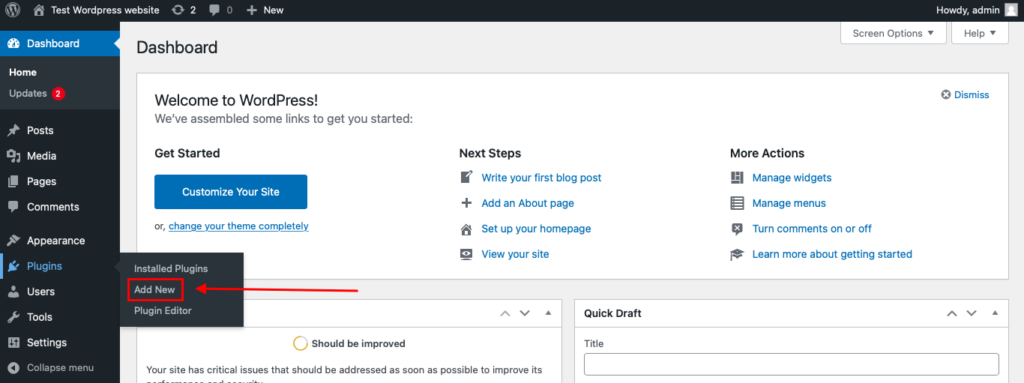
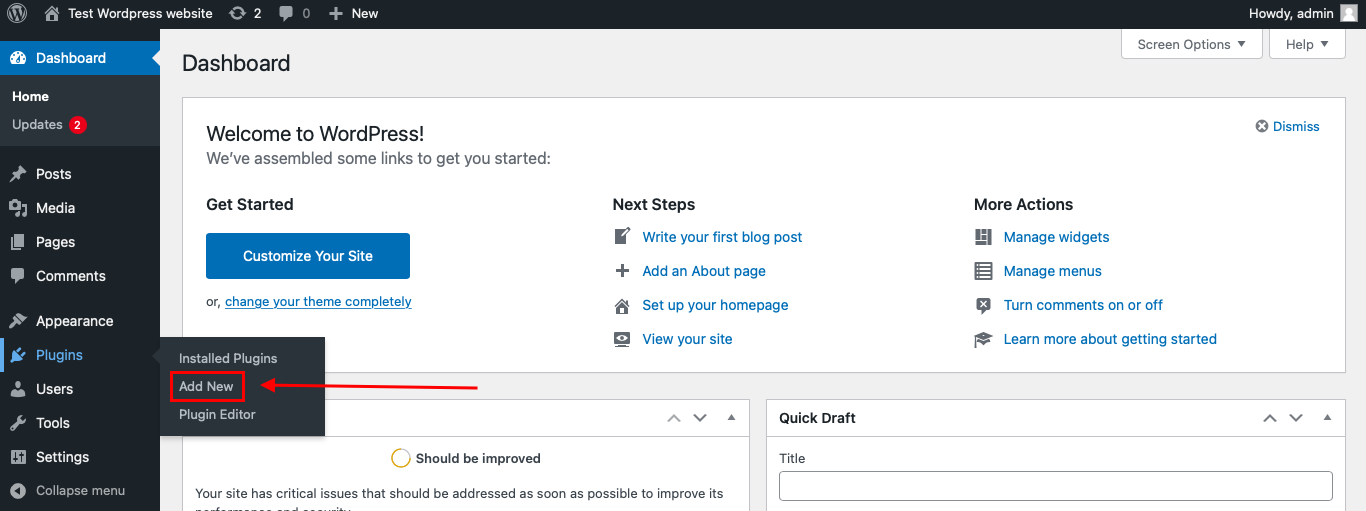
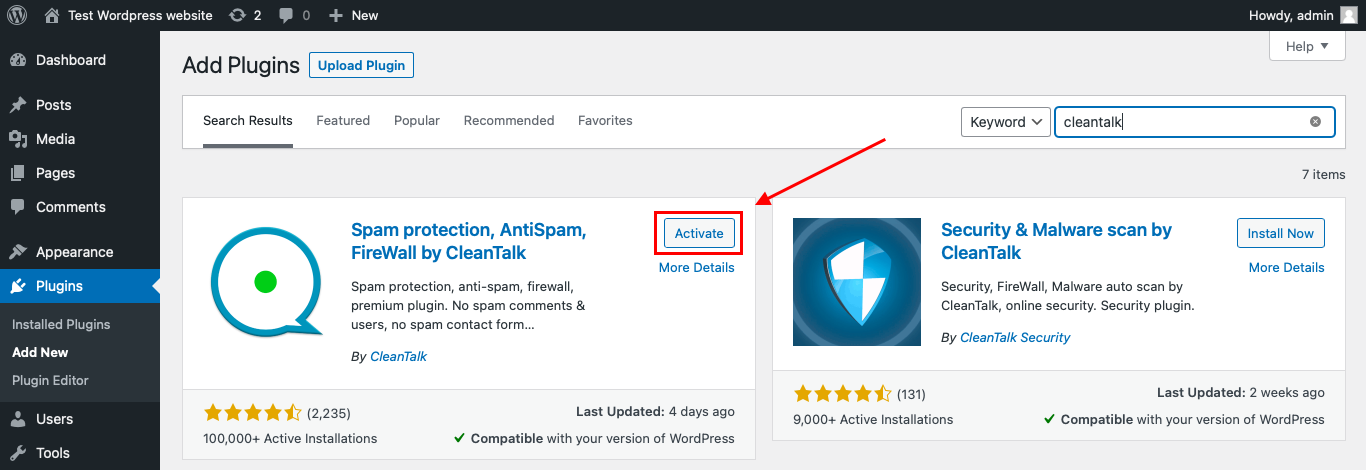
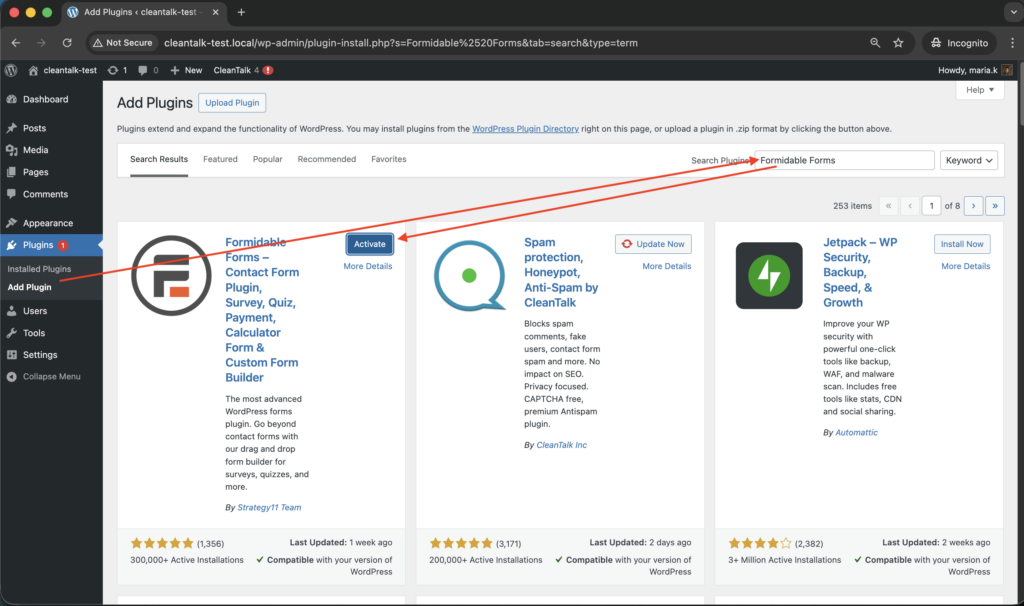
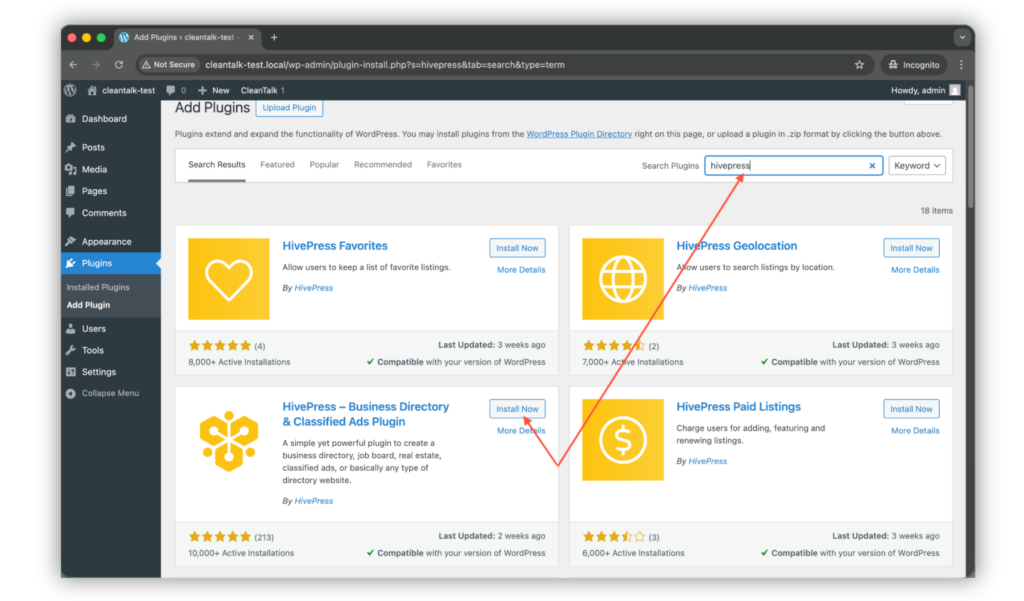
    To install the Anti-Spam plugin, go to your WordPress admin panelPluginsAdd New.

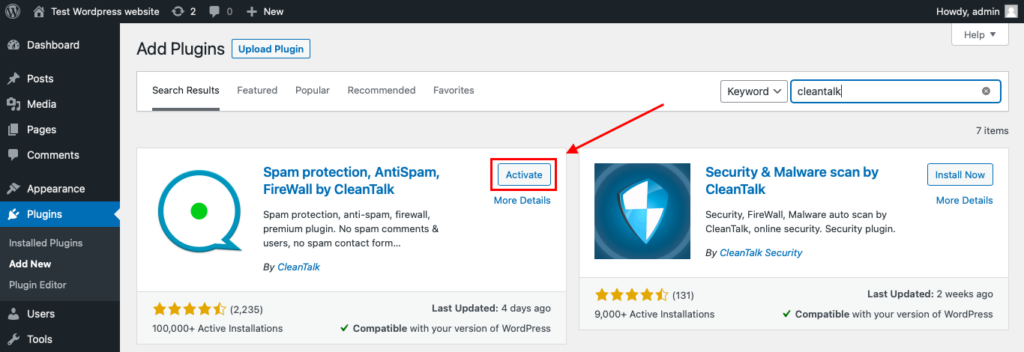
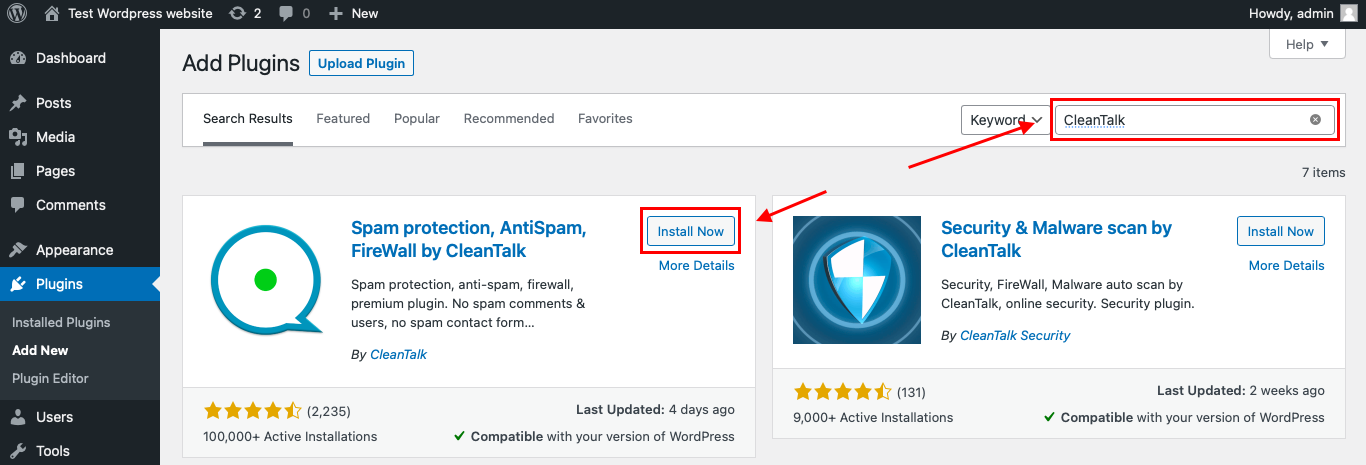
    Then enter «СleanTalk» in the search box and click the Install button for «Spam protection, Anti-Spam, FireWall by CleanTalk».
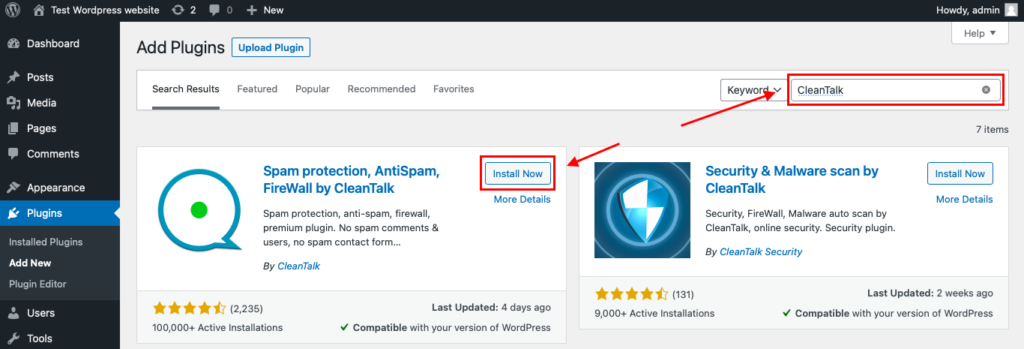
    After installing the plugin, click the «Activate»‎ button.

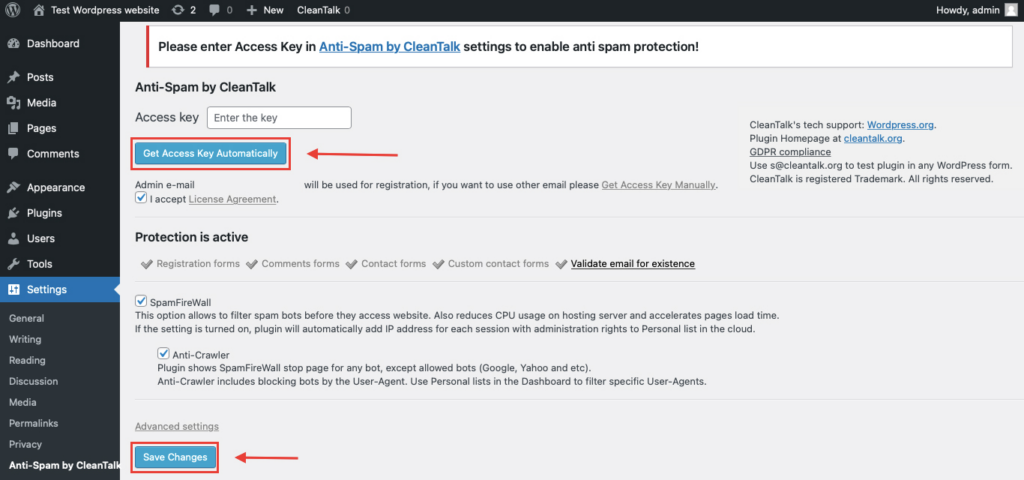
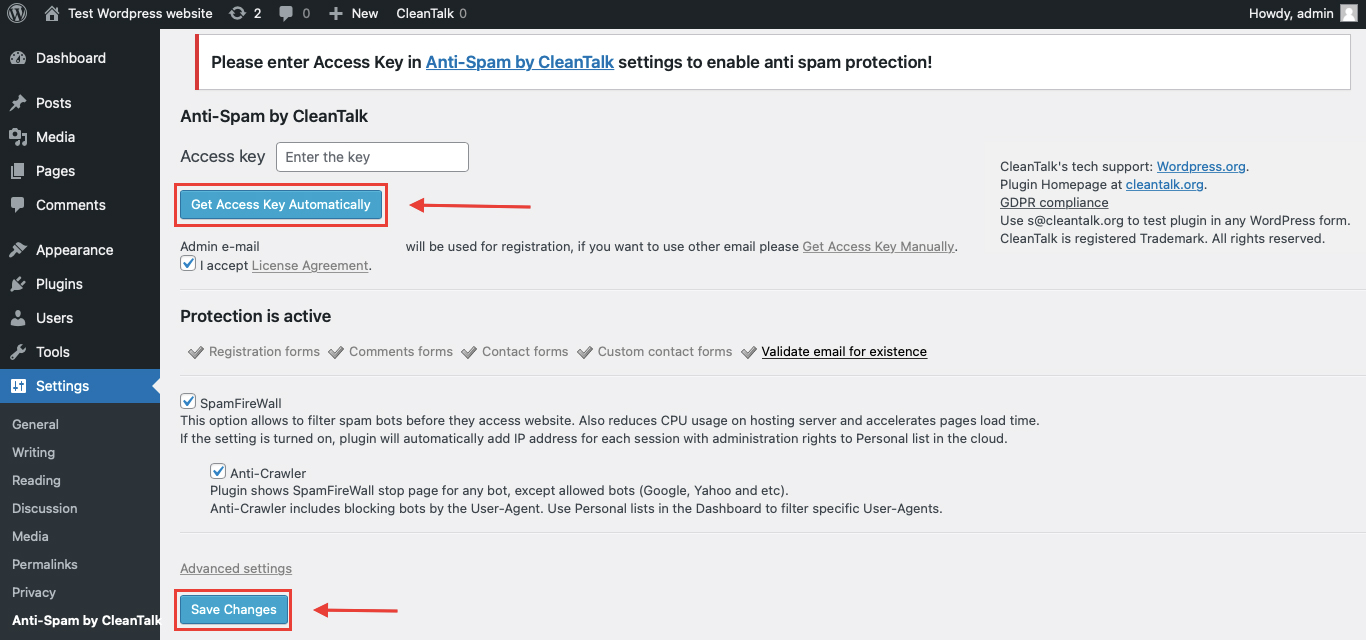
    After it is done go to the plugin settings and click the «Get Access Key Automatically» button. Then just click the «Save Settings»‎ button.

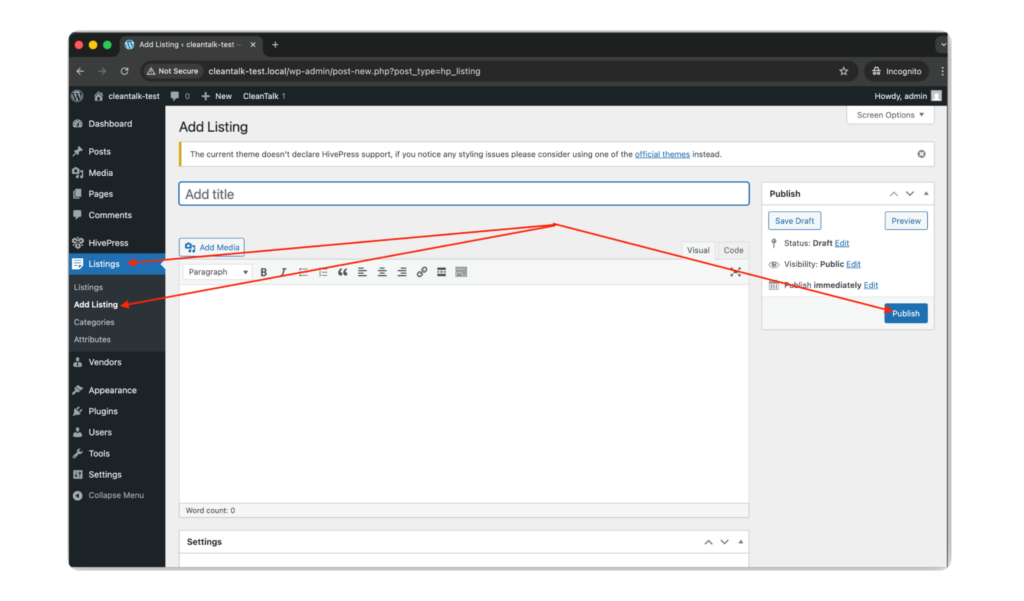
    That’s all –  Contact Form 7 are now protected From this moment,CleanTalk automatically protects the  Contact Form 7 registration form (REST route /wp-json/Contact Form 7press/v1/users/), and the Add Listing form used to submit new listings.
    You don’t need to paste any shortcodes – just use  Contact Form 7 as usual, and CleanTalk will filter spam in the background.

    Once that is done, your website has a background anti-spam layer that can help reduce suspicio

    From that point, your website will have an anti-spam layer working in the background, without adding classic CAPTCHA friction for users. The official plugin description emphasizes automatic spam blocking without visitor puzzles or extra challenges.

    Check if Spam Protection Works

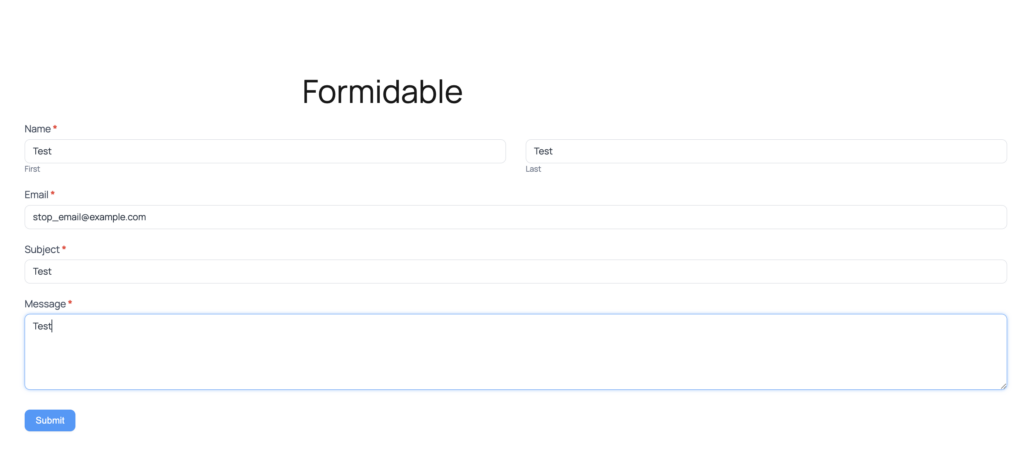
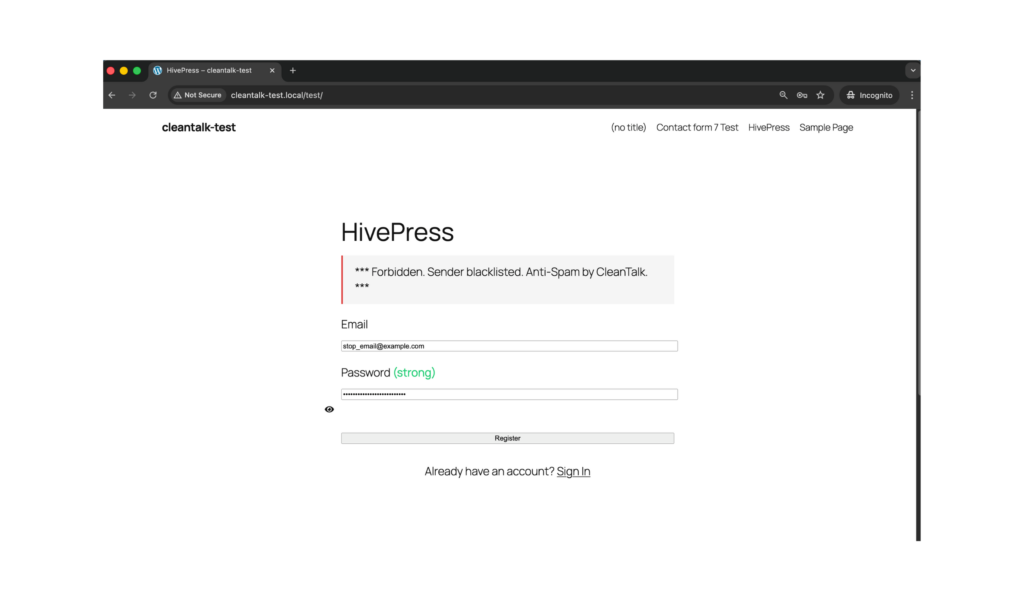
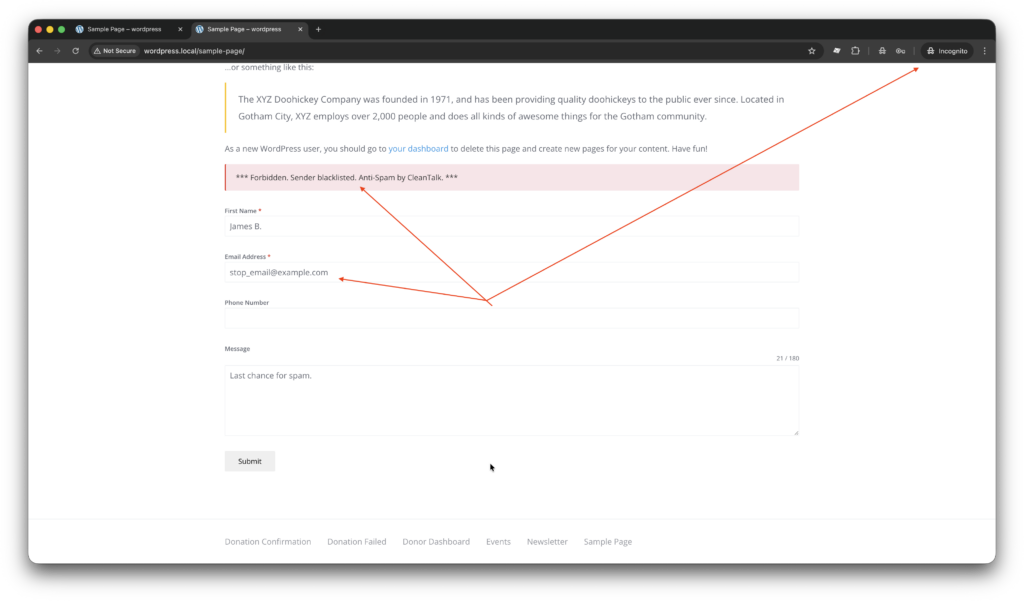
    The easiest way to test spam filtering is to use a test address such as:

    stop_email@example.com

    Open the page with your Klaviyo form in an Incognito or private browser tab.

    Fill out the form using the test email and submit it.
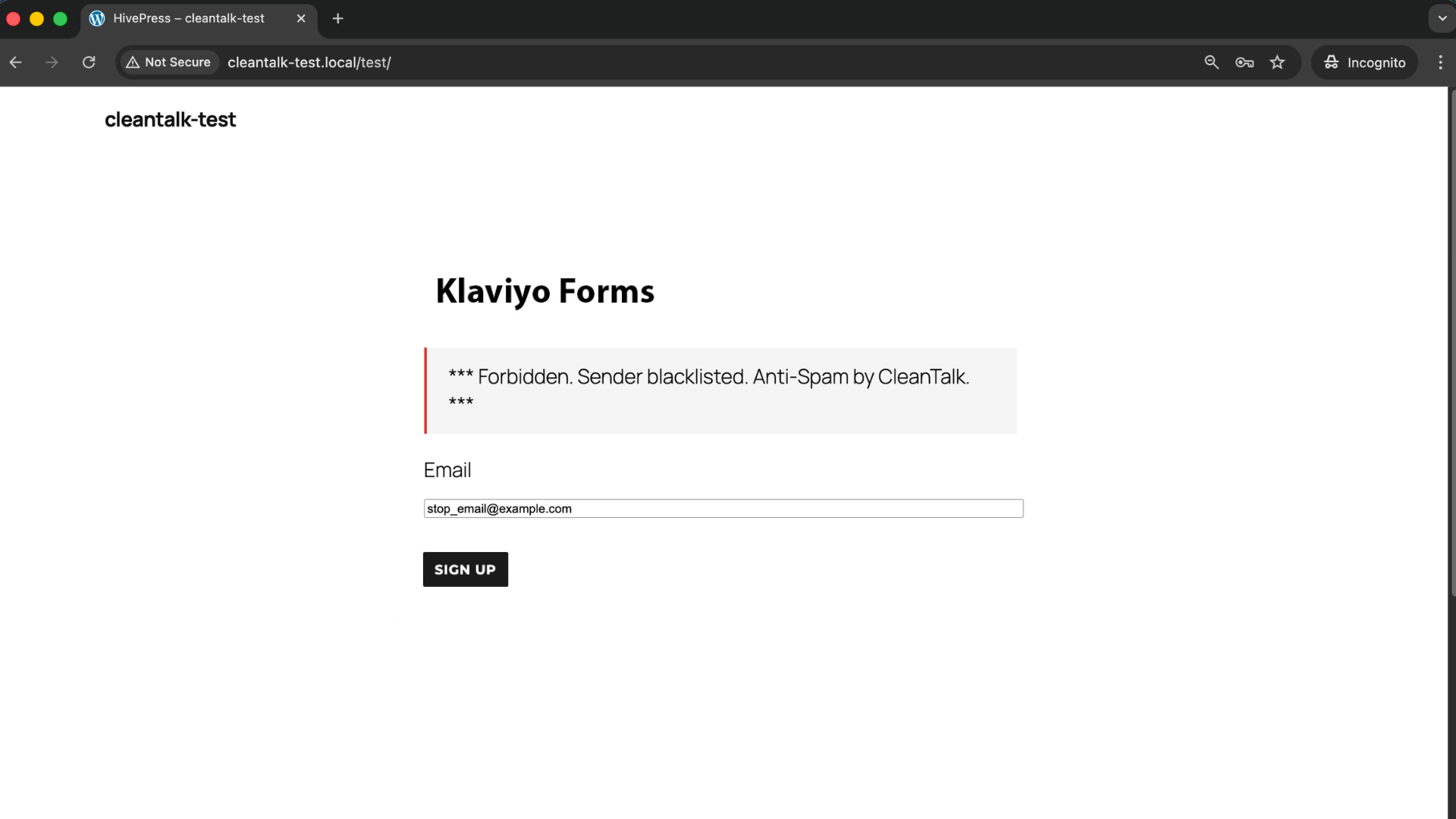
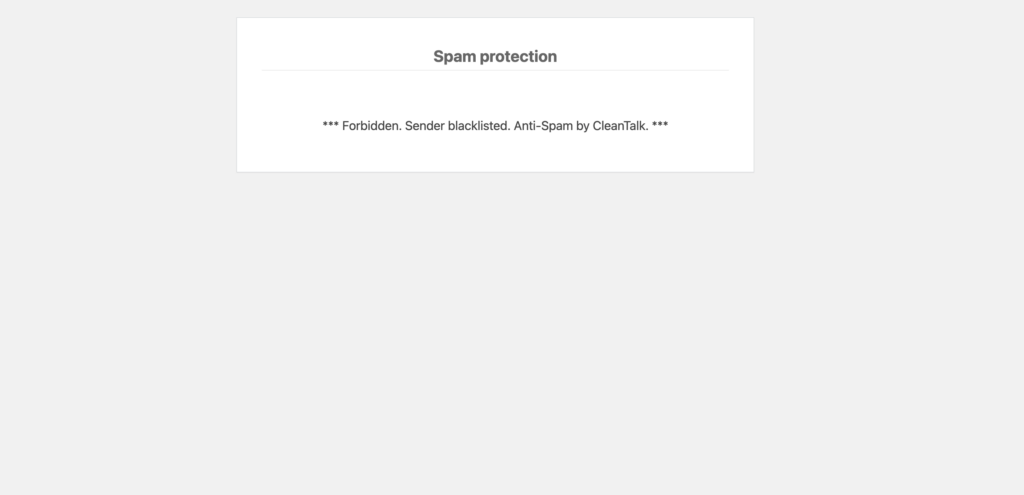
    If your protection setup is configured correctly, the test should be blocked or prevented from becoming a valid contact in Klaviyo.

    When testing, always confirm the result in both places: on the frontend, to see whether the form allows the submission, and in your Klaviyo list or flow trigger, to make sure the spam contact did not enter your marketing system.

    Cloud Dashboard and Monitoring

    A strong spam protection setup should not stop at blocking alone. You also need visibility.

    In the anti-spam dashboard, it is useful to review sender IP and email, submission time, source page, approval or denial status, and the likely reason why the submission was flagged.

    This helps identify patterns such as specific traffic sources sending junk signups, repeated abuse during discount campaigns, or bursts of fake subscriptions from disposable domains.

    That visibility is what allows you to fine-tune protection instead of guessing.

    Google reCAPTCHA, hCaptcha, and Cloudflare Turnstile

    Besides CleanTalk, you can also use CAPTCHA and anti-bot services together with Klaviyo forms to reduce spam.

    Google reCAPTCHA

    Google reCAPTCHA remains one of the best-known anti-bot solutions. Google describes it as a free service that protects websites from spam and abuse, and its documentation covers both v2 and v3 implementations. reCAPTCHA v2 uses widgets and challenges, while v3 is score-based and works without direct user interaction.

    For Klaviyo-related use, reCAPTCHA can be helpful when you want an additional visible or score-based signal, you have recurring bot traffic on public lead forms, or you want a familiar system your team already understands.

    At the same time, reCAPTCHA also has practical limitations. It can add friction, it may reduce form completion rates, and by itself it does not solve disposable-email abuse or repeated low-quality signups.

    hCaptcha

    hCaptcha is often chosen by teams that want a privacy-oriented alternative to Google-based tooling.

    Typical reasons to use it include a stronger privacy position, reduced dependence on Google services, and a better fit for teams with compliance concerns.

    Like reCAPTCHA, hCaptcha works best as an extra layer, not as the only defense.

    Cloudflare Turnstile

    Cloudflare Turnstile is one of the strongest modern alternatives for frontend verification. Cloudflare describes it as a CAPTCHA-free, privacy-preserving alternative, and its documentation includes managed, non-interactive, and fully invisible widget modes. Cloudflare also explicitly says Turnstile tokens must be verified server-side through Siteverify, otherwise the implementation is incomplete.

    Main benefits of Cloudflare Turnstile compared to classic CAPTCHA solutions:

    It can work invisibly in the background.

    It usually creates less friction than image-based challenges.

    It is a strong fit for conversion-focused signup flows.

    For Klaviyo forms, Turnstile is often the most user-friendly frontend layer, especially when you want protection without making the popup feel heavy or annoying.

    Email Validation, Double Opt-In, and List Quality

    Not all spam looks like a bot.

    Sometimes the contact is technically valid, but still harmful to your marketing system.

    This includes disposable email domains, fake or mistyped email addresses, repeat signups from the same person hunting for coupons, and low-intent contacts that damage engagement rates.

    That is why Klaviyo spam protection should also include email validation, double opt-in where appropriate, and basic abuse monitoring tied to signup incentives.

    Double opt-in will not solve all spam, but it can reduce list pollution by requiring an extra confirmation step before a contact becomes fully usable in your marketing workflow.

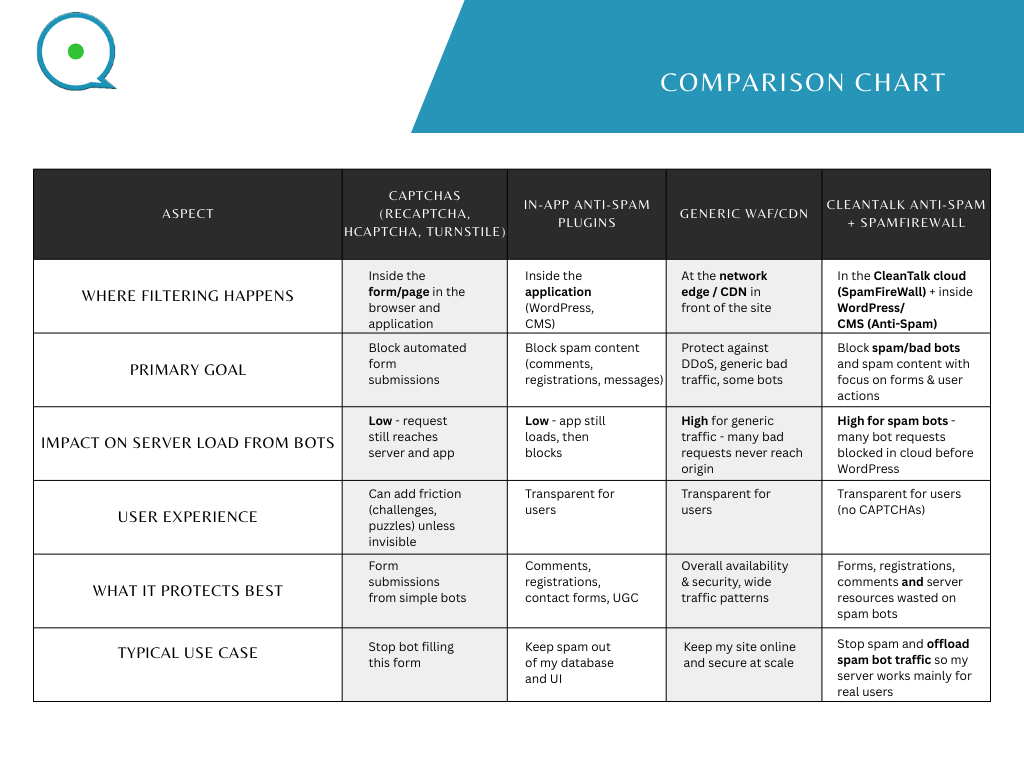
    Comparison of Anti-Spam Approaches for Klaviyo

    Each solution blocks a different part of the problem.

    SolutionMain roleStrengthsLimitationsBest use case
    Google reCAPTCHAFrontend anti-bot checkWidely known, easy to add, useful as an extra verification stepCan add friction, may reduce conversion rates, should not be the only protection layerWebsites that want a familiar anti-bot tool as an additional layer
    hCaptchaPrivacy-focused frontend anti-bot checkMore privacy-oriented, less reliance on Google, helpful for teams with compliance concernsStill adds friction and does not solve list-quality issues on its ownProjects that prioritize privacy and want an alternative to Google services
    Cloudflare TurnstileLightweight frontend verificationSupports non-interactive and invisible verification, usually creates less friction, strong fit for conversion-focused formsNeeds proper backend verification and does not replace email validation or broader anti-spam filteringKlaviyo forms where user experience and conversion rate matter
    CleanTalkCore site-level or backend anti-spam filteringFilters suspicious submissions before they reach Klaviyo, works without classic CAPTCHA friction, helps reduce bots, fake signups, and low-quality leadsUsually works best when combined with other layers for the strongest setupWebsites that want the main anti-spam layer to protect Klaviyo list quality

    In practice, the most reliable setup is layered: backend or site-level filtering first, lightweight frontend bot verification second, and list-quality controls such as validation and double opt-in on top.

    Frequently Asked Questions

    Klaviyo popup form is collecting many fake emails. What should I check first?

    Start with the basics.

    Check whether the form is tied to a discount or incentive, review whether you are accepting disposable email domains, and verify whether you have any server-side or site-level anti-spam filtering at all.

    If the only protection is a frontend popup or a visible checkbox, that is usually not enough. The problem is often not the form design itself, but the lack of filtering before the submission reaches Klaviyo.

    We added CAPTCHA, but fake signups still appear in Klaviyo. Why?

    Because CAPTCHA mainly handles one layer of the problem.

    Modern spam attacks may bypass visible widgets, use low-quality human solving, or attack the signup flow in ways that are not stopped by a simple frontend challenge. CAPTCHA can reduce some junk traffic, but it does not automatically clean your list, validate email quality, or stop all repeat abuse.

    Our discount popup is being abused by repeat signups. How do we reduce that?

    This is a very common e-commerce problem.

    Use a layered approach: block disposable email domains, review repeated attempts from the same IP or traffic source, connect coupon logic to stricter validation rules, and consider double opt-in for campaigns where list quality matters more than raw signup volume.

    If you reward every form completion immediately, you make abuse easier.

    Turnstile is installed, but spam still gets through. What may be wrong?

    The most common issue is incomplete implementation.

    Cloudflare states that Turnstile tokens must be verified server-side through Siteverify. If the token is not verified on the backend, the protection is incomplete. Also, Turnstile reduces automated abuse, but it does not replace email validation, duplicate-signup checks, or broader anti-spam filtering.

    Klaviyo signup numbers look good, but campaign performance is getting worse. Could spam be the reason?

    Yes.

    One of the clearest signals of spam or low-quality lead growth is when list size increases but engagement quality declines.

    Watch for sudden jumps in subscriptions, low open and click performance from new contacts, higher bounce or suppression rates, and poor conversion quality from a specific signup form.

    Spam is not always obvious on the surface. Sometimes it shows up first in reporting quality.

    Should we use reCAPTCHA v2, reCAPTCHA v3, or Turnstile?

    It depends on your priorities.

    reCAPTCHA v2 is more visible and straightforward, but adds friction. reCAPTCHA v3 is score-based and lighter for users, but needs good threshold tuning. Google documents both models officially. Turnstile is often the cleaner UX option because it supports non-interactive and invisible verification.

    If your main goal is conversion-friendly protection, Turnstile is usually the better frontend option.

    What is the best anti-spam stack for Klaviyo in 2026?

    For most websites, the most reliable setup is a core site-level or backend anti-spam layer, Cloudflare Turnstile or another lightweight frontend verification method, email validation, and double opt-in where the business model allows it.

    If your campaigns use incentives, add stronger monitoring for duplicate or abusive signups.

    Recommended Anti-Spam Stack for Klaviyo (2026)

    Use caseRecommended setupWhy it works
    Standard lead capture websiteCleanTalk as the main anti-spam filtering layer + email validation + optional double opt-inHelps block obvious spam, reduce fake emails, and keep list growth cleaner
    E-commerce site with discount popupsCleanTalk as the main anti-spam filtering layer + Cloudflare Turnstile on the signup experience + disposable email blocking + abuse monitoring for repeated coupon claimsReduces coupon abuse, repeated signups, and low-quality contacts
    High-traffic campaign landing pagesCleanTalk as the main anti-spam filtering layer + Turnstile or reCAPTCHA v3 + double opt-in if list quality is more important than raw signup volumeBalances spam protection with conversion rate and lead quality
    Privacy-sensitive projectsCleanTalk as the main filtering layer + hCaptcha or Turnstile as the frontend anti-bot layer + stricter validation rules for custom formsAdds protection while keeping a more privacy-focused setup
    Custom-coded signup forms connected to KlaviyoBackend anti-spam filtering + token verification + email validationProtects the form before data is sent into Klaviyo and closes common bypass routes

    Final Thoughts

    No single anti-spam tool can stop every type of abuse in Klaviyo forms.

    Some tools are better at reducing automated bot traffic. Others help validate email quality or lower the number of fake and repeated signups. The most reliable approach is to combine several layers, so each one solves a different part of the problem.

    For most websites, the strongest setup is to use a site-level anti-spam layer such as CleanTalk, add a lightweight frontend verification method such as Cloudflare Turnstile, and strengthen list quality with email validation and double opt-in where needed.

    This approach helps keep bad submissions out of your Klaviyo lists, protects campaign performance, and improves the overall quality of your lead generation process.

    By this point, most spam issues in your Klaviyo forms should be significantly reduced.

    If not, review your current setup and make sure you are not relying on only one layer of protection. In most cases, the solution is not adding more friction to the form, but applying better filtering before bad contacts enter Klaviyo.
    Stop spam before it reaches your Klaviyo lists

    Create your CleanTalk account and start blocking fake sign-ups, bot submissions, and disposable emails before they pollute your Klaviyo forms and flows.

    CleanTalk Account

    No credit card required • Setup takes less than a minute • Your temporary password will be sent by email.

  • HappyForms Spam Protection in 2026. How to Stop Fake Messages, Bot Submissions, and Junk Entries

    HappyForms Spam Protection in 2026. How to Stop Fake Messages, Bot Submissions, and Junk Entries

    If you use HappyForms on a WordPress website, spam will eventually become a real problem. Fake messages, bot submissions, promotional junk, and low-quality entries can quickly start filling your inbox and wasting time.

    This guide explains how to set up HappyForms spam protection using CleanTalk as the main filtering layer on your website, together with additional tools like HappyForms’ built-in honeypot, Google reCAPTCHA, and other practical controls. HappyForms is a WordPress drag-and-drop form builder for contact forms and other custom forms, and its plugin pages highlight one-click HoneyPot spam prevention plus the ability to save submissions in the WordPress database or send them to your inbox.

    This protection approach can be applied to standard contact forms, lead forms, quote requests, newsletter forms, surveys, and other public-facing forms created in HappyForms. 

    HappyForms for WordPress

    First, it helps to understand what HappyForms is and why spam protection matters here.

    HappyForms is a WordPress form builder designed for creating many kinds of forms, from simple contact forms to surveys, applications, and other custom forms. Its WordPress.org listing presents it as a drag-and-drop builder, while the plugin FAQ states that submissions can be saved in the WordPress database or sent to your inbox.

    In practice, HappyForms can help website owners:

    • create contact and inquiry forms
    • collect leads and subscriber details
    • receive quote requests and support messages
    • save submissions in WordPress or send them by email

    That flexibility is exactly why spam becomes an issue. Once a form is publicly available, it can attract bots, automated scripts, and low-quality submissions.


    As WordPress.org shows, HappyForms is currently used on over 20,000 websites and has 157 user reviews with an average rating of 4.8.

    Plugin Homepage at WordPress.org | Documentation at Happyforms Help Center

    Why HappyForms Attracts Spam

    HappyForms is easy to publish and easy to use, which is good for real visitors but also appealing to bad traffic.

    In real-world use, the most common issues usually include:

    • automated bot messages
    • junk promotional submissions
    • repeated inquiries with irrelevant links
    • fake leads or low-quality contact requests

    This is not limited to one form type. The same risk applies whether you are running a basic contact form, a request form, a survey, or a lead-generation form.

    Anti-Spam by CleanTalk

    The main tool we’re going to use here is CleanTalk Anti-Spam.

    CleanTalk is a cloud-based anti-spam service for WordPress sites. Its official WordPress plugin page positions it as CAPTCHA-free spam protection for forms, comments, registrations, subscriptions, fake orders, and other submission types, and the current listing shows more than 200,000 active installations.

    In practical terms, CleanTalk helps by:

    • filtering suspicious submissions before they are processed
    • checking sender reputation and email quality
    • detecting automated and repeated abuse patterns
    • reducing junk entries that would otherwise reach HappyForms inboxes or saved submissions

    That matters because the real cost of HappyForms spam is not only inbox clutter. It also means wasted time, lower lead quality, and more manual cleanup inside your workflow.

    How CleanTalk Fits into the HappyForms Workflow

    HappyForms runs inside WordPress, so the most effective place to apply protection is before the submission is treated as a normal message.

    That means the focus should not be only on what the form looks like on the frontend. The more important point is what happens when the submission reaches WordPress.

    If a site uses HappyForms for contact requests or lead capture, a site-level anti-spam layer can help stop suspicious submissions before they become normal entries.

    If the website uses custom handling, automation, or extra logic after submission, the filtering layer should still be placed before the message is accepted into the workflow.

    That is the key principle: do not wait until junk has already reached your inbox or saved entries. Stop it earlier in the process.

    According to WordPress.org, Anti-Spam by CleanTalk for WordPress has over 200,000 active installations, with thousands of reviews and an average rating around 4.7 out of 5.

    Plugin Homepage at cleantalk.org | Latest release at GitHub.com

    If your forms are built with HappyForms on WordPress, the simplest setup is to use the CleanTalk WordPress plugin.

    Install the CleanTalk Anti-Spam plugin

    To install the Anti-Spam plugin, go to your WordPress admin panelPluginsAdd New.

    Then enter «СleanTalk» in the search box and click the Install button for «Spam protection, Anti-Spam, FireWall by CleanTalk».

    After installing the plugin, click the «Activate»‎ button.

    After it is done go to the plugin settings and click the «Get Access Key Automatically» button. Then just click the «Save Settings»‎ button.

    That’s all –  Contact Form 7 are now protected From this moment,CleanTalk automatically protects the  Contact Form 7 registration form (REST route /wp-json/Contact Form 7press/v1/users/), and the Add Listing form used to submit new listings.
    You don’t need to paste any shortcodes – just use  Contact Form 7 as usual, and CleanTalk will filter spam in the background.

    Once that is done, your website has a background anti-spam layer that can help reduce suspicious HappyForms activity before unwanted messages reach their destination.

    How to Check Whether Spam Protection Works

    A simple way to test the setup is to use the following test address:

    stop_email@example.com

    Open the page with your HappyForms form in an Incognito or private browser window.

    Submit the form using that email address.

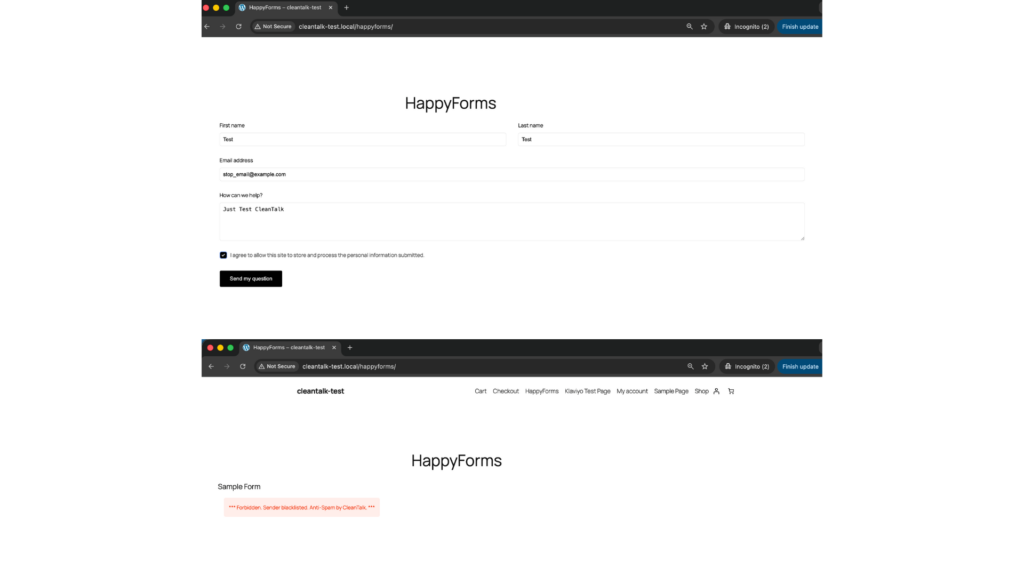
    If everything is configured properly, the submission should be blocked or should not appear as a normal legitimate entry in your form workflow.

    When testing, check both sides of the process:

    • the frontend, to see whether the form accepts the submission
    • the form entries or email destination, to verify that the message was not processed as a normal inquiry

    This matters because a form may still appear to submit on the surface while the real question is whether the message actually made it into your workflow.

    Cloud Dashboard and Monitoring

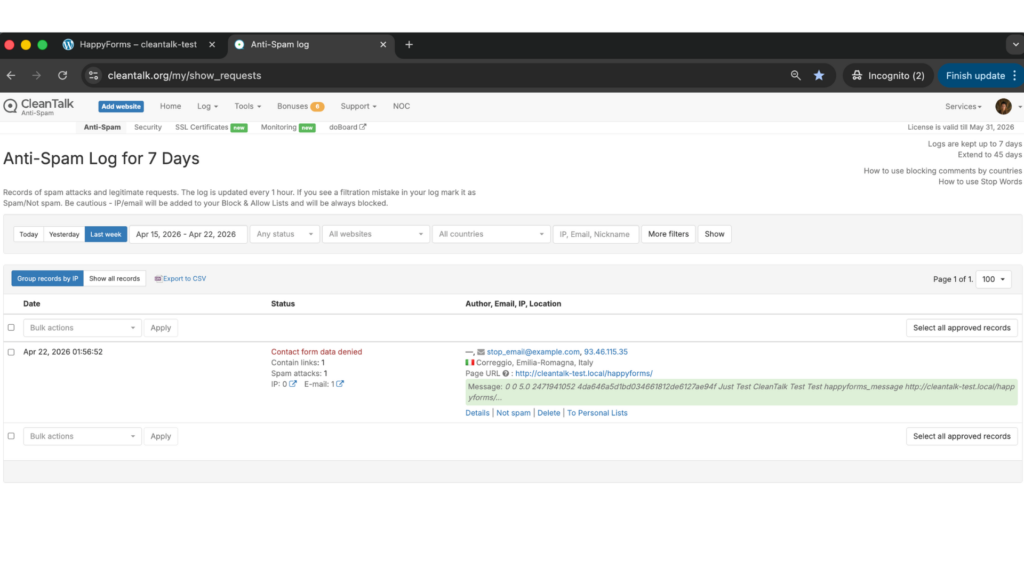
    Blocking spam is only one part of the job. Good protection also gives you visibility into what is happening.

    In the anti-spam dashboard, it is useful to review:

    • sender IP and email
    • submission time
    • source page
    • allow or deny decisions
    • the likely reason a message was flagged
    Result: Cloud Dashboard by CleanTalk
    Result: Cloud Dashboard by CleanTalk

    This makes it easier to spot recurring spam waves, identify weak pages, and understand which forms attract the most junk traffic.

    That visibility helps you adjust the setup over time instead of guessing.

    Honeypot, Google reCAPTCHA, and Additional Anti-Spam Options

    Besides CleanTalk, HappyForms also includes or supports other useful anti-spam measures.

    Honeypot

    HappyForms highlights one-click HoneyPot spam prevention on its official plugin page. That makes honeypot the most natural built-in first layer against simple automated spam.

    Honeypot is especially useful when:

    • you want an invisible anti-spam measure
    • you do not want to interrupt the user experience
    • you need a lightweight first barrier against simple bots

    Its limitation is that it works best against simpler automation, not every type of spam.

    Google reCAPTCHA

    HappyForms provides official reCAPTCHA integration. Its help documentation shows that you can configure reCAPTCHA from Forms – Integrations, choose the version, and for reCAPTCHA v3 set a minimum accepted score.

    reCAPTCHA can be helpful when:

    • you want a familiar anti-bot checkpoint
    • your site is seeing repeated automated submissions
    • you need an additional visible or score-based verification layer

    At the same time, reCAPTCHA has tradeoffs. It can add friction and it should not be treated as the only line of defense.

    Other Supporting Controls

    Depending on the site, extra protection may also include:

    • stricter field validation
    • limiting exposed public forms
    • email quality checks
    • more careful handling of forms tied to incentives or lead capture

    These do not replace anti-spam filtering, but they can make the overall setup more resilient.

    Why HappyForms Spam Becomes a Bigger Problem Over Time

    Spam in HappyForms is not just a temporary annoyance. It tends to become an operational problem.

    Once junk submissions start slipping through, they can:

    • clutter inboxes and notifications
    • reduce the quality of collected leads
    • waste time on manual review
    • make real messages harder to notice

    This is especially important if the site uses HappyForms not only for contact forms, but also for quote requests, support flows, surveys, or other business-critical communication.

    Comparison of Anti-Spam Approaches for HappyForms

    SolutionMain roleStrengthsLimitationsBest use case
    HappyForms HoneypotBuilt-in invisible anti-bot layerEasy to enable, no visible friction, good against simple botsLimited against more advanced spam patternsSites that want a lightweight first layer inside HappyForms
    Google reCAPTCHAFamiliar anti-bot verificationOfficially documented in HappyForms integrations, widely recognized, useful as an extra checkpointCan add friction and should not be the only protection methodSites that want a built-in additional anti-bot layer
    CleanTalkCore site-level anti-spam filteringFilters suspicious submissions before they become normal entries, reduces junk leads, works without classic CAPTCHA frictionUsually strongest when combined with other layersSites that want the main filtering layer to protect HappyForms submissions
    Stricter validation and workflow controlsSupporting quality-control layerHelps reduce low-quality entries and detect tighter abuse patterns.Not a full spam filter on its ownLead forms, quote forms, or higher-value submission flows

    In practice, the most dependable starting point is to use one strong primary anti-spam layer and then add extra controls only where they are truly needed. For many WordPress sites, CleanTalk can serve as that main filtering layer, while HappyForms’ built-in honeypot, reCAPTCHA, and stricter validation can be added selectively if they improve protection without causing conflicts or unnecessary friction.

    Frequently Asked Questions

    HappyForms is receiving too much spam. Where should I begin?

    Start with the form flow itself.

    Check whether the built-in honeypot is enabled, review whether reCAPTCHA is active, and make sure there is a stronger filtering layer in place before submissions are treated as normal messages.

    If junk keeps getting through, the problem is usually not the form design. It is the lack of enough filtering before the message is accepted.

    Why do spam messages still appear even though HappyForms has built-in protection?

    Because one built-in measure is rarely enough on its own.

    Honeypot can catch simple bots, and reCAPTCHA can reduce some automated traffic, but neither one guarantees that all unwanted submissions will disappear. Sites with heavier spam volume usually need a stronger site-level filtering layer as well. HappyForms’ own materials show honeypot and reCAPTCHA as anti-spam options, not as a guaranteed all-in-one answer.

    We enabled reCAPTCHA, but fake submissions still come through. What could explain that?

    Usually, it means one layer is handling only part of the problem.

    reCAPTCHA can help reduce automated abuse, but it does not automatically solve every case of junk submissions, repeated manual spam, or low-quality lead traffic. That is why it works better as a supporting layer than as the entire strategy.

    Does honeypot still matter if I already use another anti-spam solution?

    Yes, it can still be useful.

    Honeypot is lightweight and invisible, so it can help catch simpler bot behavior before stronger filters even need to act. It is not enough by itself in every case, but it is still a worthwhile extra layer.

    What setup works best for HappyForms in 2026?

    For most websites, the strongest setup is layered.

    A site-level anti-spam filter should do the main screening, HappyForms’ built-in honeypot can provide a frictionless first barrier, and reCAPTCHA can add an extra checkpoint when needed. HappyForms officially documents both honeypot on the plugin page and reCAPTCHA in the help center.

    Why does HappyForms spam become harder to manage over time?

    Because the damage is cumulative.

    At first, junk entries may only seem annoying. Over time, they start affecting inbox quality, lead review, team workflow, and the ability to find real messages quickly. The longer they are allowed through, the more cleanup they create.

    What should I do if real submissions are being blocked together with spam?

    Review the protection layers one by one.

    Check whether reCAPTCHA is configured appropriately, confirm that your stricter validation rules are not too aggressive, and look at the site-level filtering settings. In most cases, the answer is not to remove protection, but to tune it more carefully.

    Recommended Anti-Spam Stack for HappyForms (2026)

    Use caseRecommended setupWhy it works
    Standard contact websiteCleanTalk as the main anti-spam filtering layer + HappyForms honeypot + optional reCAPTCHAHelps block obvious spam, reduce junk messages, and keep contact flows cleaner
    Business website with valuable inquiriesCleanTalk as the main anti-spam filtering layer + Google reCAPTCHA + tighter field validationReduces bot submissions while improving lead quality
    High-traffic public formsCleanTalk as the main anti-spam filtering layer + HappyForms honeypot + reCAPTCHABalances strong filtering with practical frontend protection
    Lead generation or quote request formsCleanTalk as the main anti-spam filtering layer + stricter validation + optional reCAPTCHAHelps reduce fake leads and low-quality entries before they reach the team
    Sites focused on low frictionCleanTalk as the main anti-spam filtering layer + HappyForms honeypotAdds protection while keeping the form experience as smooth as possible

    Final Thoughts

    No single anti-spam tool can stop every kind of unwanted HappyForms submission.

    Some methods are better at catching simple bots. Others help add visible or invisible verification at the form level. The most reliable approach is to combine several layers so that each one covers a different part of the problem.

    For most WordPress websites using HappyForms, the strongest setup is to use a site-level anti-spam layer such as CleanTalk, keep HappyForms’ built-in honeypot enabled, and add Google reCAPTCHA where extra verification is needed. HappyForms itself documents honeypot and reCAPTCHA as anti-spam measures, while CleanTalk provides broader site-level filtering for WordPress forms.

    This combination helps keep bad submissions out of your workflow, reduces noise in your inbox, and makes it easier to focus on real inquiries.

    If spam is still getting through, review the current setup and make sure you are not depending on only one control. In most cases, stronger protection comes not from adding more friction everywhere, but from placing the right filtering layers in the right parts of the submission flow.

    Stop spam before it reaches your HappyForms inbox

    Create your CleanTalk account and start blocking spam messages, fake leads, and junk submissions sent through HappyForms — no CAPTCHA challenges and no extra friction for real visitors.

    CleanTalk Account

    No credit card required • Setup takes less than a minute • Your temporary password will be sent by email.

  • Flamingo Spam Protection in 2026. How to Protect Contact Form 7 Messages and Stored Submissions

    Flamingo Spam Protection in 2026. How to Protect Contact Form 7 Messages and Stored Submissions

     If you use Flamingo to store contact form submissions in WordPress, spam will eventually become a real issue. Fake messages, bot submissions, promotional junk, and low-quality inquiries can quickly pile up in your database and make it harder to work with genuine submissions.

    This guide explains how to set up Flamingo spam protection using CleanTalk as the main filtering layer on your website, along with additional tools such as Akismet, Cloudflare Turnstile, Google reCAPTCHA, Contact Form 7’s disallowed list, and other practical controls.

    This approach is relevant for websites that use Contact Form 7 as the form engine and Flamingo as the storage layer for inbound messages.

    Flamingo for Contact Form 7

    To begin, it helps to understand what Flamingo actually does.

    Flamingo is a WordPress plugin created for Contact Form 7 that saves submitted messages in the WordPress database. Once activated, it adds an interface in the admin panel where website owners can review, search, and manage stored messages later.

    This is especially useful because Contact Form 7 does not save submissions by default. Without Flamingo, an important message can be lost if email delivery fails or if the mail settings are not configured properly.

    In practice, Flamingo helps website owners:

    • keep a database copy of inbound messages
    • review past inquiries in the WordPress dashboard
    • search through saved submissions
    • preserve important communication even when email delivery is unreliable

    The same feature that makes Flamingo useful also creates its biggest weakness: it stores whatever gets through the form. If spam reaches the form, spam reaches Flamingo too. That is why a proper Flamingo spam protection setup matters from the start.
    Flamingo works hand in hand with Contact Form 7 because it stores messages submitted through Contact Form 7 forms. If you also want a broader guide focused on protecting the form layer itself, see our article on how to protect Contact Form 7 from spam:https://blog.cleantalk.org/how-to-protect-contactform7-from-spam/

    As WordPress.org shows, Flamingo is currently used on over 800,000 websites and has 118 user reviews with an average rating of 4.2.

    Plugin Homepage at WordPress.org | Documentation at Contact Form 7

    Why Flamingo Becomes a Spam Magnet

    Strictly speaking, Flamingo is not the source of the spam. It simply records what your public forms receive.

    But in real-world use, that distinction does not make much difference. If Contact Form 7 is exposed on a public website, spambots and low-quality submissions will eventually find it. Once that happens, Flamingo starts storing all that noise alongside legitimate inquiries.

    Typical examples include:

    • automated contact form submissions
    • irrelevant promotional messages
    • spam containing suspicious or malicious links
    • repeated junk inquiries that fill up the message list

    The more visible your website becomes, the more likely it is that those submissions will start accumulating.

    Anti-Spam by CleanTalk

    The main tool we’re going to use here is CleanTalk Anti-Spam.

    CleanTalk is a cloud-based anti-spam service for WordPress websites. In practical terms, it helps filter suspicious submissions before they are stored in Flamingo, checks sender reputation, detects automated abuse patterns, and reduces junk messages before they become part of your saved message history.

    That is especially important for Flamingo because the goal is not only to stop annoying emails. The larger issue is keeping your database clean and making sure stored submissions remain useful instead of becoming clutter.

    If real inquiries are buried under junk, Flamingo stops being an asset and starts becoming a maintenance problem.

    How CleanTalk Fits into the Flamingo Workflow

    Flamingo is usually used together with Contact Form 7, so the right place for protection is before the message is stored.

    That means the real focus is not Flamingo alone, but the submission flow that feeds it.

    If Contact Form 7 is running on WordPress and Flamingo is active, a site-level anti-spam layer can help block suspicious submissions before they are saved as inbound messages.

    If the website uses extra Contact Form 7 logic, custom handlers, or additional workflows tied to form submissions, the anti-spam check should still be placed before the message is fully processed and written to the database.

    That is the key principle: do not wait until spam appears inside Flamingo. Stop it earlier in the chain.

    Because of that, Flamingo spam protection should always be considered together with Contact Form 7 spam protection. For a more detailed guide focused specifically on the form layer, you can also read: https://blog.cleantalk.org/how-to-protect-contactform7-from-spam/

    According to WordPress.org, Anti-Spam by CleanTalk for WordPress has over 200,000 active installations, with thousands of reviews and an average rating around 4.7 out of 5.

    Plugin Homepage at cleantalk.org | Latest release at GitHub.com

    If Flamingo is being used together with Contact Form 7 on WordPress, the simplest option is to install the CleanTalk WordPress plugin.

    Install the CleanTalk Anti-Spam plugin

    To install the Anti-Spam plugin, go to your WordPress admin panelPluginsAdd New.

    Then enter «СleanTalk» in the search box and click the Install button for «Spam protection, Anti-Spam, FireWall by CleanTalk».

    After installing the plugin, click the «Activate»‎ button.

    After it is done go to the plugin settings and click the «Get Access Key Automatically» button. Then just click the «Save Settings»‎ button.

    That’s all –  Contact Form 7 are now protected From this moment,CleanTalk automatically protects the  Contact Form 7 registration form (REST route /wp-json/Contact Form 7press/v1/users/), and the Add Listing form used to submit new listings.
    You don’t need to paste any shortcodes – just use  Contact Form 7 as usual, and CleanTalk will filter spam in the background.

    Once that is done, the site has an anti-spam layer working in the background. This helps reduce suspicious form activity before unwanted messages ever reach Flamingo.

    Check if spam protection works with Contact Form 7 (CF7)

    The best way to text the spam protection by using a test email,

    stop_email@example.com

    1. Open a page with a Contact Form 7 (for example, the registration popup or the Add Listing form) in an Incognito / private browser tab.
    2. Fill out the Contact form using stop_email@example.com as sender’s email.
    3. Send the form.
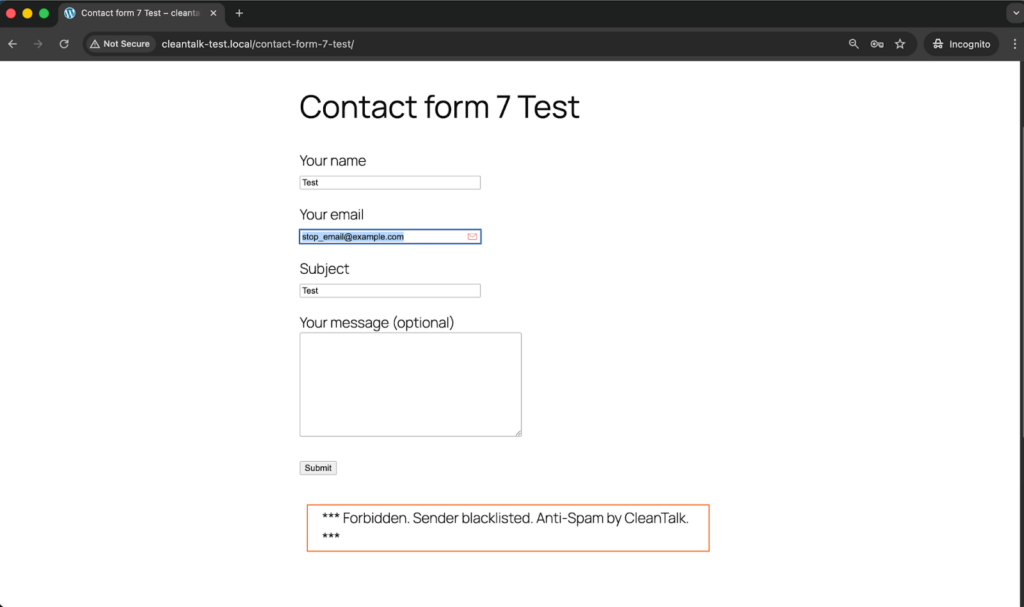
    4. You should see a message from the Anti-Spam plugin confirming that a spam submission was blocked.

    *** Forbidden. Sender blacklisted. Anti-Spam by CleanTalk. ***

    This double check is important because visible blocking on the page and actual storage behavior in WordPress are not always the same thing.

    Cloud Dashboard and Monitoring

    Blocking spam is only part of the job. Good protection also gives you visibility.

    In the anti-spam dashboard, it is useful to review:

    • sender IP and email
    • submission time
    • source page
    • request status: denied or approved 
    • the likely reason a message was flagged

    This makes it easier to spot recurring spam waves, identify low-quality traffic sources, and understand which forms are attracting the most junk.

    That kind of visibility helps you improve the setup over time instead of relying on guesswork.

    Akismet, Cloudflare Turnstile, Google reCAPTCHA, and Disallowed List

    Besides CleanTalk, there are several other methods that can strengthen Flamingo and Contact Form 7 protection.

    Akismet

    Akismet is a familiar option for WordPress users and works well as an additional spam-filtering layer for Contact Form 7.

    It is especially useful when:

    • you want a Contact Form 7-compatible filtering option
    • Akismet is already active elsewhere on the site
    • you want another signal alongside your main anti-spam layer

    That said, Akismet works better as part of a broader setup than as the only safeguard on a website with serious spam traffic.

    Cloudflare Turnstile

    Turnstile is one of the best frontend protection options for modern contact forms.

    Its main advantages are:

    • little or no visible friction for visitors
    • a smoother experience than traditional image-based CAPTCHA flows
    • a good fit for contact pages where usability matters

    For Contact Form 7 forms connected to Flamingo, Turnstile is often the most user-friendly additional layer.

    Google reCAPTCHA

    Google reCAPTCHA is still one of the most familiar anti-bot tools.

    Many WordPress users consider it first simply because it is widely recognized and easy to understand.

    At the same time, in a modern Contact Form 7 and Flamingo setup, reCAPTCHA often makes more sense as an optional supporting tool than as the foundation of the whole protection strategy.

    Disallowed List

    The WordPress disallowed list remains useful for recurring, predictable spam patterns.

    It works best when:

    • the same keywords appear again and again in junk messages
    • certain IP-based sources need to be blocked
    • you want a quick manual rule for repeated spam patterns

    It is not enough on its own, but it can be a useful reinforcement layer when spam follows recognizable patterns.

    Why Stored Spam Creates a Bigger Headache Than Expected

    With Flamingo, spam does not just interrupt the moment. It stays behind.

    Once junk submissions start getting stored, they can:

    • clutter the Inbound Messages view
    • make legitimate inquiries harder to find
    • create unnecessary database noise
    • slow down support or sales workflows that depend on stored submissions

    That is one of the main reasons Flamingo spam protection deserves attention. Flamingo is meant to preserve valuable communication. But when filtering is weak, the same storage advantage turns into an organizational burden.

    Comparison of Anti-Spam Approaches for Flamingo

    SolutionMain roleStrengthsLimitationsBest use case
    AkismetNative Contact Form 7 spam filteringFits well into Contact Form 7 workflows, familiar to WordPress users, useful as an additional layerNot strong enough on its own for websites with heavy spam volumeSites that want a Contact Form 7-compatible filtering option
    Cloudflare TurnstileLightweight frontend verificationLow friction, strong user experience, suitable for conversion-focused formsNeeds proper implementation and does not replace broader filteringWebsites that want a user-friendly frontend protection layer
    Google reCAPTCHAFamiliar anti-bot verificationWidely recognized, easy to understand, adds a visible anti-bot checkpointCan introduce friction and is not always the best modern defaultSites that specifically prefer Google-based protection
    Disallowed listManual rule-based spam filteringUseful for repeated spam phrases and IP patterns, easy to update manuallyLimited on its own and requires ongoing maintenanceSituations where recurring spam follows recognizable patterns
    CleanTalkCore site-level anti-spam filteringStops suspicious submissions before they reach Flamingo, reduces junk storage, works quietly in the backgroundUsually strongest when combined with other layersWebsites that want the main anti-spam layer to protect Flamingo message quality

    In practice, the most reliable setup is layered: site-level filtering first, lightweight frontend verification second, and manual rules such as disallowed list on top where they add value.

    Frequently Asked Questions

    Flamingo is filling up with spam messages. Where should I begin?

    Start by looking at the form flow, not the storage screen.

    Review whether Contact Form 7 has any real anti-spam protection enabled, check if Akismet or Turnstile is active, and make sure suspicious submissions are being filtered before they are written to the database.

    If junk keeps appearing in Flamingo, the weak point is usually earlier in the process.

    Contact Form 7 seems to be working normally, so why does Flamingo still contain spam?

    Because Flamingo simply saves what gets accepted.

    If an unwanted message slips through the form layer, Flamingo may store it like any legitimate inquiry. That is why protection has to happen before the submission reaches storage, using tools such as CleanTalk, Akismet, Turnstile, or disallowed list rules.

    Can spam and legitimate inquiries be separated inside Flamingo?

    Yes, depending on how the filtering workflow is configured.

    With the right anti-spam tools in place, suspicious entries and genuine submissions can be handled more clearly instead of ending up mixed together in one crowded stream of messages.

    We installed Turnstile, but suspicious messages are still being saved. What could be wrong?

    In many cases, the problem is not the idea but the implementation.

    Turnstile helps reduce automated abuse, but it does not replace deeper filtering, email checks, or manual blocking rules. If junk is still getting through, review whether backend verification is configured correctly and whether another filtering layer is needed.

    Contact Form 7 sometimes shows an orange border warning. What usually triggers that?

    That warning typically means one of the spam protection mechanisms marked the submission as suspicious.

    In other words, the system did not treat it as a regular inquiry. If this happens often, it is worth checking which layer is being triggered and whether the settings are too aggressive or working exactly as intended.

    What setup tends to work best for Flamingo in 2026?

    For most websites, the strongest setup is a layered one.

    A site-level anti-spam filter should do the main screening, a user-friendly frontend solution such as Turnstile or a Contact Form 7-compatible layer such as Akismet can add another checkpoint, and disallowed list rules can help handle recurring spam patterns you already recognize.

    Why does Flamingo spam become harder to manage over time?

    Because saved junk does not clear itself.

    Once spam starts accumulating, it makes the inbox harder to navigate, hides real inquiries among irrelevant messages, and creates more manual cleanup work inside WordPress. The longer it continues, the more it affects daily workflow.

    What should I do if real inquiries are being blocked together with spam?

    Start by reviewing your filters one by one.

    Look at your keyword rules, test your frontend protection settings, and check whether the anti-spam layer is acting too aggressively. In most cases, the solution is not removing protection altogether, but adjusting the combination of rules so legitimate messages can pass more reliably.

    Recommended Anti-Spam Stack for Flamingo (2026)

    Use caseRecommended setupWhy it works
    Standard contact websiteCleanTalk as the main anti-spam filtering layer + Contact Form 7 disallowed list + optional AkismetHelps block obvious spam, reduce junk messages, and keep Flamingo inboxes cleaner
    Business website with important inquiriesCleanTalk as the main anti-spam filtering layer + Cloudflare Turnstile + Flamingo storageReduces bot submissions while preserving important messages in the database
    High-traffic contact pagesCleanTalk as the main anti-spam filtering layer + Turnstile or Akismet + manual disallowed list updatesBalances spam protection with usability and adds extra control over recurring spam patterns
    Privacy-sensitive projectsCleanTalk as the main filtering layer + Cloudflare Turnstile + stricter form rulesAdds protection while keeping a more privacy-friendly setup
    Contact Form 7 sites already using Flamingo heavilyCleanTalk + Akismet + Flamingo spam review workflowHelps reduce junk storage while preserving visibility into stored submissions

    Final Thoughts

    No single anti-spam tool can stop every type of junk submission that reaches Flamingo.

    Some solutions are better at reducing bot traffic. Others are more useful for identifying suspicious message patterns or adding a lightweight verification layer without hurting usability. The most dependable approach is to combine several methods so that each one covers a different part of the problem.

    For most WordPress websites using Contact Form 7 and Flamingo, the strongest setup is to use a site-level anti-spam layer such as CleanTalk, add a Contact Form 7-compatible control such as Akismet or Cloudflare Turnstile, and apply disallowed list rules where recurring manual patterns appear.

    This combination helps keep bad submissions out of your saved messages, reduces unnecessary database clutter, and makes genuine inquiries easier to find and manage.

    Because Flamingo stores messages submitted through Contact Form 7, it makes sense to protect both layers together. If you want a more detailed guide focused specifically on Contact Form 7, read also:https://blog.cleantalk.org/how-to-protect-contactform7-from-spam/

    By this point, most spam issuesin your Flamingo inbox should be significantly reduced.

    If they are not, review the current setup and make sure you are not depending on only one method. In most cases, the answer is not to store messages more carefully after the fact, but to filter more effectively before they are ever saved.

    Stop spam before it reaches your Flamingo inbox

    Create your CleanTalk account and start blocking spam messages sent through Contact Form 7 and stored in Flamingo — no CAPTCHA challenges and no extra friction for real visitors.

    CleanTalk Account

    No credit card required • Setup takes less than a minute • Your temporary password will be sent by email.

  • WooCommerce: How to Stop Fake Orders and Spam Signups

    WooCommerce: How to Stop Fake Orders and Spam Signups

    If you run a WooCommerce store, spam is rarely limited to a few junk messages.

    More often, it appears in ways that directly affect store operations: fake orders, suspicious signups, spam reviews, and unwanted submissions through store-related forms. Left unchecked, this kind of activity creates extra admin work, weakens customer data quality, and makes it harder to separate genuine sales activity from noise.

    In this article, you will learn what WooCommerce spam usually looks like, why it becomes a problem for store owners, and how to install the CleanTalk plugin to protect your WooCommerce store from spam. We will look at the most common warning signs, explain where spam usually comes from, and show how to reduce it across orders, registrations, reviews, and related forms without adding CAPTCHA friction for real customers.

    That is why WooCommerce spam should be treated as a store-level problem, not just a single-form nuisance.

    WooCommerce banner at https://it.wordpress.org/plugins/woocommerce/
    WooCommerce banner at https://wordpress.org/plugins/woocommerce/

    What WooCommerce Spam Actually Includes

    WooCommerce spam is a broad category. In practice, it usually includes:

    • fake or junk orders
    • spam customer registrations
    • spam product reviews
    • suspicious checkout activity
    • abuse of enquiry, contact, or other store-related forms

    These issues may appear separately, but they often overlap. A store dealing with fake orders may also have low-quality registrations. A site receiving spam reviews may also be getting junk messages through product or contact forms. When several public-facing actions exist in the same store, spam rarely stays in only one place.

    Fake Orders

    Fake orders are one of the most visible and frustrating forms of WooCommerce spam.

    They create immediate operational noise and can make the store feel unstable, even when no real sales are being lost directly. Instead of processing genuine customer activity, the admin team ends up sorting through junk entries, failed attempts, and suspicious patterns that should never have reached the store in the first place.

    Typical signs of fake orders include:

    • many pending or failed orders
    • repeated patterns in customer details
    • suspicious bursts of low-value orders
    • usernames or email addresses that look random or disposable
    • checkout activity that does not match normal store behavior
    • repeated requests from unusual locations or similar device patterns

    The main problem with fake orders is not only clutter. They consume time, distort reporting, and make it harder to understand what is actually happening in the business. If suspicious activity keeps building up in the background, genuine operational signals become harder to spot.

    Spam Signups

    Spam registrations are another common part of the WooCommerce spam problem.

    At first glance, fake signups may seem less urgent than fake orders. But over time they create their own kind of damage. Customer data becomes weaker, email lists become noisier, and the admin area fills up with accounts that have no real commercial value.

    Typical signs of spam signups include:

    • fake-looking email addresses
    • disposable or temporary email domains
    • many registrations with no meaningful activity
    • bursts of signups from irrelevant geographies
    • junk profiles that never behave like real customers

    Spam accounts are not just a cosmetic issue. They reduce data quality, add cleanup work, and can later be used for other low-value actions such as spam reviews or repeated form submissions.

    Spam Reviews

    Review spam is easy to underestimate, especially when fake orders feel more urgent. But it creates a different kind of problem: it damages trust.

    A store that depends on user-generated content needs product reviews to look authentic and useful. When product pages start filling with generic praise, link-heavy comments, or repeated low-quality posts, the entire shopping experience begins to feel less reliable.

    Typical signs of spam reviews include:

    • generic praise with no product detail
    • repeated text across multiple products
    • irrelevant promotional content
    • link-heavy submissions
    • comments that do not match the product itself
    • low-quality text clearly written for exposure rather than actual feedback

    Spam reviews increase moderation work, weaken credibility, and make product pages look neglected.

    Store Form Abuse

    WooCommerce spam often goes beyond orders, signups, and reviews.

    Many stores also use enquiry forms, quote forms, waitlist forms, product-related contact flows, and plugin-based forms connected to the shopping experience. Each additional form creates another public-facing entry point, and each entry point can become a target for abuse if left unprotected.

    Common targets include:

    • product enquiry forms
    • quote request forms
    • contact forms
    • waitlist or notification forms
    • pre-sale communication forms
    • custom WooCommerce-related forms

    This matters because many stores focus on protecting checkout while leaving the rest of the site exposed. In practice, that often means the problem simply moves from one part of the store to another.

    Why WooCommerce Stores Attract Spam

    WooCommerce stores combine several public interactions in one place:

    • registration
    • login and account-related actions
    • checkout
    • reviews
    • contact and enquiry forms
    • plugin-based product interactions

    That makes them attractive to bots and abusive submitters. A single weak point can create junk data, but many stores have multiple open entry points at the same time. As a result, what looks like a small problem at first can grow into a broader operational issue across the store.

    Store owners rarely experience WooCommerce spam as one isolated technical bug. More often, it feels like a growing mess: noisy order queues, low-quality customer accounts, spam reviews, and more time spent cleaning up actions that should never have made it into the system.

    Common Signs You Have a WooCommerce Spam Problem

    You likely have a WooCommerce spam issue if you see:

    • sudden spikes in failed, pending, or suspicious orders
    • fake-looking customer accounts
    • spam reviews appearing on products
    • junk submissions through contact or enquiry forms
    • repeated names, emails, or behavior patterns
    • strange activity from locations that do not match your normal market
    • more admin cleanup without matching growth in sales

    Another clue is repetition. If the same kinds of names, email patterns, order values, IP behavior, or submission patterns keep appearing, the issue is less likely to be random noise and more likely to be organized spam or bot activity.

    Real Customer Activity vs Spam Activity

    Not every unusual order is spam, but spam usually leaves patterns that real customers do not.

    Real customer activity usually looks like this:

    • normal order timing and volume
    • realistic names and email addresses
    • browsing and checkout behavior that fits the store’s traffic patterns
    • reviews connected to actual purchase intent
    • registrations followed by meaningful activity

    Spam activity often looks like this:

    • bursts of failed or suspicious orders
    • repeated or random-looking customer details
    • fake accounts with no meaningful activity
    • generic reviews or irrelevant promotional messages
    • repeated patterns across orders, accounts, or form submissions

    This kind of comparison helps move the problem from a vague feeling that something is wrong to practical signals that can actually be monitored.

    Why This Problem Hurts More Than It Seems

    WooCommerce spam is not just annoying. It creates real business costs.

    It often leads to:

    • more time reviewing fake orders
    • less reliable customer data
    • polluted reporting
    • more moderation work on reviews and forms
    • less clarity about real store activity
    • more manual cleanup in the admin area
    • more risk of missing genuine issues inside noisy data

    And because the problem can affect several parts of the store at once, teams often end up treating symptoms one by one instead of fixing the broader cause.

    How to Stop WooCommerce Spam

    The strongest approach is layered protection.

    That does not mean adding as much friction as possible. In e-commerce, too much friction can hurt real customers. The goal is to protect the store broadly while keeping the buying experience smooth.

    A strong WooCommerce anti-spam strategy should cover:

    • checkout-related flows
    • registrations
    • product reviews
    • contact and enquiry forms
    • WooCommerce-related add-ons and custom forms
    • one consistent anti-spam layer across the store

    If you only secure one area, bots may continue using another. A store that protects checkout but ignores registration, reviews, or form-based plugins may still end up dealing with the same problem through a different entry point.

    One-Form Protection vs Store-Wide Protection

    Some store owners try to solve WooCommerce spam by protecting only one entry point, usually checkout. That may help temporarily, but it often leaves the rest of the store exposed.

    One-form protection usually focuses on:

    • checkout only
    • one visible symptom, such as fake orders
    • manual cleanup after spam appears
    • isolated fixes that do not protect the rest of the store

    Store-wide protection focuses on:

    • orders
    • registrations
    • product reviews
    • contact and enquiry forms
    • multiple store-related plugins and form types
    • consistent anti-spam filtering across the store

    If one form becomes harder to abuse, bots often move to another. That is why WooCommerce spam should be treated as a store-wide issue rather than a single checkout issue.

    WooCommerce Spam Protection Without CAPTCHA

    One of the biggest challenges in e-commerce is protecting the store without creating friction for real customers.

    WooCommerce depends on smooth interactions at key moments:

    • account creation
    • cart flow
    • checkout
    • post-purchase reviews
    • contact and enquiry forms

    For many store owners, the goal is not simply to block spam. The real goal is to block spam without making legitimate customers work harder.

    How CleanTalk Helps Protect WooCommerce Stores

    CleanTalk is designed to help protect WooCommerce stores in the background, without adding CAPTCHA friction to the customer journey.

    Instead of focusing on only one step of the funnel, the idea is to reduce spam more broadly across the store. That includes the places where bots usually create the most visible problems: orders, registrations, reviews, and other store-related forms.

    This matters because WooCommerce spam rarely stays limited to one action. A store dealing with fake orders may also be collecting junk registrations or low-quality reviews. In the same way, a site that protects checkout but ignores other public-facing forms may still leave important entry points open to abuse.

    In practical terms, CleanTalk fits stores that want to:

    • reduce fake orders and suspicious submissions
    • protect registrations and review forms
    • cover multiple WooCommerce-related forms at once
    • keep checkout and signup smoother for legitimate users

    For stores where conversion matters, that low-friction approach is especially important.

    CAPTCHA vs Background Protection

    CAPTCHA-based protection can:

    • add friction to checkout or signup
    • interrupt the buying flow
    • create extra steps for legitimate users
    • reduce completion rates if users abandon the process

    Background anti-spam protection aims to:

    • block unwanted submissions automatically
    • keep checkout and signup smoother
    • reduce spam without visible friction for real customers
    • protect multiple store forms at the same time

    This is why low-friction protection matters so much for WooCommerce. On an e-commerce site, every extra obstacle can affect conversion.

    How to Install CleanTalk for WooCommerce Spam Protection

    Once you understand where WooCommerce spam is coming from, the next step is to set up protection across the store.

    A typical WooCommerce anti-spam setup should cover the main public-facing actions that bots target most often:

    • customer registrations
    • checkout-related activity
    • product reviews
    • contact and enquiry forms
    • other WooCommerce-related forms and add-ons

    With CleanTalk, the goal is to reduce spam in the background rather than add more visible friction for shoppers.

    CleanTalk Anti-Spam for WordPress is used on over 200,000 websites and is designed to protect forms, registrations, reviews, and other submissions without adding friction for real users.

    How to install CleanTalk Anti-Spam plugin

    Show Instructions

    To install the Anti-Spam plugin, go to your WordPress admin panelPluginsAdd New.

    Then enter «СleanTalk» in the search box and click the Install button for «Spam protection, Anti-Spam, FireWall by CleanTalk».

    After installing the plugin, click the «Activate»‎ button.

    After it is done go to the plugin settings and click the «Get Access Key Automatically» button. Then just click the «Save Settings»‎ button.

    That’s it! Your WooCommerce store is now protected. Next, let’s see how to test the protection.

    How to check spam protection for WooCommerce

    You can test the Anti-Spam protection for WooCommerce by using a test email.

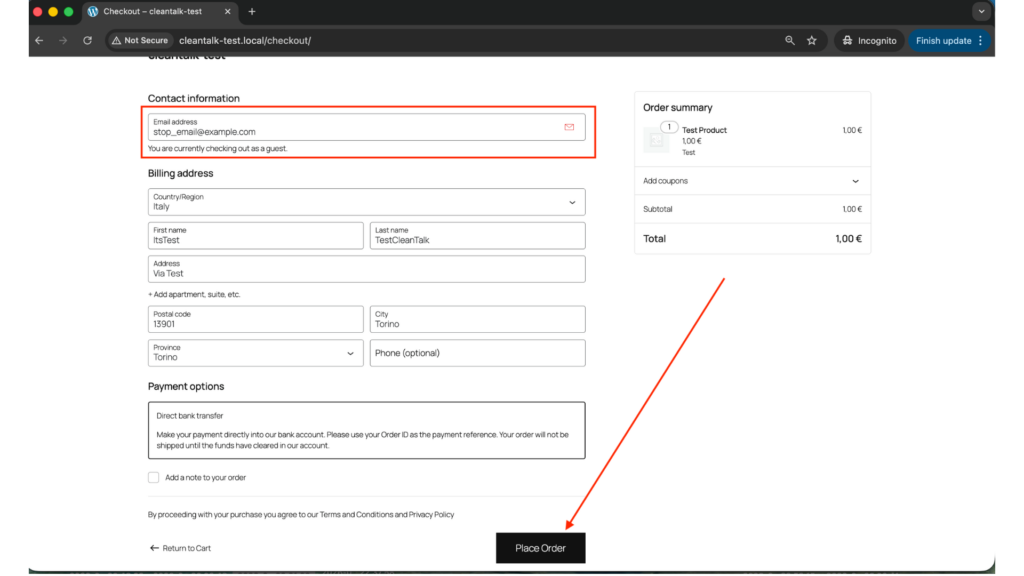
    stop_email@example.com

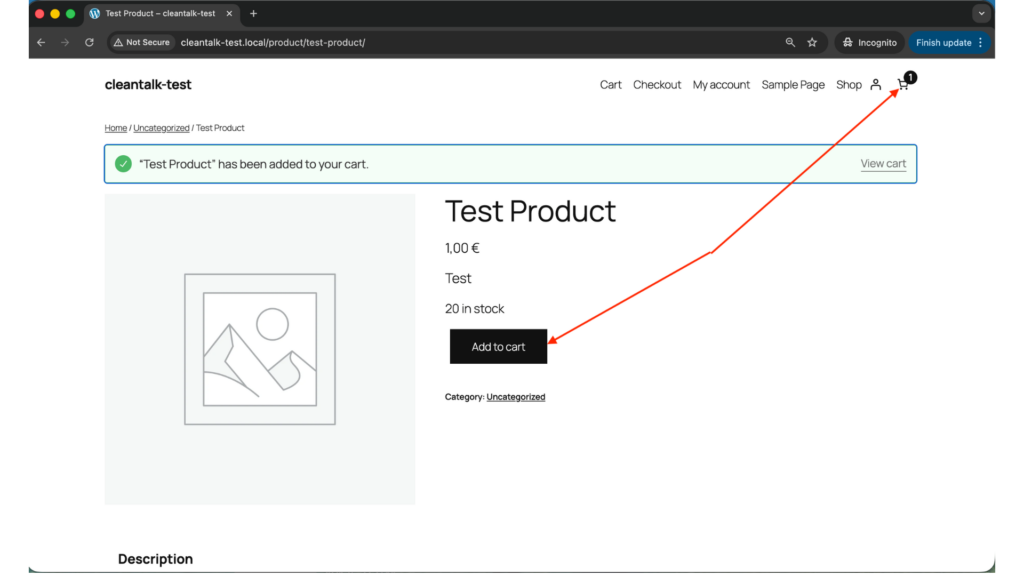
    1. Open your WooCommerce store in an Incognito browser tab. Add any product to the cart and proceed to checkout.
    2. Fill in the checkout form using test customer details and the email address stop_email@example.com.
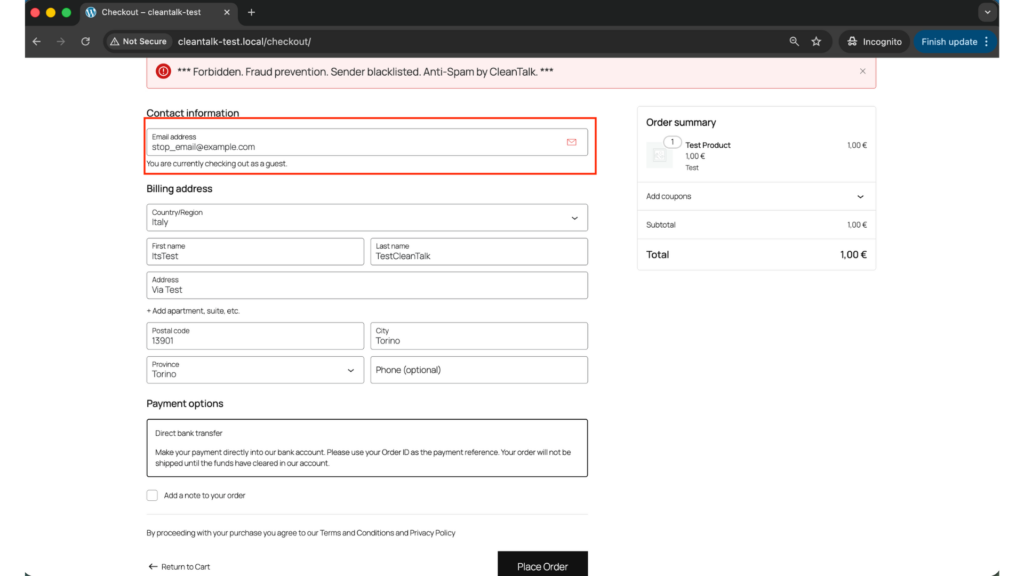
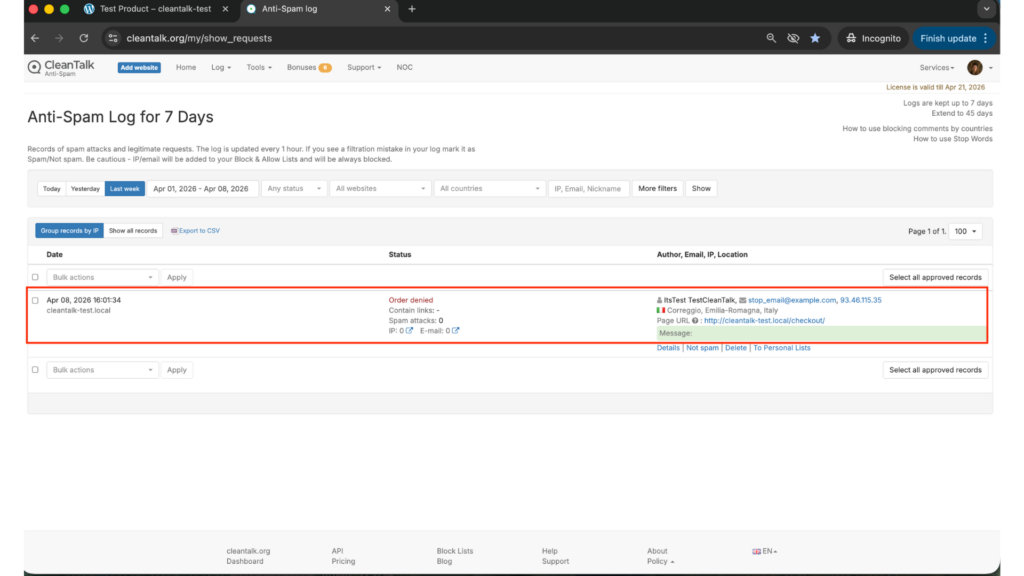
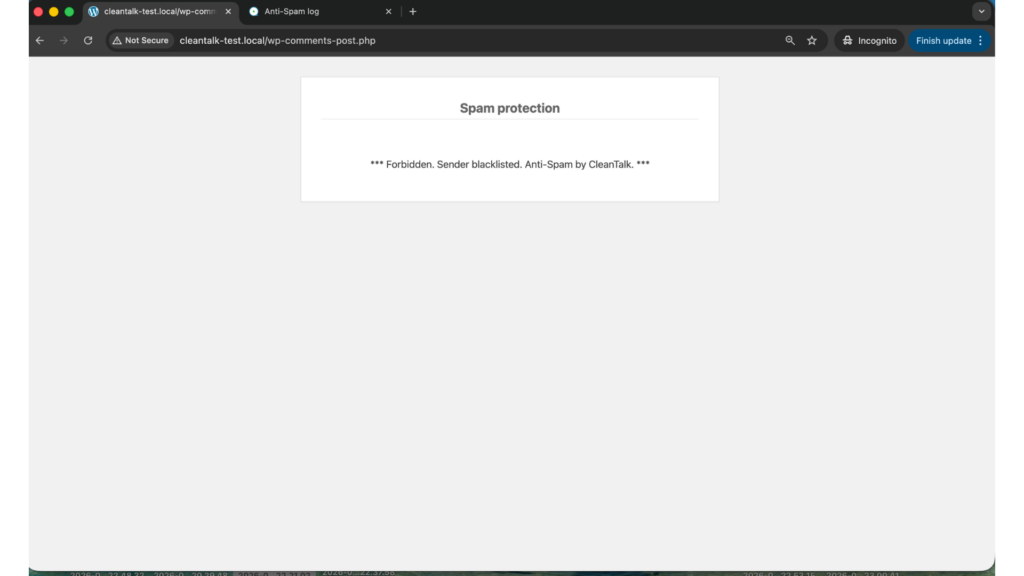
    3. Submit the form. You should see a blocking message similar to the one shown below.

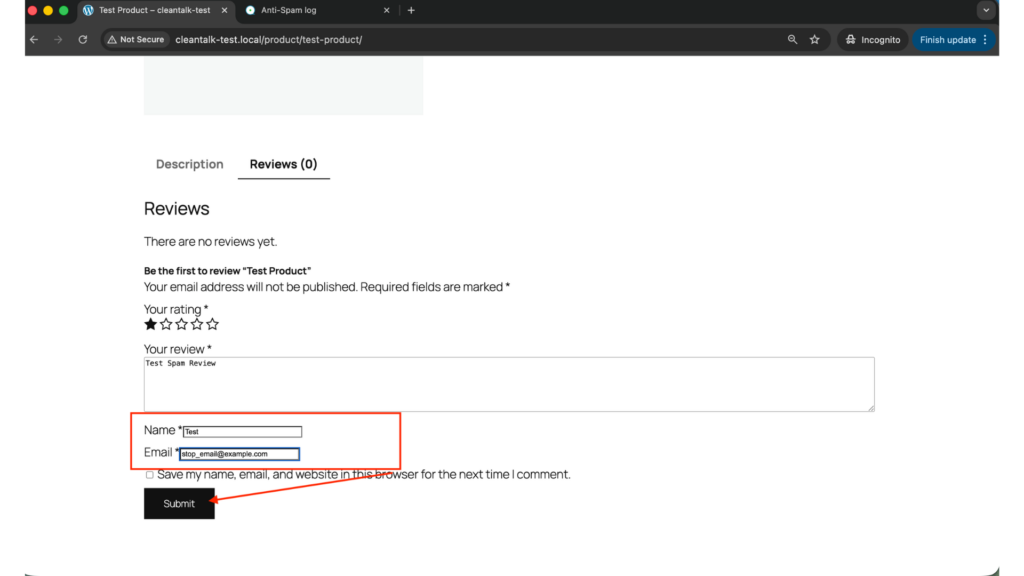
    You can use the same approach to test other WooCommerce-related forms, such as:

    • customer registration forms
    • product review forms
    • enquiry or contact forms connected to the store

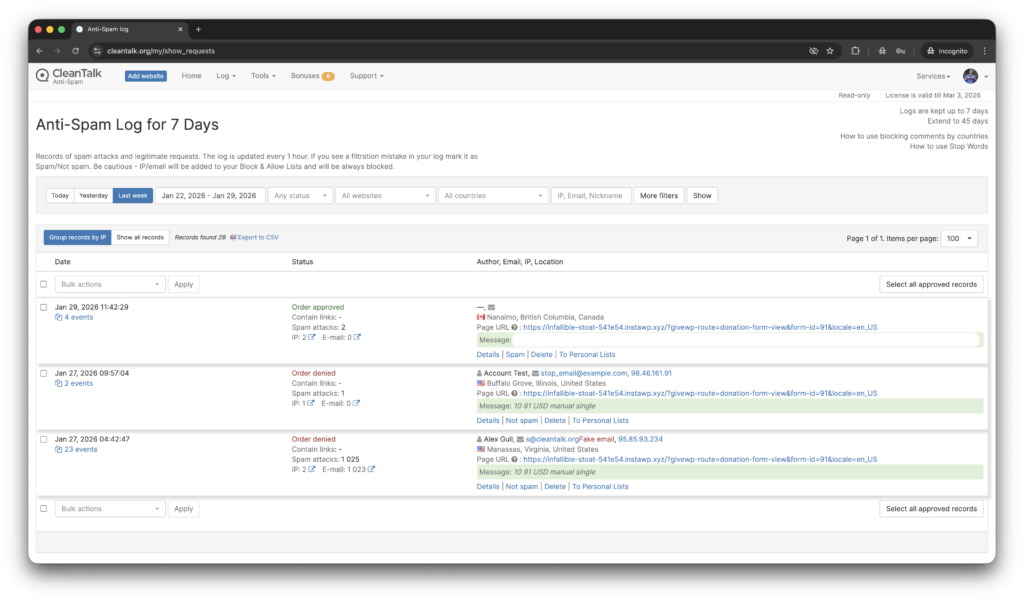
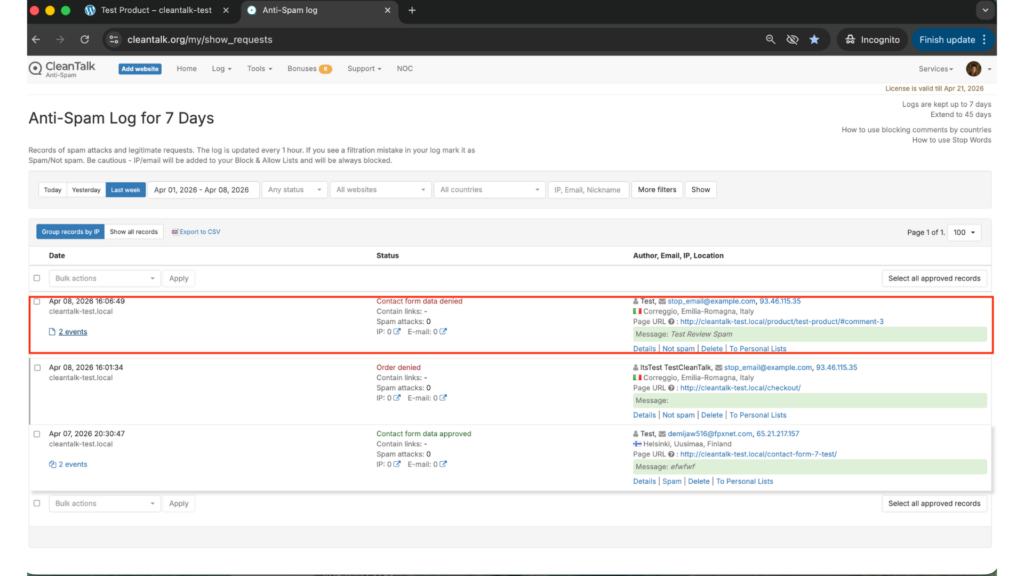
    In addition, in the Cloud Dashboard , you can review additional details about blocked WooCommerce submissions, including:

    • IP address and email of the sender
    • sender activity history across websites connected to the CleanTalk cloud
    • sender geolocation
    • date and time of the submission
    • page URL where the submission was made
    • cloud decision, such as Approved or Denied
    • explanation for the cloud decision
    • tools to move the sender to the Block or Allow lists

    After installing CleanTalk, the next step is to see how the protection works in practice. Below, we show what a fake WooCommerce spam order looks like during submission, how the blocked attempt appears after CleanTalk intervenes.

    We also include an example of a fake spam review to show that the same protection is not limited to checkout alone. This helps demonstrate how CleanTalk can cover different WooCommerce entry points, from orders to reviews, while giving store owners more visibility into suspicious activity.

    This kind of setup helps store owners move from manual cleanup to ongoing prevention. Instead of removing fake orders, spam accounts, and junk reviews after they appear, you reduce the chance of that spam reaching the store in the first place.

    If your store uses additional WooCommerce-related plugins, such as review, enquiry, or registration extensions, it is also worth checking that those forms are included in your anti-spam coverage.

    Final Thoughts

    WooCommerce spam is rarely one isolated issue sitting in one corner of the store.

    Fake orders are often only the most visible symptom. Spam signups weaken data quality. Spam reviews damage trust. Unprotected forms create additional entry points for abuse. If you treat each of these as separate annoyances, you will keep cleaning up symptoms. If you treat them as part of a broader store-level problem, you can protect the customer journey more consistently and keep the experience smoother for real users.

    The practical takeaway is simple: the most effective response is not to patch one symptom and move on. It is to look at the store as a whole, identify where public-facing interactions are exposed, and protect the full customer flow — from registration to checkout to post-purchase engagement.

    For store owners who want a low-friction way to reduce WooCommerce spam across orders, signups, reviews, and related forms, CleanTalk is the natural next step.

    FAQ

    What is WooCommerce spam?

    WooCommerce spam is a broad term for unwanted or automated submissions affecting a WooCommerce store. It can include fake orders, spam registrations, spam reviews, suspicious checkout activity, and abuse of related store forms.

    Does WooCommerce spam include fake orders?

    Yes. Fake orders are one of the clearest and most visible forms of WooCommerce spam, especially when stores start seeing repeated failed orders, suspicious customer details, or unusual checkout patterns.

    Can WooCommerce spam affect registrations and reviews?

    Yes. WooCommerce spam can affect registrations, product reviews, enquiry forms, contact flows, and other public-facing interactions, not just checkout.

    What are the signs of a WooCommerce spam problem?

    Common signs include spikes in failed or pending orders, suspicious user details, fake-looking registrations, spam reviews, repeated patterns in submissions, and junk activity across store-related forms.

    What is the best way to approach WooCommerce spam?

    The strongest approach is to treat it as a store-wide issue and protect orders, registrations, reviews, and related forms together instead of focusing on only one symptom.

    Stop WooCommerce spam without frustrating your customers

    Create your CleanTalk account and start blocking fake orders, spam signups, and spam reviews — no CAPTCHA challenges and no friction for real shoppers.

    CleanTalk Account

    No credit card required • Setup takes less than a minute • Your temporary password will be sent by email.

  • 7 Ways to Prevent Fake Registrations on WordPress (with CleanTalk)

    7 Ways to Prevent Fake Registrations on WordPress (with CleanTalk)

    Fake registrations are more than a minor admin inconvenience. They fill your database with junk accounts, waste moderation time, reduce signup quality, and make it harder to understand what real user activity looks like.

    For WordPress sites, this problem is especially common. Registration forms are public by design, which makes them an easy target for bots, automated scripts, and low-quality signups. Membership websites, WooCommerce stores, directories, LMS platforms, communities, and lead generation projects are all exposed.

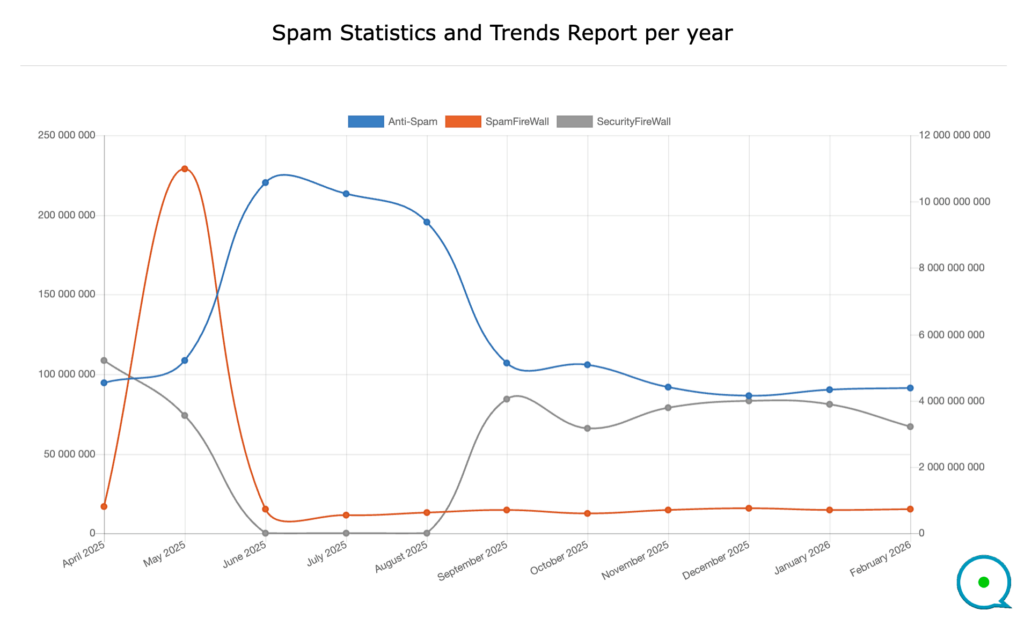
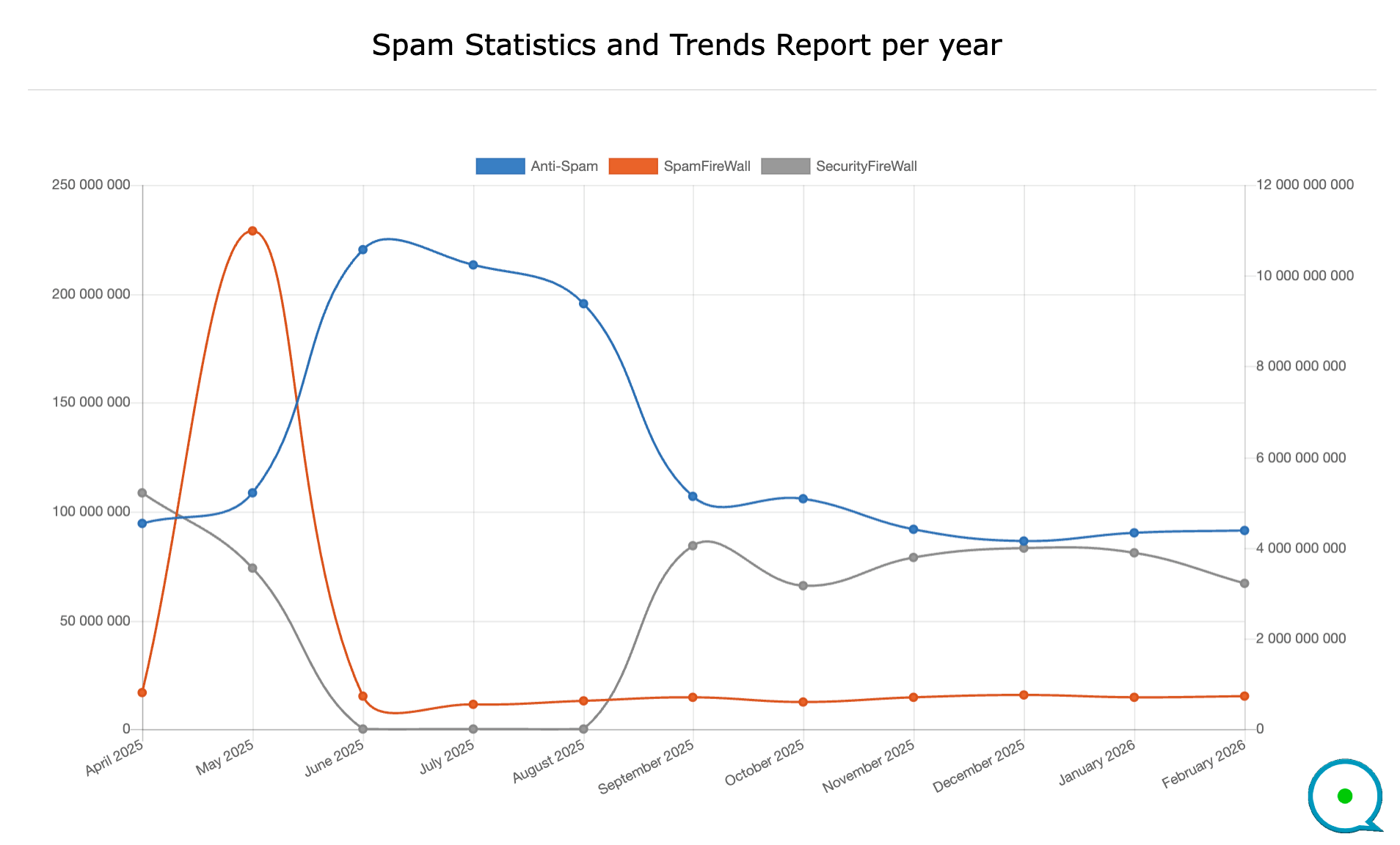
    There is also a broader operational side to this issue. Fake registrations are often just one visible part of a larger spam and bot traffic problem. CleanTalk’s own network data shows that suspicious requests are processed at very high volumes across protected websites, with cloud filtering handling a massive share of that traffic before it turns into a bigger site-level problem

    The good news is that fake registrations can be reduced significantly with the right setup.

    Below are seven practical ways to prevent fake signups on WordPress while keeping the registration flow simple for real users.

    7 Ways to Prevent Fake Registrations on WordPress

    1. Use dedicated anti-spam protection on registration forms

    The default WordPress registration flow is not a complete anti-spam system. If registration is open and there is no dedicated protection in place, fake accounts can enter your database far too easily.

    The first step is simple: protect the registration form itself.

    A dedicated anti-spam solution helps filter suspicious signups before they become user accounts. This reduces manual cleanup, keeps your user list cleaner, and improves the quality of data collected through the signup process.

    CleanTalk is a practical fit here because it is designed to block fake users, spam submissions, and other forms of automated abuse without adding unnecessary friction to the registration experience.

    According to WordPress.org, Anti-Spam by CleanTalk for WordPress has over 200,000 active installations, with 3,168 reviews and an average rating of 4.7.

    Plugin Homepage at cleantalk.org | Latest release at GitHub.com | Website cleantalk.org

    Install the CleanTalk Anti-Spam plugin

    Show Instructions

    To install the Anti-Spam plugin, go to your WordPress admin panelPluginsAdd New.

    Then enter «СleanTalk» in the search box and click the Install button for «Spam protection, Anti-Spam, FireWall by CleanTalk».

    After installing the plugin, click the «Activate»‎ button.

    After it is done go to the plugin settings and click the «Get Access Key Automatically» button. Then just click the «Save Settings»‎ button.

    That’s it! From now you know how to completely protect your HivePress from spam.

    2. Add email confirmation or validation steps

    A valid email format does not always mean a real signup. Many fake registrations use temporary, low-quality, or non-engaged email addresses simply to get through the form.

    That is why email confirmation and validation rules matter.

    Even a basic confirmation step can make fake signups harder to activate and easier to filter out. On higher-risk sites, additional checks may also help improve account quality and reduce junk users before they become part of your system.

    This is especially useful for:

    • membership websites
    • gated content hubs
    • communities and forums
    • B2B lead capture flows
    • downloadable resource pages

    If signup quality matters, email validation should be part of the process.

    3. Do not rely only on CAPTCHA

    CAPTCHA can help reduce some automated submissions, but it should not be the only line of defense.

    The problem is simple: CAPTCHA adds friction for legitimate users and does not always stop more advanced spam activity. A registration flow that depends only on visible challenges can still be bypassed, while real visitors are left with a worse experience.

    A better approach is to use background anti-spam checks first and visible challenges only when they are really needed.

    This is one reason CleanTalk works well for registration protection. It focuses on filtering spam in the background, which helps site owners reduce fake signups without forcing every legitimate user to solve a puzzle before they can create an account.

    4. Add approval steps where the business risk is higher

    Not every WordPress site needs the same registration policy.

    A simple blog may be able to keep things lightweight. A membership site, store, directory, forum, or gated platform may need stronger controls. The more access, content, or operational value a new account creates, the more carefully that account should be validated.

    Useful options include:

    • email activation
    • admin approval
    • restricted access until verification
    • role-based registration rules
    • manual review for suspicious profiles

    The goal is not to create friction everywhere. The goal is to apply more control where fake accounts create more risk.

    5. Look at behavior patterns, not just individual signups

    Fake registrations are rarely isolated. In many cases, they are part of a larger pattern of repeated bot activity, abusive traffic, or automated spam campaigns.

    That is why it helps to think beyond one form submission at a time.

    CleanTalk’s broader protection model supports this layered approach. In addition to form-level anti-spam, CleanTalk SpamFireWall is designed to block many suspicious requests before they reach the website. According to CleanTalk’s own reporting, the cloud layer processes a much larger volume of suspicious requests than the visible spam events site owners usually notice inside forms and registrations

    That matters because fake signups are often just one symptom of a wider abuse pattern.

    6. Monitor signup and spam activity in a dashboard

    Many teams only notice fake registrations after the database is already filled with junk accounts. By then, the problem is harder to measure and slower to fix.

    Visibility changes that.

    When signup and spam activity can be monitored in one dashboard, teams can see blocked events, track spikes, understand where suspicious activity is coming from, and evaluate whether protection settings are working over time.

    This is one of the strongest advantages of the CleanTalk Cloud Dashboard. It turns spam from a cleanup problem into something measurable and manageable.

    That helps answer practical questions like:

    • Are fake signups increasing?
    • Did a recent settings change improve results?
    • Are suspicious requests coming in waves?
    • Is spam pressure affecting only one form or the whole site?

    A dashboard does not just help you react. It helps you make better decisions earlier.

    7. Use one system that combines protection and visibility

    Many site owners try to solve fake registrations with a patchwork stack: one CAPTCHA, one verification step, one moderation rule, one separate way to review activity.

    That can work, but it is rarely simple or scalable.

    A more practical setup is to use one system that combines:

    • registration protection
    • broader anti-spam coverage
    • reduced visible friction
    • cloud-level filtering
    • centralized monitoring

    That is where CleanTalk stands out. Instead of treating fake signups as a narrow registration-form issue, it helps site owners approach the problem as part of a wider spam prevention strategy.

    For WordPress websites, that means cleaner user lists, less manual moderation, and better visibility into what is happening around the signup flow.

    Why CleanTalk is a strong fit for fake registration prevention

    CleanTalk is a strong fit for this use case because it addresses both sides of the problem.

    At the application level, it helps block fake users and spam submissions on registration forms and other public-facing forms. At the cloud level, SpamFireWall helps filter many suspicious requests before they ever reach the site. And through the Cloud Dashboard, teams can review logs, monitor blocked activity, and better understand spam patterns over time.

    That gives site owners a simple and practical framework: protect the form, reduce fake users, and make spam activity visible.

    FAQ

    What are fake registrations in WordPress?

    Fake registrations are user accounts created by bots, spammers, or low-quality users who have no real intention of engaging with your website. These accounts often use suspicious usernames, temporary email addresses, or automated signup patterns.

    Why are fake registrations a problem?

    Fake registrations do more than clutter your user database. They waste admin time, reduce data quality, distort reporting, and can create extra moderation and security work for your team.

    Why does WordPress get so many fake signups?

    WordPress registration forms are public and easy for bots to find. If registration is enabled without proper protection, automated scripts can create fake accounts at scale.

    How do I stop fake registrations on WordPress?

    The most effective approach is layered protection. This usually includes dedicated anti-spam protection, email confirmation or validation, approval rules for higher-risk registrations, and monitoring suspicious activity over time.

    Is CAPTCHA enough to stop fake registrations?

    Not always. CAPTCHA can reduce some spam registrations, but many site owners use additional anti-spam protection because CAPTCHA alone may not stop all fake signups and can add friction for legitimate users.

    Can CleanTalk block fake users on WordPress?

    Yes. CleanTalk is designed to help block fake users, spam submissions, and other types of abuse on WordPress forms.

    How is CleanTalk different from basic signup protection?

    CleanTalk combines form-level anti-spam protection with cloud-based filtering and dashboard visibility. This helps site owners not only reduce fake registrations, but also monitor suspicious activity more effectively.

    Does CleanTalk only protect registration forms?

    No. CleanTalk can also help protect comments, contact forms, and other public-facing submission points on a WordPress site.

    What kinds of websites need fake registration protection most?

    This is especially important for membership sites, WooCommerce stores, directories, forums, LMS platforms, and lead generation websites.

    Will anti-spam protection hurt the user experience?

    Not necessarily. Many site owners prefer solutions that work in the background and reduce spam without forcing legitimate users through extra visible challenges.

    Final takeaway

    Fake registrations on WordPress are best handled with layered protection. Kinsta’s guidance supports using a combination of CAPTCHA, admin approval, email activation, and dedicated anti-spam plugins. CleanTalk’s official product materials support using its plugin to block fake users and its SpamFireWall to stop many spam bots before they ever reach the site.

    If your site is dealing with fake signups, the practical goal is not to add random friction everywhere. It is to make registrations easier for real users and harder for bad actors.

    Stop fake registrations on WordPress without CAPTCHAs

    Create your CleanTalk account and protect WordPress registration forms from fake users, spam signups, and automated bot activity. Keep signups easy for real visitors while extending protection across comments, contact forms, and other WordPress forms.

    Protect Your Registration Forms

    No credit card required • Setup takes less than a minute • Protect registrations, comments, and contact forms.

  • Formidable Forms Spam Protection in 2026

    Formidable Forms Spam Protection in 2026

    If you use Formidable Forms on a WordPress website, spam will eventually become a real issue. It usually starts with a few junk submissions in a contact form, quote request form, survey, quiz, or registration form. Then it turns into fake leads, bot traffic, meaningless messages, and wasted admin time.

    That is not a Formidable-specific flaw. It is a normal consequence of running public-facing forms on a visible website. The more accessible the form is, the more often bots and abusive senders will try to submit it. That is why Formidable Forms spam protection should be configured from the start, not only after your inbox is already full of garbage entries.

    This guide explains how to build a practical layered setup for Formidable spam protection. The main solution here is the Anti-Spam plugin by CleanTalk, and then we will also cover additional tools such as built-in anti-spam options, honeypot protection, reCAPTCHA, hCaptcha, Cloudflare Turnstile, and other WordPress anti-spam plugins.

    By the end of this article, you will know how to stop most fake submissions in Formidable Forms without making your forms harder for real visitors to use.

    formidable logo

    Formidable Forms – WordPress Form Builder Plugin

    First, let’s take a quick look at Formidable Forms itself.

    Formidable Forms is a WordPress form builder used for much more than a basic contact form. Website owners use it to create contact forms, lead forms, quote request forms, surveys, quizzes, registration flows, calculators, payment forms, and other custom workflows. That flexibility is exactly why the plugin is attractive for businesses, agencies, and content-driven sites.

    But that same flexibility also increases spam exposure. The more public forms a website has, the more entry points it gives to spambots and abusive users.

    Typical Formidable spam problems include:

    • fake contact messages,
    • junk quote requests,
    • automated survey submissions,
    • low-quality leads,
    • bot-driven registration attempts,
    • repeated testing of form fields and validation logic.

    So when users search for formidable spam, they are usually not describing one single issue. They often mean a broader set of problems: fake submissions, spammy messages, junk leads, bot traffic, and abusive attempts to use public forms.

    A strong anti-spam strategy should address all of those while keeping the experience simple for legitimate users.

    As WordPress.org shows, Formidable Forms is currently used on over 300,000 websites and has 1,357 user reviews with an average rating of 4.8.

    Plugin Homepage at wordpress.org | Website formidableforms.com

    Install Formidable Forms to create contact forms, quote request forms, surveys, quizzes, registration forms, and other custom forms in WordPress.

    You can set it up in just a few easy steps:

    1. Search for the plugin in WordPress console -> Plugins -> Add Plugin -> Search -> Type ‘Formidable Form

    Search for the plugin in WordPress console

    2. Install and Activate the plugin

    Install and Activate the plugin

    3. Create your first form in WordPress console -> Formidable -> Forms -> Add New.

    WordPress console -> Formidable -> Forms -> Add New -> choose a template or start with a blank form -> add fields and settings -> Save.

    4. That’s all! Your first form is ready and Formidable Forms is now set up on your site.

    Anti-Spam plugin by CleanTalk for WordPress

    The main solution in this guide is the Anti-Spam plugin by CleanTalk.

    CleanTalk is a cloud-based anti-spam service for WordPress and other CMS platforms. Instead of making every visitor solve a challenge, it checks submissions in the background and filters spam automatically. This matters because one of the biggest weaknesses of CAPTCHA-only protection is friction: every extra test can reduce conversion rate and annoy real users.

    Here is why CleanTalk works well for Formidable Forms websites:

    • it checks submissions automatically in the background,
    • it helps protect contact, registration, survey, quote, and feedback forms,
    • it reduces fake entries before they clutter your inbox or database,
    • it does not rely on classic CAPTCHA for every visitor,
    • it gives you a cloud dashboard for reviewing decisions and fine-tuning protection if needed.

    In practical terms, this means you can keep the form experience clean for real users while filtering suspicious behavior in the background.

    For most websites, CleanTalk should be the primary spam filter, while CAPTCHA and other tools are used only as additional layers on higher-risk forms.

    According to WordPress.org, Anti-Spam by CleanTalk for WordPress has over 200,000 active installations, with 3,168 reviews and an average rating of 4.7.

    Plugin Homepage at cleantalk.org | Latest release at GitHub.com | Website cleantalk.org

    Install the CleanTalk Anti-Spam plugin

    Show Instructions

    To install the Anti-Spam plugin, go to your WordPress admin panelPluginsAdd New.

    Then enter «СleanTalk» in the search box and click the Install button for «Spam protection, Anti-Spam, FireWall by CleanTalk».

    After installing the plugin, click the «Activate»‎ button.

    After it is done go to the plugin settings and click the «Get Access Key Automatically» button. Then just click the «Save Settings»‎ button.

    That’s it! From now you know how to completely protect your HivePress from spam.

    Check if spam protection works with Formidable Forms

    The easiest way to test the setup is to use the CleanTalk test email:

    stop_email@example.com

    Use this method:Open a page with your Formidable form in an Incognito or Private browser window.

    1. Fill out the form.
    2. Use stop_email@example.com as the sender email.
    Screenshot 2026 03 21 at 19.48.18

    4. Submit the form.

    5. You should see a blocking message from the Anti-Spam plugin instead of a successful submission.

    Screenshot 2026 03 21 at 22.21.13

    If that happens, the protection is working correctly and your Formidable form is already filtering known spam submissions.

    Cloud Dashboard

    In addition, the CleanTalk Cloud Dashboard gives you more visibility into what is happening with submissions processed through the anti-spam service.

    For Formidable Forms websites, this is useful because it helps you review not only whether a submission was blocked, but also why it was blocked.

    In the dashboard, you can usually find details such as:

    • sender IP and email,
    • geolocation of the sender,
    • date and time of the submission,
    • page URL where the form was submitted,
    • cloud decision – Approved or Denied,
    • explanation for the decision,
    • tools to move the sender to Allow or Block lists.

    This is especially helpful if the site receives repeated attacks, recurring junk leads, or suspicious activity from the same sources.

    Built-in Spam Protection in Formidable Forms

    Besides CleanTalk, Formidable Forms itself can be used with built-in anti-spam measures and additional anti-abuse checks.

    These are useful, but in most real-world cases they work best as secondary protection, not as the only defense.

    Honeypot protection

    A honeypot is one of the simplest anti-spam methods. It adds hidden fields that real visitors do not interact with, but simple bots often fill automatically. When that happens, the submission can be rejected.

    Why honeypot is useful:

    • it is invisible to legitimate users,
    • it creates no extra friction,
    • it catches primitive bots efficiently.

    Why it is not enough on its own:

    • more advanced bots can bypass it,
    • it does not handle every case of fake leads or manual spam,
    • it is better as a supporting layer than as a full anti-spam strategy.

    That is why honeypot is a good addition, but not a complete replacement for a broader spam filter.

    Native anti-spam and validation options

    Form builders often include basic anti-abuse logic, validation rules, and submission checks. These can help reduce low-quality automated submissions and obvious junk entries.

    However, built-in checks are usually narrower than a dedicated anti-spam service. They may stop some bot patterns, but they do not always provide broader reputation analysis, behavior-based filtering, or cloud-level spam intelligence.

    For that reason, a layered setup works better: use Formidable’s own checks where appropriate, but keep CleanTalk as the main filter working in the background.

    reCAPTCHA, hCaptcha, and Cloudflare Turnstile for Formidable Forms

    Another common question is whether CAPTCHA should be used together with Formidable Forms.

    The answer is: yes, sometimes – but not as the only protection layer.

    CAPTCHA-style tools are most useful for higher-risk forms, such as:

    • registration forms,
    • quote request forms,
    • lead generation landing pages,
    • public surveys,
    • pages that receive repeated bot attacks.

    Google reCAPTCHA

    Google reCAPTCHA is one of the best-known anti-bot tools. It can reduce obvious automated abuse, but it also has downsides:

    • it may interrupt the user experience,
    • it can lower form completion rates,
    • some spam still passes through,
    • it does not replace a complete anti-spam strategy.

    So reCAPTCHA can help, but it should not replace your main spam filter.

    hCaptcha

    hCaptcha is often chosen by site owners who want an alternative to Google-based services. It can be useful as an additional challenge layer for forms that receive repeated automated abuse.

    Its role in a Formidable setup is simple: increase resistance on risky forms while CleanTalk continues filtering quietly in the background.

    Cloudflare Turnstile

    Cloudflare Turnstile is a more modern alternative that often works with less visible friction than classic CAPTCHA challenges. For websites that want extra bot protection with a lighter user experience, it can be a strong second layer.

    But the same principle still applies:

    Do not rely on Turnstile alone.
    Use it together with CleanTalk, not instead of CleanTalk.

    Akismet and other third-party anti-spam plugins

    There are also other WordPress anti-spam solutions that site owners may consider.

    Akismet

    Akismet is well known in the WordPress ecosystem and is often used for comments and basic spam filtering. On a Formidable-based website, it may help with broader site-level anti-spam needs outside the form workflow itself.

    But for a forms-heavy website, Akismet is usually better treated as a supporting layer rather than the core Formidable spam protection strategy.

    Other universal anti-spam plugins

    Some website owners also try solutions such as:

    • WP Armour,
    • OOPSpam,
    • Maspik,
    • honeypot plugins,
    • CAPTCHA-focused plugins.

    These can be useful in specific projects, especially if a website has unusual traffic patterns or several different plugins handling different submission points.

    At the same time, using too many overlapping anti-spam plugins can also create conflicts, duplicate filtering, false positives, or an unnecessarily complicated admin workflow.

    That is why the cleaner approach is usually better:

    one primary spam filter, one optional CAPTCHA layer, and extra tools only where they solve a clear problem.

    Frequently Asked Questions

    Why am I still getting fake submissions in Formidable Forms after enabling spam protection?

    Spam protection blocks most automated junk, but not every unwanted lead is a classic bot submission. Some low-quality entries may be submitted manually or by more advanced automated methods. In that situation, the best fix is layered protection: keep CleanTalk as the main background filter and add CAPTCHA or Turnstile only to the forms that receive repeated abuse.

    Can CleanTalk protect all Formidable Forms or do I need to configure each form separately?

    In most cases, CleanTalk starts checking form submissions after installation and activation, so you do not need to rebuild every Formidable form manually. That makes it convenient for websites with multiple contact forms, quote request forms, survey forms, and registration pages.

    Should I use CAPTCHA together with CleanTalk for Formidable Forms?

    For many standard contact forms, CleanTalk alone is enough. But if a site runs registration forms, quote pages, paid-traffic landing pages, or other high-risk forms, adding reCAPTCHA, hCaptcha, or Cloudflare Turnstile as a second layer is a good idea.

    What types of Formidable forms attract the most spam?

    The most common targets are contact forms, lead generation forms, quote request forms, registration forms, and surveys on public pages. These forms are easy for bots to discover and usually contain clear fields that can be abused at scale.

    How can I check whether CleanTalk is actually blocking Formidable spam?

    The simplest test is to open your Formidable form in an Incognito window and submit it using stop_email@example.com. If CleanTalk is working correctly, the form submission should be blocked and a spam warning should appear.

    Why would a legitimate Formidable form submission be blocked as spam?

    Occasional false positives can happen with any anti-spam system. This may be caused by unusual sender behavior, shared networks, VPN use, aggressive browser settings, or plugin conflicts. If needed, review the event in the CleanTalk dashboard and move trusted senders to the allow list.

    What is the best anti-spam setup for contact, quote, and registration forms built with Formidable?

    For most websites, the best setup is CleanTalk as the main spam filter, Formidable’s built-in checks or honeypot as a lightweight extra layer, and CAPTCHA only on the forms with the highest spam risk. This keeps the user experience smoother than forcing challenge-based verification everywhere.

    Why are my Formidable form notifications landing in spam folders even when submissions are blocked correctly?

    This usually points to an email delivery issue rather than a form filtering problem. If form notifications go to spam, configure SMTP for the WordPress site, avoid relying on the default PHP mail function, and make sure the sending domain has valid SPF, DKIM, and DMARC records.

    Recommended Anti-Spam Stack for Formidable Forms 

    No single anti-spam method stops every type of spam. The most reliable approach is a layered anti-spam stack, where each layer deals with a different category of abuse.

    Small business website with a contact form

    Recommended setup:

    • CleanTalk Anti-Spam as the main protection,
    • optional honeypot or built-in checks,
    • occasional dashboard review if spam appears.

    That is usually enough for a simple business website with normal traffic.

    Lead generation, quote request, survey, or registration forms

    Recommended setup:

    • CleanTalk Anti-Spam as the main protection,
    • honeypot or built-in validation as an extra layer,
    • reCAPTCHA, hCaptcha, or Turnstile on the most attacked forms.

    This setup gives better resistance against recurring bot attacks and fake leads.

    High-traffic or high-risk forms

    Recommended setup:

    • CleanTalk Anti-Spam as the main protection,
    • CAPTCHA or Turnstile on targeted forms,
    • allow/block list tuning in the dashboard,
    • checks for plugin conflicts,
    • SMTP configuration for reliable email notifications.

    This is the best option for websites that actively attract spam traffic.

    Final thoughts

    If you are trying to stop Formidable Forms spam in WordPress, the most effective approach is not to rely on one tool alone.

    A reliable setup usually looks like this:

    • CleanTalk as the main background spam filter,
    • honeypot or built-in checks as lightweight support,
    • reCAPTCHA, hCaptcha, or Turnstile only where additional verification is needed,
    • dashboard monitoring and personal lists for fine-tuning.

    That combination helps reduce fake submissions, keeps the form experience cleaner for real users, and gives you more control when spam patterns change over time.

    Stop Formidable Forms spam without frustrating your visitors

    Create your CleanTalk account and start blocking spam form submissions, fake registrations, survey spam, quiz abuse, and junk leads — no CAPTCHA challenges and no impact on real visitors.

    CleanTalk Account

    No credit card required • Setup takes less than a minute • Your temporary password will be sent by email.

  • CleanTalk Releases version 1.6. Update for the MyBB Anti-Spam Plugin

    CleanTalk Releases version 1.6. Update for the MyBB Anti-Spam Plugin

    Blue And White Modern Website Development Service Facebook Ad

    We’ve published a new update for AntiSpam by CleanTalk for MyBB. This release includes one targeted Fix: Anti-Spam. Rotating moderate disabled.

    The update was published in response to a request from the MyBB community. For this integration, new releases are published when there is a clear maintenance need or a specific issue to resolve. In this case, the new version addresses a reported anti-spam-related issue and improves the reliability of the plugin for MyBB forum administrators.

    This version is a focused maintenance release that solves a real problem and helps keep spam protection stable for forums using CleanTalk to protect registrations and user activity. Thank you to the MyBB community for the feedback and continued trust in CleanTalk.

  • HivePress Spam Protection in 2026

    HivePress Spam Protection in 2026

    If you use HivePress to power a directory, classifieds, or marketplace website, you will eventually face spam – fake listings, bot registrations, and junk messages.

    This guide explains how to set up HivePress spam protection using:

    • the Anti-Spam plugin by CleanTalk with direct integration for HivePress, and
    • additional tools like Google reCAPTCHA and basic moderation.

    The integration now protects both:

    • the registration form of HivePress (requests to /wp-json/hivepress/v1/users/), and
    • the Add Listing form used to submit new listings.
    hivepress logo

    HivePress – Business Directory & Classified Ads Plugin

    First, let’s take a quick look at HivePress itself and the types of sites you can build with it.

    HivePress is a free and highly flexible WordPress plugin for building any type of directory or listing website: business directory, job board, classifieds, real estate catalog, rental marketplace, and more.

    Out of the box HivePress provides:

    • listing types, categories and custom fields;
    • powerful search filters and location-based search;
    • user accounts, ratings, reviews, private messages and favorites.

    Because HivePress relies heavily on user-generated content and public forms, it quickly becomes a target for spambots. That’s why it is important to have a reliable HivePress spam protection setup from the beginning.

    As WordPress.org shows, HivePress is currently used on over 10,000 websites and has 213 user reviews with an average rating of 4.9.

    Plugin Homepage at wordpress.org | Website hivepress.io


    Install HivePress to build business directories, classifieds, marketplaces and other listing websites.

    You can set it up in just a few easy steps:

    1. Search for the plugin in WordPress console -> Plugins -> Add plugin -> Search -> Type ‘hivepress

    Untitled design

    2. Install and Activate the plugin.

    3. Add the very first listing in WordPress console -> Listings -> Add New.

    Untitled design (2)

    WordPress console -> Listings -> Add New -> add title, description, images and other fields -> Publish.

    4. That’s all! Your first listing is live and HivePress is ready to use on your site.

    Anti-Spam plugin by CleanTalk for WordPress

    The next tool we’re going to use is the Anti-Spam plugin by CleanTalk.
    Here’s a short overview:

    • CleanTalk is a cloud-based spam protection service for websites, founded in 2012.
    • It automatically blocks spam without CAPTCHAs and doesn’t interrupt the user experience.
    • Protects many types of forms: contact forms, payment forms, registrations, comments, surveys and more.
    • Stops both automated bots and human spam submissions.
    • Uses advanced filtering algorithms and a global spam detection network.
    • Detects spam based on IP address, email address and user behavior.
    • Lets you create custom filtering rules for specific cases.
    • Allows blocking or filtering by IP, email and country.
    • Works quietly in the background and is very easy to install and configure.

    According to WordPress.org, Anti-Spam by CleanTalk for WordPress has over 200,000 active installations, with 3,168 reviews and an average rating of 4.7.

    Plugin Homepage at cleantalk.org | Latest release at GitHub.com | Website cleantalk.org

    Install the CleanTalk Anti-Spam plugin

    Show Instructions

    To install the Anti-Spam plugin, go to your WordPress admin panelPluginsAdd New.

    Then enter «СleanTalk» in the search box and click the Install button for «Spam protection, Anti-Spam, FireWall by CleanTalk».

    After installing the plugin, click the «Activate»‎ button.

    After it is done go to the plugin settings and click the «Get Access Key Automatically» button. Then just click the «Save Settings»‎ button.

    That’s it! From now you know how to completely protect your HivePress from spam.

    Check if spam protection works with HivePress

    The best way to test the spam protection by using a test email,

    stop_email@example.com

    1. Open page with your form (don’t forget to add the shortcode in the page content) in Incognito browser tab.
    2. Fill out the Contact form using stop_email@example.com as sender’s email.
    3. Send the form.
    4. You should see a message from the Anti-Spam plugin confirming that a spam submission was blocked.
    Untitled design (9)
    If you see this message, it means CleanTalk successfully protects your HivePress forms (registration and Add Listing) from spam.

    Cloud Dashboard

    In addition, in the Cloud Dashboard you can find extra details regarding all submissions processed by CleanTalk, including HivePress registration and Add Listing forms:

    • IP and email of the sender, as well as the sender’s activity history across other websites connected to the CleanTalk cloud.
    • Geolocation of the sender.
    • Date and time of the submission.
      Page (URL) where the form was submitted (for example, a specific listing submission page).
    • Cloud decision – Approved or Denied.
    • Cloud explanation for the decision (e.g. blacklisted email, bad IP reputation, spam text, etc.).
    • Tools to move the sender to Block or Allow lists so you can fine-tune HivePress spam protection.

    Google reCAPTCHA, hCaptcha, and Cloudflare Turnstile

    Besides CleanTalk and the built-in HivePress tools, you can also use cloud CAPTCHA / anti-bot services together with HivePress to reduce spam and protect registration and Add Listing forms.

    Google reCAPTCHA (native HivePress integration)

    HivePress has a core integration with Google reCAPTCHA v2:

    • First, register your site in the Google reCAPTCHA admin and generate a Site Key and Secret Key.
    • Then go to WordPress console → HivePress → Settings → Integrations → reCAPTCHA and paste these keys.
    • In the same section you can select which HivePress forms to protect (for example, registration, login, listing submission).

    This helps reduce spam submissions and adds an extra security layer to HivePress forms, while CleanTalk continues to filter all submissions in the background.

    hCaptcha

    HivePress does not currently include native hCaptcha support. However, you can use hCaptcha on your site via separate WordPress plugins (for example, “hCaptcha for Forms and More”) that add hCaptcha to standard WordPress forms and some popular plugins.

    Key benefits of hCaptcha compared to reCAPTCHA:

    • Better privacy for visitors. hCaptcha collects less tracking data and is more focused on privacy and GDPR-friendly use.
    • Reduced dependence on Google services. Useful for projects that prefer not to rely on Google infrastructure for branding or compliance reasons.
    • Optional monetization. hCaptcha offers a program where site owners can earn small rewards for solved challenges, something reCAPTCHA does not provide.

    To use hCaptcha you need to:

    • obtain a Site Key and Secret Key in the hCaptcha dashboard,
    • install and configure the corresponding WordPress plugin,
    • and test that hCaptcha is correctly displayed and working on your HivePress registration and Add Listing forms (since there is no direct HivePress integration yet).

    Cloudflare Turnstile

    Cloudflare Turnstile is a modern CAPTCHA alternative that verifies users mostly in the background, without classic image puzzles.

    Turnstile can be connected to WordPress via dedicated plugins that integrate Turnstile with standard WordPress forms and some third-party plugins.

    Main benefits of Cloudflare Turnstile compared to classic reCAPTCHA:

    • Invisible verification. Turnstile usually works silently in the background, so users can submit forms without extra clicks and image challenges.
    • Higher form completion rates. With fewer interruptions, registration and listing submission forms tend to have fewer abandoned attempts.
    • Strong privacy approach. Turnstile is designed to minimize user tracking and does not rely on heavy behavioral profiling, which makes it more privacy-friendly than traditional CAPTCHA solutions.

    As with hCaptcha, you need to:

    • obtain a Site Key and Secret Key in the Cloudflare Turnstile dashboard,
    • configure the chosen WordPress plugin,
    • and verify that Turnstile is actually applied to the pages where HivePress renders registration or Add Listing forms.

    Honeypot, Akismet and third-party Anti-Spam plugins

    Additionally, let’s consider standalone plugins and anti-spam mechanics that also work for HivePress-based websites.

    Honeypot

    Honeypot is one of the simplest anti-spam mechanics against primitive spam bots. It works by adding hidden fields that are only detected and filled by bots. When a bot fills these fields, the submission is blocked automatically, while legitimate users never see any additional challenges.

    Because no CAPTCHA or interaction is required, honeypots:

    • help maintain a smooth user experience,
    • reduce friction on registration and Add Listing forms,
    • and add a lightweight extra layer of protection.

    You can enable honeypot protection via a dedicated WordPress plugin, for example WP Armour – Honeypot Anti Spam.

    Settings are available in the plugin configuration, for example:

    • WordPress console -> Plugins -> Add New -> Search -> type ‘WP Armour’
    • Install and Activate the plugin.
    • WordPress console -> Settings -> WP Armour (or the plugin’s own menu item) -> enable honeypot protection for the forms used with HivePress (registration / Add Listing pages).

    Effective on March 19th, 2026 users report that WP Armour does not protect or support HivePress. They observe spam subscriptions and accounts. Read more.

    Third-party Anti-Spam plugins

    Akismet

    Akismet Anti-Spam helps WordPress users automatically filter spam submissions by analyzing form data against its global spam detection network. It works in the background to identify suspicious content and prevent unwanted messages from reaching your inbox or database. This reduces manual moderation and helps keep comments and basic contact forms clean.

    Looking for an Akismet alternative for registrations and forms?

    For HivePress websites, Akismet can be used together with CleanTalk to:

    • filter blog comments and simple contact forms,
    • reduce low-quality submissions outside of HivePress-specific forms.

    In order to activate protection the user must:

    1. Install and activate the third-party plugin Akismet Anti-Spam.
    2. Get an API key from Akismet and enter it in the plugin settings.
    3. Enable spam checking for the content types you need (comments, contact forms, etc.).

    Typical path:

    • WordPress console -> Plugins -> Add New -> Search -> type ‘Akismet’
    • Install and Activate the plugin.
    • WordPress console -> Settings -> Akismet Anti-Spam -> enter API key and save.

    Other universal Anti-Spam plugins

    OOPSpam, Maspik, and Simple CAPTCHA Alternative are universal anti-spam plugins for WordPress that provide additional spam protection at the site level. They can help filter spam on contact forms, comments and other areas of your site that are not covered directly by HivePress integration.

    All of these solutions can be found in the search results at wordpress.org:

    WordPress console -> Plugins -> Add New -> Search -> type ‘WP Armour’ | ‘OOPSpam’ | ‘Maspik’ | ‘Simple CAPTCHA Alternative’
    Install and Activate the chosen plugin, then configure it according to its documentation.

    These third-party plugins can be used alongside CleanTalk and HivePress as optional extra layers of protection for high-risk or high-traffic projects.

    This guide explains how to protect HivePress forms using the Anti-Spam plugin by CleanTalk together with additional tools such as Google reCAPTCHA, hCaptcha, Cloudflare Turnstile, honeypot mechanisms and third-party anti-spam plugins like Akismet, OOPSpam and Maspik.

    Frequently Asked Questions (FAQ)

    Still getting spam through your HivePress forms?

    If nothing works in this guide, try a few more things:

    1. Block spammers by particular IPs, countries and email masks via Personal lists in your CleanTalk account.
    2. Enable listing moderation in HivePress, so new listings must be approved by an admin before they go live.
    3. Check for plugin conflicts – temporarily disable other anti-spam / security plugins and test HivePress registration and Add Listing forms only with CleanTalk enabled.
    4. Submit a support request to CleanTalk, attaching examples of spam submissions (IPs, emails, message text, page URLs). The support team will do their best to tune spam protection for your specific case.
    reCAPTCHA not saving in HivePs settingress or showing errors

    If reCAPTCHA keys are not saved or you see an error in HivePress → Settings → Integrations → reCAPTCHA:

    1. Make sure you are using the correct key type (usually reCAPTCHA v2 for HivePress).
    2. Double-check that the domain in the Google reCAPTCHA admin exactly matches your site.
    3. Remove any extra spaces when pasting the Site Key and Secret Key.
    4. Try temporarily disabling other CAPTCHA / security plugins and saving the settings again.
    5. If the issue persists, you can switch to an alternative solution such as hCaptcha or Cloudflare Turnstile via a separate WordPress plugin, while keeping CleanTalk as your main spam filter.
    HivePress + hCaptcha / Turnstile does not prevent spam

    If you enabled hCaptcha or Cloudflare Turnstile but spam still comes through:

    1. Do not rely on hCaptcha / Turnstile alone – always keep CleanTalk Anti-Spam enabled as the primary filter.
    2. Enable honeypot protection if it is available in your chosen security / form plugins to catch simple bots.
      Check that there are no plugin conflicts disabling CleanTalk checks or bypassing them.
    3. Use layered protection: CleanTalk + CAPTCHA (reCAPTCHA / hCaptcha / Turnstile) + HivePress moderation usually works much better than any single method.
    Emails from HivePress forms are going to spam.
    1. Check SMTP configuration and avoid sending mail via the default PHP mail() function.
    2. Install and configure an SMTP plugin, so your site sends messages through an authenticated email account (hosting mail, Gmail, or a transactional service).
    3. Verify that your domain has proper SPF / DKIM / DMARC records to improve sender reputation.
    4. After configuring SMTP, send a few test submissions from HivePress forms and confirm that notifications now arrive in the inbox, not in spam.

    Recommended Anti-Spam Stack for HivePress (2026)

    Finally, no single anti-spam tool can stop every type of spam submission. The most reliable approach for HivePress websites is a layered protection stack, where each tool blocks a different category of bots and spam behavior.

    Starting from the latest plugin update, the Anti-Spam plugin by CleanTalk includes a direct integration with HivePress. It automatically protects the HivePress registration form and the Add Listing form before a new user account or listing is created, without any extra settings inside HivePress. This integration is the core of the recommended anti-spam stack below.

    Recommended setup by site type

    Small business directory / local listings

    • CleanTalk Anti-Spam (with direct HivePress integration)
    • Optional honeypot protection in a security/form plugin
    • Basic HivePress listing moderation

    High-traffic classifieds or service marketplace

    • CleanTalk Anti-Spam (with direct HivePress integration)
    • Google reCAPTCHA or Cloudflare Turnstile on registration and Add Listing forms
    • Listing moderation for new or untrusted users

    Membership / registration-heavy HivePress sites

    • CleanTalk Anti-Spam (with direct HivePress integration)
    • Cloudflare Turnstile or hCaptcha on registration and login
    • Optional honeypot protection for additional bot filtering

    By now, most spam issues in your HivePress registration, login and Add Listing forms should be resolved. If not, sign up for a CleanTalk account or log in to your existing one and contact our support team – we will be happy to help you fine-tune spam protection for your specific case.

    Stop spam without frustrating your visitors

    Create your CleanTalk account and start blocking spam forms, surveys, polls and quiz answers — no CAPTCHA challenges and no impact on visitors.

    CleanTalk Account

    No credit card required • Setup takes less than a minute • Your temporary password will be sent by email.

  • Standard WordPress Registration Forms Spam Protection Guide in 2026

    Standard WordPress Registration Forms Spam Protection Guide in 2026

    If your website uses the default WordPress signup flow, spam registrations can become a real problem surprisingly quickly. Bots scan the web for open signup pages, submit fake user data, and fill WordPress sites with junk accounts that never behave like real users.

    For standard WordPress websites, this usually happens through the default registration endpoint. In WordPress core, the registration URL is typically generated through wp_registration_url(), which returns wp-login.php?action=register. The Register link is shown when public registration is enabled.

    That is why site owners often search for terms like standard wordpress registration forms spam, default wordpress registration form spam, or stop spam user registration wordpress. They are not looking for a page builder or a form plugin issue. They are trying to stop fake signups on the native WordPress registration flow.

    In this guide, you will learn what the standard WordPress registration form is, why it gets spammed, how to protect it with CleanTalk Anti-Spam, and how to test the protection correctly.

    What is a standard WordPress registration form?

    A standard WordPress registration form is the default signup form managed by WordPress core rather than by a third-party membership or form-builder plugin.

    On most sites, this registration flow is associated with:

    wp-login.php?action=register

    WordPress developer documentation confirms that wp_registration_url() returns that path. The developer reference for wp_register() also shows that the Register link is only displayed when the site has public user registration enabled.

    So when we talk about standard WordPress registration forms, we mean the built-in WordPress registration flow – not a custom Elementor, WPForms, or membership-plugin form.

    Why standard WordPress registration forms attract spam

    The default WordPress registration page is predictable. It uses a known path, a familiar structure, and is often left open without a dedicated anti-spam layer.

    That combination makes it easy for bots to detect and target. Once they find the registration page, they can create fake subscribers, junk user accounts, throwaway profiles, and low-quality signups at scale.

    This is more than a cosmetic issue. Spam registrations can:

    • clutter your user database,
    • waste moderation time,
    • pollute analytics,
    • trigger unwanted email flows,
    • create future abuse risks from fake accounts.

    If your website depends on public registration, protecting this form should be treated as a baseline measure, not as an optional improvement.

    How to protect standard WordPress registration forms from spam

    One of the simplest ways to protect the default WordPress registration form is to use CleanTalk Anti-Spam for WordPress.

    The official WordPress.org plugin page says the plugin stops spam registrations, and the current plugin listing shows 200,000+ active installations.

    CleanTalk is built to filter spam in the background instead of forcing every visitor through visible CAPTCHA friction. That matters because public registration is often part of your growth flow, and every extra barrier can reduce the number of legitimate signups.

    How to install CleanTalk Anti-Spam for WordPress

    To install the Anti-Spam plugin, go to your WordPress admin panelPluginsAdd New.

    Then enter «СleanTalk» in the search box and click the Install button for «Spam protection, Anti-Spam, FireWall by CleanTalk».

    After installing the plugin, click the «Activate»‎ button.

    After it is done go to the plugin settings and click the «Get Access Key Automatically» button. Then just click the «Save Settings»‎ button.

    CleanTalk’s current and older guides follow this same setup logic: install the plugin, activate it, connect it, and then let it start protecting supported forms on the site.

    How to test that spam protection works

    When testing form protection, do not test it while logged in as a WordPress administrator. CleanTalk documentation explicitly notes that administrator actions are not checked, so testing should be done as a regular visitor in Incognito or Private mode.

    Use this process:

    Open the registration page in an Incognito or Private browser tab.

    Fill in the required form fields.

    Use the test email address stop_email@example.com.

    Submit the form.

    The current CleanTalk help page and the WordPress.org plugin FAQ both use stop_email@example.com as the test email for comments, contacts, registrations, and signups. If the protection is active, the test submission should be blocked.

    Why this approach is good for conversion

    Many site owners try to stop spam registrations by adding visible obstacles to the signup flow. Sometimes that helps, but it can also make legitimate visitors drop off before completing registration.

    A background anti-spam solution is often a better fit when registration is part of the site’s business funnel. It helps reduce fake signups without making real users solve extra challenges every time they want to create an account.

    For websites that depend on community growth, lead capture, onboarding, or member access, keeping the registration form simple is almost as important as keeping it protected.

    How to know whether the default WordPress form is still being abused

    Some websites use a custom registration plugin but still leave the default WordPress registration path available.

    That creates a hidden problem: the visible custom signup flow may look protected, while bots continue to register through the original WordPress endpoint.

    If you suspect that, review your registration sources and check whether the default WordPress registration screen is still enabled. If your custom plugin fully replaces the standard flow, it is often wise to protect the custom form and disable the unused default registration route.

    Using a custom registration plugin instead?

    If your website uses User Registration & Membership by WPEverest instead of the default WordPress registration form, use the dedicated CleanTalk guide for that plugin:

    User Registration & Membership spam protection guide
    /user-registration-forms-spam-protection-for-wordpress/

    This internal link is useful both for readers and for SEO, because it clearly separates two close but different intents:

    • default WordPress registration spam,
    • spam on a specific registration plugin.

    Final thoughts

    If public registration is enabled on your site, the standard WordPress registration form should not be left unprotected.

    WordPress core makes the registration path predictable, and bots actively exploit predictable signup flows. CleanTalk’s WordPress plugin is built to stop spam registrations and is already widely used across WordPress sites.

    If your goal is to reduce fake signups without making registration harder for real users, start by protecting the default WordPress registration form, testing it properly in Incognito mode, and closing any unused registration paths that may still be exposed.

    Start protecting your registration forms with CleanTalk Anti-Spam today.

    FAQ

    What is the default WordPress registration URL?

    By default, WordPress returns the registration URL through wp_registration_url(), which points to wp-login.php?action=register.

    When does WordPress show the Register link?

    The Register link is shown when public registration is enabled through the Anyone can register setting.

    Does CleanTalk protect registration forms?

    Yes. The official WordPress.org page for the CleanTalk plugin says it stops spam registrations.

    How do I test the anti-spam protection?

    Test as a logged-out visitor in an Incognito or Private tab and use stop_email@example.com. That test address is documented in current CleanTalk help and in the WordPress.org plugin FAQ.

    What if I use a custom registration plugin instead of the default WordPress form?

    Then it is better to use a plugin-specific guide and make sure the default WordPress registration endpoint is not still open if you no longer need it. The CleanTalk blog already has a dedicated guide for User Registration & Membership.

    Stop spam on standard WordPress registration forms

    Create your CleanTalk account and protect the default WordPress registration form from fake signups and bot registrations. Keep registration simple for real users while extending protection across comments, contact forms, and other WordPress forms.

    CleanTalk Account

    No credit card required • Setup takes less than a minute • Your temporary password will be sent by email.

  • How Much Server Resources Spam Bots Waste

    How Much Server Resources Spam Bots Waste

    When you look at your hosting invoice, you see CPU, RAM, disk and traffic.
    What you don’t see is the hidden line:

    How much of this is spent on spam bots instead of real users.

    Today a big part of web traffic is no longer human. Bad bots:

    • try to register fake accounts,
    • submit spam through forms and comments,
    • hit login, XML-RPC and admin URLs thousands of times a day.

    For your server, each of these bots looks like a normal visitor:

    • PHP runs,
    • WordPress and plugins load,
    • the database is queried,
    • logs and backups grow.

    From a business point of view, this is pure waste:
    you pay for server resources that serve traffic which will never become a customer, lead or subscriber.

    We can see the scale of this problem very clearly in CleanTalk’s own network.

    • the Anti-Spam layer processed about 91-220 million spam events per month at the application level,
    • while SpamFireWall filtered 560-740 million suspicious requests per month before they reached websites – and in May 2025 it blocked more than 11 billion requests in a single month.

    In total for that period, SpamFireWall handled many times more bad requests than the Anti-Spam checks inside forms and registrations. This is exactly what “reduce server load bots create” means in practice: most of the dirty work is done in the cloud, so your own servers stay free for real visitors.

    In this article, we’ll look at:

    • how spam bots translate into real server and hosting costs,
    • why blocking spam only inside WordPress is not enough if you care about performance and budget,
    • and how CleanTalk SpamFireWall uses cloud filtering to cut bot load before it ever reaches your infrastructure.

    The goal is simple:
    to show spam not only as “junk content”, but as a financial line item, and to explain how CleanTalk helps you shrink that line without changing your whole tech stack.

    2. Problem: Why Spam Bots Are Expensive, Not Just Annoying

    Most teams think of spam bots as a nuisance: fake sign-ups, junk messages, useless comments.

    From a business perspective, they’re something else entirely:

    Spam bots quietly burn real server resources that you pay for – and they never become customers.

    Every spam bot request looks “normal” to your infrastructure:

    • it opens a connection to your server,
    • starts PHP or your application runtime,
    • loads WordPress and all active plugins,
    • may trigger database and cache queries,
    • writes another line into your logs and backups.

    Technically, that bot request costs almost the same as a real visitor.
    The only difference is outcome: there is zero chance it turns into revenue.

    That’s the core of the spam bots server cost problem.

    2.1. Direct server and hosting cost

    If a noticeable share of your traffic is bots – and for many sites it is 20-30% or more – then the same share of your infrastructure is effectively reserved for non-humans:

    • CPU cycles are spent executing code for scripts, not people.
    • RAM is used to keep processes alive for fake sessions.
    • Disk I/O and storage are consumed by logs and backups of bot traffic.

    The result:

    • you hit resource limits earlier,
    • you upgrade hosting plans sooner,
    • you pay for bigger servers than your real audience actually needs.

    This is the hidden spam bots server cost: part of your hosting budget that works only to serve automated garbage traffic.

    2.2. Performance and user experience

    Bots don’t stand in a separate queue. They compete with your real users for the same pool of workers and database connections.

    When a wave of bots hits:

    • pages start loading slower,
    • login, registration and checkout become less responsive,
    • time-outs and 5xx errors appear at the worst possible moment – usually when you run campaigns or receive organic peaks.

    From a business angle, this shows up as:

    • lower conversion rates,
    • worse campaign performance,
    • and the wrong diagnosis: “we need UX changes” or “ads are not working”,
      when the real problem is that servers are busy talking to bots.

    2.3. Security and operational noise

    Bad bots are also responsible for a lot of “background noise” in security and operations:

    • endless login attempts and password guessing,
    • automated vulnerability scans,
    • repeated hits to admin and system URLs.

    Even if these attempts fail, they still generate:

    • alerts and tickets,
    • time spent investigating suspicious spikes,
    • extra rules and manual blocks.

    Your security and DevOps teams pay the cost in attention and hours, rather than focusing on real incidents and product reliability.

    2.4. Dirty analytics and poor decisions

    Finally, spam bots compromise the quality of your data:

    • they inflate visits and page views,
    • distort geography and device statistics,
    • pollute funnels and conversion metrics.

    Marketing and product teams then make decisions based on a dataset where a significant part is not human:

    • overestimating interest from certain regions,
    • underestimating the true conversion rate of real users,
    • misjudging which channels are actually working.

    In short, spam bots are not just about “ugly comments” or “annoying sign-ups”. They are:

    • extra percentage points on your hosting bill,
    • slower pages for real customers,
    • more noise for your security and ops teams,
    • and less reliable analytics for management.

    The rest of this article will show how a cloud filter like CleanTalk SpamFireWall helps reduce server load bots create, so your infrastructure, teams and budget are focused on real visitors instead of scripts.

    3. Data: What CleanTalk Sees in Real Traffic

    Before we talk about solutions, it’s worth asking a simple question:

    “Is this really a big enough problem to care about, or just a few spam submissions a day?”

    CleanTalk’s own network data gives a very clear answer.

    Across thousands of protected websites, CleanTalk records every spam event and firewall block. Between April 2025 and February 2026, the platform processed:

    • Anti-Spam (forms, registrations, comments): from ~86-220 million spam events per month
    • SpamFireWall (cloud filtering): from ~566-825 million suspicious requests per month
    • With a spike in May 2025, when SpamFireWall blocked more than 11 billion requests in a single month.

    In other words: for every batch of spam you see at the application level, there is a much larger wave of bot traffic that can be stopped earlier – in the cloud.

    3.1. Cloud firewall vs in-app spam checks

    Looking at the monthly report:

    • February 2026:
      • Anti-Spam: 91,136,173 events
      • SpamFireWall: 738,199,535 events
    • November 2025:
      • Anti-Spam: 92,113,219
      • SpamFireWall: 721,915,379

    A typical pattern emerges:

    SpamFireWall consistently handles 6-8× more bad requests than the Anti-Spam layer inside forms.

    That means the bulk of hostile or useless traffic never needs to reach PHP, WordPress, or your database at all – as long as you filter it in the cloud first.

    From a “reduce server load bots” perspective, this is the key point:

    • Anti-Spam removes spam content and fake accounts.
    • SpamFireWall removes a huge amount of bot load before your server ever has to care.

    3.2. Billions of requests that never hit customers’ servers

    The May 2025 numbers are a good illustration of scale:

    • Anti-Spam processed 108,609,819 spam events.
    • SpamFireWall blocked 11,001,687,601 requests in the cloud.

    That’s not a rounding error or a minor optimisation. It’s roughly:

    • 100+ million visible spam attempts vs
    • 11 billion blocked at the edge.

    Put differently:

    For every spam submission cleaned up inside a form, there were hundreds of bot requests that could have reached customer servers – but didn’t.

    Those 11 billion requests represent CPU, RAM, I/O and bandwidth that CleanTalk’s cloud absorbed instead of the websites themselves. That’s exactly the “spam bots server cost” that can be shifted away from your own infrastructure.

    3.3. A global problem, not a local glitch

    The same report also shows where spam is coming from. Between April 2025 and February 2026, the top sources of spam traffic in the CleanTalk network were:

    1. United States – 269,351,056 events (24.19%)
    2. Netherlands – 150,566,461 (13.52%)
    3. Germany – 66,958,677 (6.01%)
    4. Russian Federation – 46,137,396 (4.14%)
    5. Brazil – 40,897,099 (3.67%)
    6. China – 40,769,672 (3.66%)
      … and so on.

    This reinforces an important message for decision-makers:

    • spam and bad bots are not an edge case or a local phenomenon,
    • they are a predictable, measurable part of global traffic patterns,
    • and they will appear on almost any public-facing site as soon as it has real traffic.

    Seen through this lens, spam bots server cost stops being an abstract risk and becomes a very concrete, quantifiable component of your infrastructure spend – one that a cloud filter like CleanTalk SpamFireWall can directly reduce.

    4. How Spam Bots Turn into Hosting and Performance Costs

    By this point, it’s clear that bots generate a lot of traffic.
    The next question is simple: where exactly does this show up in your P&L and SLAs?

    Spam bots don’t come with a separate invoice.
    Instead, their cost is spread across four areas: infrastructure, performance, security, and data.

    4.1. Infrastructure: paying to serve non-customers

    Every extra request from a bot pushes your infrastructure a little closer to its limits:

    • CPU – executing PHP, WordPress and plugin code for non-human traffic,
    • RAM – keeping processes and connections alive for fake sessions,
    • Disk & I/O – writing access logs, error logs and larger backups,
    • Bandwidth – sending responses that no human ever sees.

    If 20-30% of your HTTP requests are bots, then 20-30% of your:

    • provisioned CPU capacity,
    • memory headroom,
    • and outbound traffic

    is effectively reserved for traffic that cannot convert.

    In practical terms, this means:

    • upgrading to a higher hosting plan “because we’re hitting limits”,
    • moving to larger VPS/instances earlier than necessary,
    • keeping a bigger performance buffer “just in case” – and feeding a lot of it to bots.

    That is your spam bots server cost in its purest form:
    the part of your hosting bill that exists only because scripts keep knocking on your door.

    4.2. Performance: bots competing with real users

    Infrastructure cost is only half the story. The other half is user experience.

    Bots don’t politely wait until your real customers are finished. They hit:

    • login and registration endpoints,
    • search and listing pages,
    • checkout and contact forms,

    using the same worker pool and the same database connections as humans.

    The result:

    • CPU spikes during bot waves lead to slower page loads,
    • application queues fill up, leading to higher TTFB,
    • at peak moments (campaigns, product launches, seasonal traffic),
      real users experience timeouts, 5xx errors or just “feels slow”.

    From a business perspective, this translates into:

    • lower conversion rates on key funnels,
    • underperforming ad campaigns,
    • higher cost per acquisition – not because your marketing is bad,
      but because servers are busy serving bots instead of buyers.

    If your goal is to reduce server load bots generate, this is exactly the performance win you’re aiming for:
    freeing capacity so that real users always get a fast, stable experience.

    4.3. Security and operations: constant background noise

    Many of the bots hitting your site are not just spammers, they’re also:

    • brute-forcing passwords,
    • probing for outdated plugins and known CVEs,
    • crawling admin and system URLs looking for weak points.

    Even when they fail, they still create work:

    • alerts in monitoring tools,
    • tickets for the security or DevOps team,
    • time spent investigating suspicious IPs and traffic spikes,
    • manual IP blocks and ad-hoc firewall rules.

    None of this creates value for customers.
    It’s necessary defensive work caused by traffic that should ideally never reach your application in the first place.

    By blocking a large share of this traffic in the cloud, you don’t just protect the server – you also reduce the operational noise your teams have to deal with.

    4.4. Analytics: dirty data, weaker decisions

    Finally, spam bots quietly damage something very important for business: data quality.

    If bot traffic is not filtered properly, it will:

    • inflate visits and page views,
    • distort geography and device breakdowns,
    • pollute funnels with sessions that never had a chance to convert,
    • drag down apparent conversion rates (“lots of traffic, few sign-ups”).

    This leads to bad second-order effects:

    • marketing invests more into audiences and regions with heavy bot presence,
    • channels are misjudged (“this campaign sends junk”, when the junk is bots),
    • product and growth decisions are made on metrics that don’t represent real users.

    Reducing bot load at the edge gives you cleaner numbers:

    • fewer fake sessions,
    • more realistic conversion rates,
    • better signal on which channels, markets and campaigns actually work.

    Put together, this is why spam bots are more than “just annoying”:

    • they drive up your infrastructure spend,
    • reduce performance and conversion for real customers,
    • increase security and operations overhead,
    • and weaken the analytics you use to run the business.

    The next step is to treat this as an architectural issue, not a form-field issue – and that’s where a cloud layer like CleanTalk SpamFireWall comes in as a tool specifically designed to cut this spam bots server cost before it reaches your servers.

    5. Why CAPTCHAs and In-App Filters Don’t Reduce Server Load

    At this point many teams say:

    “We already use CAPTCHA and an anti-spam plugin. Aren’t we covered?”

    You are covered against visible spam – fake comments, junk sign-ups, trash in your inbox.
    You are not covered against the server cost of bots.

    The reason is simple: most traditional anti-spam and security tools work inside your application, not before it.

    5.1. What actually happens with in-app spam protection

    Let’s take a typical WordPress setup:

    • A bot submits a registration or contact form.
    • The request reaches your web server.
    • PHP starts.
    • WordPress loads core, theme and all active plugins.
    • Your anti-spam plugin (or CAPTCHA) finally checks the request and says:
      “This is spam, block it.”

    Yes, you successfully blocked the spam submission.
    But from a server perspective, the heavy work has already happened:

    • CPU cycles were spent loading WordPress and running plugin code.
    • RAM was allocated for the request.
    • Logs were written, backups grew.

    In other words:

    In-app filters protect your content and users,
    but they do not reduce the server load bots generate.

    You have solved the “we don’t want spam in our interface” problem,
    but not the “we don’t want to pay for serving bots” problem.

    5.2. Why this matters more as bot traffic grows

    When bots were rare, this distinction didn’t matter much.
    With bots now representing a third of global traffic, it matters a lot.

    If 20-30% of your requests are bots, and every one of them:

    • boots your app stack,
    • touches your database,
    • sits in the same queues as real users,

    then you are paying a real, recurring spam bots server cost, even if your forms are “clean”.

    Symptoms you may already see:

    • “We keep hitting CPU or I/O limits, even though human traffic hasn’t grown that much.”
    • “The site slows down under spikes that don’t match our campaigns.”
    • “We had to upgrade hosting but didn’t see a proportional improvement in business KPIs.”

    That’s what “blocking too late” looks like.

    5.3. The architectural shift: from “inside the app” to “before the app”

    Big infrastructure players talk a lot about moving protection to the edge:

    • decisions are made as close as possible to the source of traffic,
    • bad requests are dropped before they consume origin resources.

    The same idea applies here, but with a focus on spam and bad bots.

    To actually reduce server load bots create, you need a layer that:

    • sees the request before WordPress, PHP or your framework do,
    • can make a fast decision based on IP, reputation and technical signals,
    • and, if it’s a known bad actor, stops the request right there.

    No PHP.
    No WordPress.
    No database query.
    No extra log entry on your side.

    Only after this cloud filter says “yes”, does the request reach your application, where in-app anti-spam can handle the remaining edge cases (new bots, human spammers, borderline content).

    That’s the architectural gap that CleanTalk SpamFireWall is designed to fill for CMS-driven sites.

    5.4. How CleanTalk is different from “just another CAPTCHA”

    So where does CleanTalk sit compared to CAPTCHAs and typical form plugins?

    You can think of it this way:

    • CAPTCHA protects forms.
    • Anti-Spam protects data and user base.
    • SpamFireWall protects your resources – CPU, RAM, bandwidth, and the time of your teams.

    All three have their place. But if your goal is not only “have less spam”, but also “pay less and perform better under load”, you need something that works before your application – not only inside it.

    In the next section, we’ll look more closely at how SpamFireWall’s cloud filtering actually works and how it translates into fewer bot requests hitting your servers in day-to-day operation.

    6. Solution: CleanTalk SpamFireWall (Cloud Filtering)

    If the problem is that bots consume server resources before your application can stop them,
    the solution has to start before your application too.

    That’s exactly what CleanTalk’s SpamFireWall is designed to do.

    Instead of fighting spam bots only inside WordPress or your CMS, CleanTalk adds a cloud filtering layer in front of your site. The goal is simple:

    Block as many spam/bad bots as possible in the cloud,  so your servers spend their time on real users, not scripts.

    In business language: it’s a way to reduce server load bots create and shrink your spam bots server cost without rebuilding your infrastructure.

    6.1. Two layers working together: cloud + application

    CleanTalk doesn’t replace in-app filters – it adds a second layer in front of them.

    1. SpamFireWall – cloud layer
      • Checks incoming IPs and technical signals against CleanTalk’s global spam and attack database.
      • Blocks known spam bots, brute-force tools and abusive scanners before they reach your server.
      • Offloads a large volume of hostile and useless traffic to the cloud.
    2. Anti-Spam – application layer
      • Runs inside WordPress / your CMS.
      • Analyzes actual form submissions (comments, registrations, contact forms, directory listings, etc.).
      • Blocks spam content, fake accounts and “fresh” spam that can’t be recognized by IP alone.

    Together they form a pipeline:

    Internet → SpamFireWall (CleanTalk cloud) → your server → WordPress / CMS → Anti-Spam → forms & users

    For a significant share of bot traffic, the journey ends at SpamFireWall – and that’s where your savings start.

    6.2. What happens when a visitor (or bot) hits your site

    At a high level, each request goes through three decisions:

    1. Cloud check (SpamFireWall)
      • The visitor’s IP and other technical signals are checked in the CleanTalk cloud.
      • If it matches known spam, attack or abuse patterns, the request is blocked at once.
      • Your web server, PHP and database don’t have to do any work for it.
    2. Application check (Anti-Spam)
      • If the cloud layer allows the request, it reaches your site as usual.
      • When the visitor submits a form (sign-up, login, comment, listing, contact, etc.), that submission is checked by CleanTalk’s Anti-Spam logic.
      • Suspicious content is blocked; clean submissions go through.
    3. Logging and visibility
      • Both layers record what they did in your CleanTalk dashboard:
        • how many requests SpamFireWall blocked,
        • how many spam submissions Anti-Spam stopped,
        • where spam and bots are coming from.

    The key architectural shift:

    • Instead of letting every bot request hit WordPress and then deciding “this is spam”,
    • CleanTalk moves a big part of that decision upstream, into the cloud.

    6.3. What this means in practice for server load

    From a business viewpoint, you don’t buy SpamFireWall just to say “we have another security tool”.
    You buy it to change the shape of your traffic:

    • Fewer bot requests reach your origin.
    • Fewer PHP workers are tied up by bots.
    • Fewer database queries are caused by fake sign-ups and scans.
    • More CPU and memory are available for actual customers.

    In CleanTalk’s own stats between April 2025 and February 2026, SpamFireWall consistently processed several times more bad requests than in-app Anti-Spam checks did – including a month with 11+ billion blocked requests. That is a direct, measurable reduction in spam bots server cost for the sites behind it.

    For you, the expected effects are:

    • More stable performance during traffic peaks and campaigns.
    • Less pressure to upgrade hosting “just to survive bot waves”.
    • Cleaner analytics (fewer fake sessions and non-human hits).
    • Less spam and fewer fake accounts for your team to clean up.

    In short: SpamFireWall turns “bots are just part of the internet now” into “bots are largely CleanTalk’s problem, not our servers’ problem”.

    7. Implementation: How to Deploy CleanTalk SpamFireWall (WordPress Example)

    The good news: you don’t need a new infrastructure project or DNS migration to start reducing bot load.

    For a typical WordPress site, enabling CleanTalk + SpamFireWall is a plugin-level change, not a platform rewrite.

    Below is a simple rollout plan you can hand to your tech person or agency.

    7.1. What you need before you start

    • A working WordPress site (any theme, any hosting).
    • Admin access to the WordPress dashboard.
    • A CleanTalk account (trial or paid) – this is created automatically if you use the “Get Access Key” button.

    That’s it. No DNS changes, no reverse proxies, no extra servers to maintain.

    Step 1 – Install the CleanTalk Anti-Spam plugin

    In the WordPress admin:
    1. Go to Plugins → Add New.

    2. To install the Anti-Spam plugin, go to your WordPress admin panelPluginsAdd New.

    3. In the search box, type: cleantalk.

    4. Find Spam protection, Honeypot, Anti-Spam by CleanTalk.

    Click Install, then Activate.

    Step 2 – Connect plugin to the cloud
    1. Navigate to Settings → Anti-Spam by CleanTalk in the WordPress dashboard.

    2. Click “Get Access Key Automatically”.

    WordPress will contact CleanTalk, create/link your account, and insert an Access Key.

    1. Click Save Changes.

    Now:

    • your site can communicate with the CleanTalk cloud,
    • basic Anti-Spam checks for forms and comments are active.
    Step 3 – Make sure SpamFireWall is enabled

    The best way to text the spam protection by using a test email,

    stop_email@example.com

    1. Open page with your form (don’t forget to add the shortcode in the page content) in Incognito browser tab.
    2. Fill out the Contact form using stop_email@example.com as sender’s email.
    3. Send the form.
    4. You should see a message from the Anti-Spam plugin confirming that a spam submission was blocked.

    Cloud Dashboard

    In addition, in the Cloud Dashboard you can find extra details regarding all submissions processed by CleanTalk, including HivePress registration and Add Listing forms:

    • IP and email of the sender, as well as the sender’s activity history across other websites connected to the CleanTalk cloud.
    • Geolocation of the sender.
    • Date and time of the submission.
      Page (URL) where the form was submitted (for example, a specific listing submission page).
    • Cloud decision – Approved or Denied.
    • Cloud explanation for the decision (e.g. blacklisted email, bad IP reputation, spam text, etc.).
    • Tools to move the sender to Block or Allow lists so you can fine-tune HivePress spam protection.

    7.2. What about other CMS and custom sites?

    While this section uses WordPress as the example (because it’s the most common), CleanTalk is not limited to WordPress:

    • There are ready-made integrations for other popular CMS and e-commerce / forum engines.
    • For custom platforms, CleanTalk provides an HTTP API, so your developers can send form data to the cloud and get allow/deny decisions back.

    In practice, this means you can apply the same SpamFireWall + Anti-Spam model across most of your public-facing properties, not just WordPress.

    From an implementation standpoint, that’s all you need:

    • plugin install,
    • access key,
      enable SpamFireWall,
    • watch the numbers.

    The heavy lifting – maintaining IP reputation, filtering billions of bot requests, and absorbing the associated server load – is handled by CleanTalk’s infrastructure, not yours.

    8. Business Takeaways: How to Talk About This Inside Your Company

    By now, spam bots should look less like “IT noise” and more like what they really are:

    A recurring, measurable cost on your infrastructure, performance and data – that you don’t have to fully pay.

    Here’s how to frame this for founders, CTOs and CFOs in clear business language.

    8.1. This is not a plugin decision – it’s a cost decision

    Instead of “Should we install one more plugin?”, the better question is:

    • How much of our server budget goes to bots, not humans?
    • How much of that load can we move from our servers to CleanTalk’s cloud?

    You already pay for:

    • hosting and infrastructure capacity,
    • lost conversions when the site is slow,
    • internal time spent cleaning spam and handling security noise.

    CleanTalk + SpamFireWall simply changes who carries part of that load:

    • fewer spam/bot requests reach your servers,
    • less capacity is wasted on non-customers,
    • more headroom is available for real users.

    8.2. Four sentences you can use with leadership

    You can summarise the whole story in four short statements:

    1. Cost
      “A noticeable share of our server capacity is currently used to serve bots.
      CleanTalk’s SpamFireWall blocks a large part of that traffic in the cloud, so we can either delay upgrades or get more out of our existing hosting.”
    2. Performance & revenue
      “Bots compete with real users for CPU and database connections. Reducing bot load gives us more stable page speed and conversion during campaigns and peak traffic.”
    3. Risk & operations
      “Many brute-force and scanner requests never reach our app if we stop them in the cloud. That means fewer alerts, fewer incidents to check, and more time for real engineering work.”
    4. Data & decision quality
      “Filtering bots earlier gives us cleaner analytics – more accurate funnel numbers, conversion rates and geo data, so we can invest in the right channels and markets.”

    All of that is powered by one practical change: turning on SpamFireWall alongside CleanTalk Anti-Spam.

    8.3. What success looks like

    When this is working, you should see:

    • A clear, growing number of SpamFireWall blocks in the CleanTalk dashboard – these are requests your servers no longer process.
    • More stable CPU and response times during both normal days and marketing peaks.
    • Less manual spam moderation and fewer fake accounts for your team to chase.
    • Analytics that look more like human behaviour and less like random noise.

    You don’t have to guess: before/after numbers from SpamFireWall and your hosting panel will tell you whether your spam bots server cost is going down.

    8.4. The real decision

    The internet will only have more bots, not fewer.
    You can’t change that – but you can choose who pays for their requests.

    • Option A: your own servers, hosting budget and teams.
    • Option B: offload a large part of that work to a cloud service that is built to absorb it.

    CleanTalk’s Anti-Spam plugin plus SpamFireWall is a straightforward way to choose option B:

    • no DNS migration,
    • no new infrastructure to maintain,
    • just a cloud filter that sits in front of your site and lets your servers focus on humans.

    That’s ultimately what this article is about:

    Stop treating spam bots as “just annoying”.
    Start treating them as a cost centre –
    and then deliberately make that cost smaller.

    Stop wasting server resources on spam bots

    Create your CleanTalk account and let SpamFireWall block bad bots in the cloud before they reach your server — no CAPTCHA challenges and no friction for real visitors.

    CleanTalk Account

    No credit card required • Setup takes less than a minute • Your temporary password will be sent by email.