
-
How to Reduce Server Load by Simply Filtering Bad Traffic
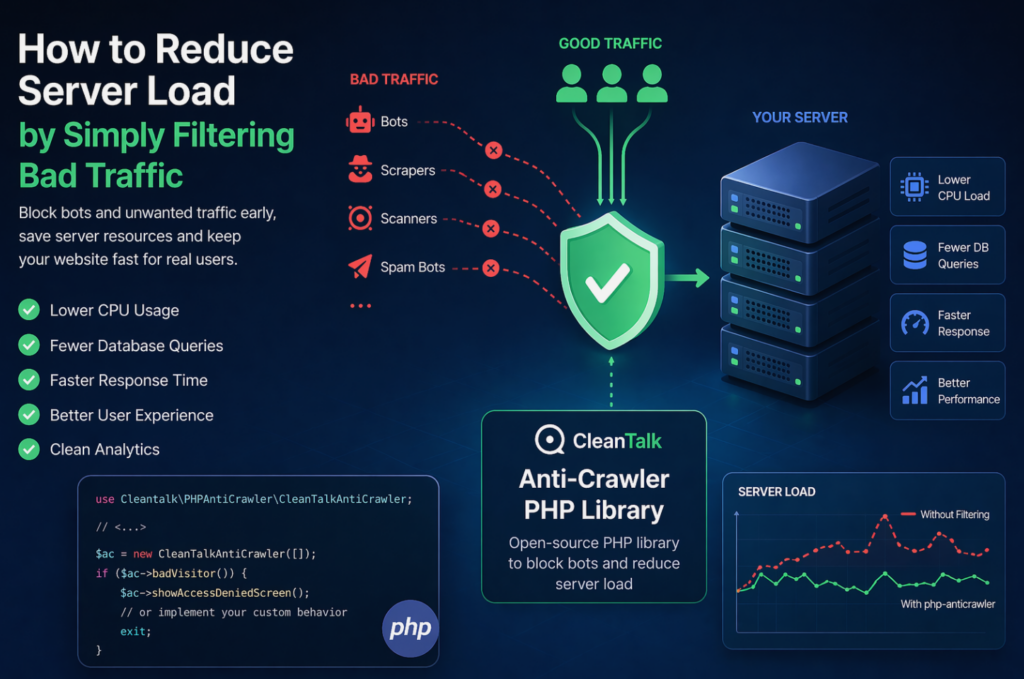
When a website starts slowing down, many teams immediately think about scaling infrastructure: adding CPU, RAM, more servers, or optimizing the database. In reality, a significant part of server load is often caused not by real users, but by automated traffic — bots, scrapers, vulnerability scanners, spam robots, and aggressive crawlers. These requests may continuously
FEEDBACK LOG


The Latest
-
5 Common Spam Problems in Contact Form 7 and How to Fix Them
Contact Form 7 is one of the most popular plugins for WordPress sites — simple, flexible, and easy to set up.Unfortunately, its popularity makes it a frequent target for spam bots. If you’re tired of fake messages, empty fields, or endless “test” emails, this guide will help you stop them — without CAPTCHAs or complicated…

-
How Spam Bots Attack WooCommerce Stores (and How to Block Them)
Spam bots can do more than just fill your inbox with fake messages — they can flood your WooCommerce store with fake orders, test stolen cards, and overload your checkout process.This guide explains how these attacks happen, what signs to look for, and how to stop them without hurting your real customers. Why Spam Bots…

-
How Spam Activity Changes Over Time — and Why It’s Not Related to License Expiration
From time to time, website owners report a sudden increase in spam activity and try to link it to plugin settings, hosting, or license status.However, these assumptions often overlook how dynamic spam behavior truly is.To illustrate this, I conducted a small study analyzing spam distribution over time using data from several of our WordPress sites.…

-
A critical vulnerability in WP Statistics threatens over 600,000 websites: CleanTalk Research team discovers complete admin panel takeover method
The CleanTalk Research team has identified a critical vulnerability in the popular WP Statistics plugin (versions up to and including 14.15.3), which is installed on over 600,000 WordPress websites. The vulnerability allows unauthenticated attackers to perform Stored Cross-Site Scripting (XSS), leading to administrative session hijacking, admin panel compromise, and potential code execution on the underlying…